How Far in Advance Should Brands Start Planning for the LA 2028 Olympics?
The closing ceremony of the Milano Cortina 2026 Winter Olympics has barely wrapped, and already the marketing world has shifted its full attention south and west. Kate Hudson sang "California Dreamin'" in an NBC promo, the Olympic flag landed in Los Angeles, and the two-year countdown to the biggest event in American sports history officially began.
If you're a brand marketer reading this and thinking you still have time to figure things out, you don't.
The brands that win the LA 2028 Olympics won't be the ones scrambling six months out with last-minute activations. They're the ones building strategies right now, securing partnerships before the landscape locks up, and booking the teams and infrastructure they'll need to execute flawlessly on the world's most watched stage.
So, how far in advance should brands actually start planning? The answer is: at minimum two years, and ideally three or more. Here's everything you need to know about why — and exactly what to do at each stage.
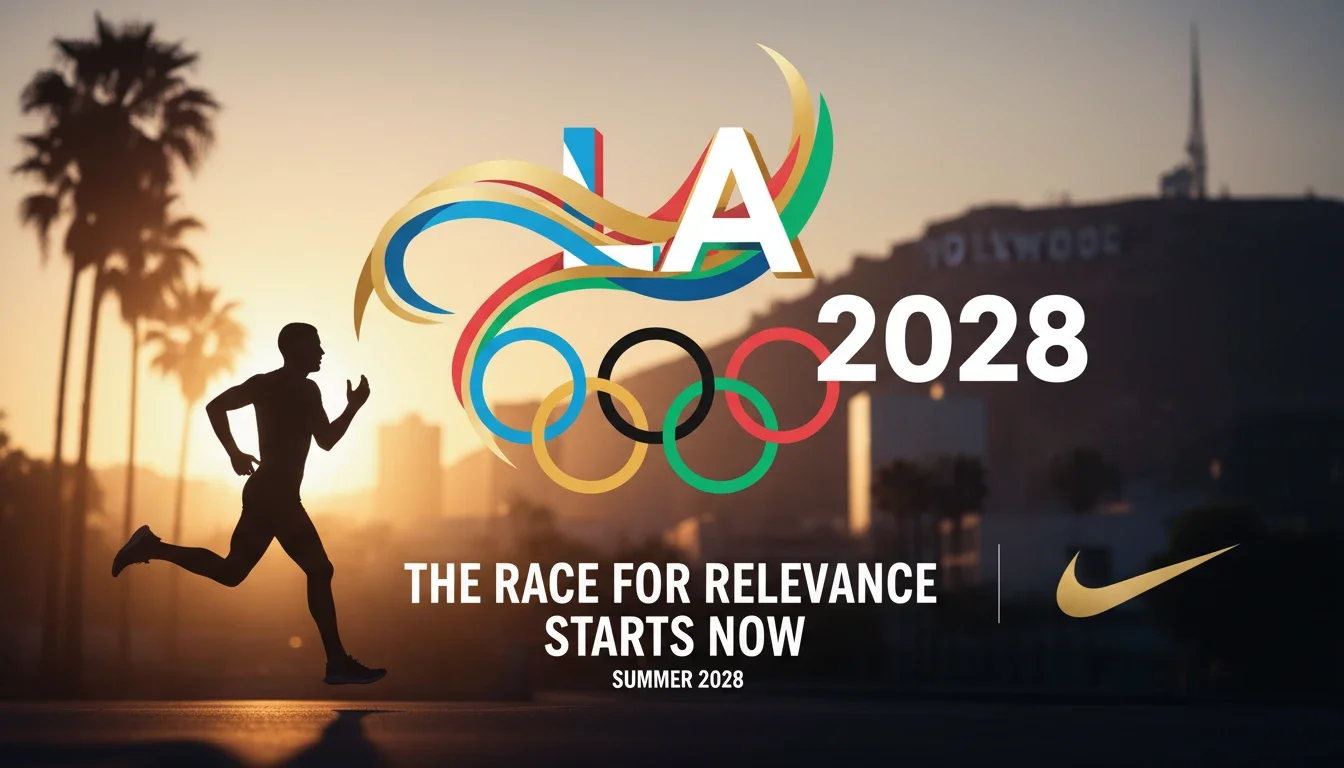
The LA 2028 Olympic Games arrive in summer 2028, but the race for brand relevance is already well underway.
The Short Answer: You're Already Behind
Let's be direct. Over $2 billion in LA 2028 sponsorships have already been secured — surpassing Paris 2024's total more than two years before the Games. Founding partners, including Honda, Starbucks, Google, Delta, T-Mobile, and Intuit, have reportedly committed investments of nearly $200 million each. The top tier is effectively closed.
That doesn't mean your opportunity is gone. But it does mean the window on the most valuable assets, the best athlete partnerships, the premium venue adjacencies, and the top-tier event staffing talent is closing faster than most brands realize.
Why One Year Isn't Enough
Expert consensus from sponsorship professionals who have worked across the last decade of Olympic Games is consistent: entering the Olympics planning process just one year out is a serious handicap.
At that stage, the best hospitality accommodations are gone. Athlete contract negotiations — which take months — leave you scrambling for second-tier talent. Internal stakeholder alignment across departments, markets, and budgets can't realistically be achieved in that timeframe. And on the operational side, experienced event staffing agencies in Los Angeles will already have their best talent committed to other activations.
The companies that consistently extract the most value from Olympic investments — historically brands like McDonald's, P&G, and Ralph Lauren — treat the Games as a multi-year company-wide platform, not a marketing line item that gets activated 90 days out.
What the Best Olympic Sponsors Have in Common
Across every successful Olympic sponsorship, a pattern emerges. The winners involve the whole organization early. They integrate the Games across departments — marketing, HR, operations, sales, and corporate communications. They build content and brand narrative arcs that develop over multiple years. And they lock in the logistics — venue adjacencies, staffing, hospitality, transportation — well before those resources become scarce or prohibitively expensive.
For LA 2028 specifically, where the competitive field is larger and more sophisticated than any previous U.S.-hosted Olympics, planning early isn't a nice-to-have. It's the price of entry.
The Four-Phase LA 2028 Planning Timeline
Every brand's Olympic strategy will vary depending on its budget, category, and goals. But the underlying planning architecture follows a consistent rhythm. Here's how to think about the next two years.
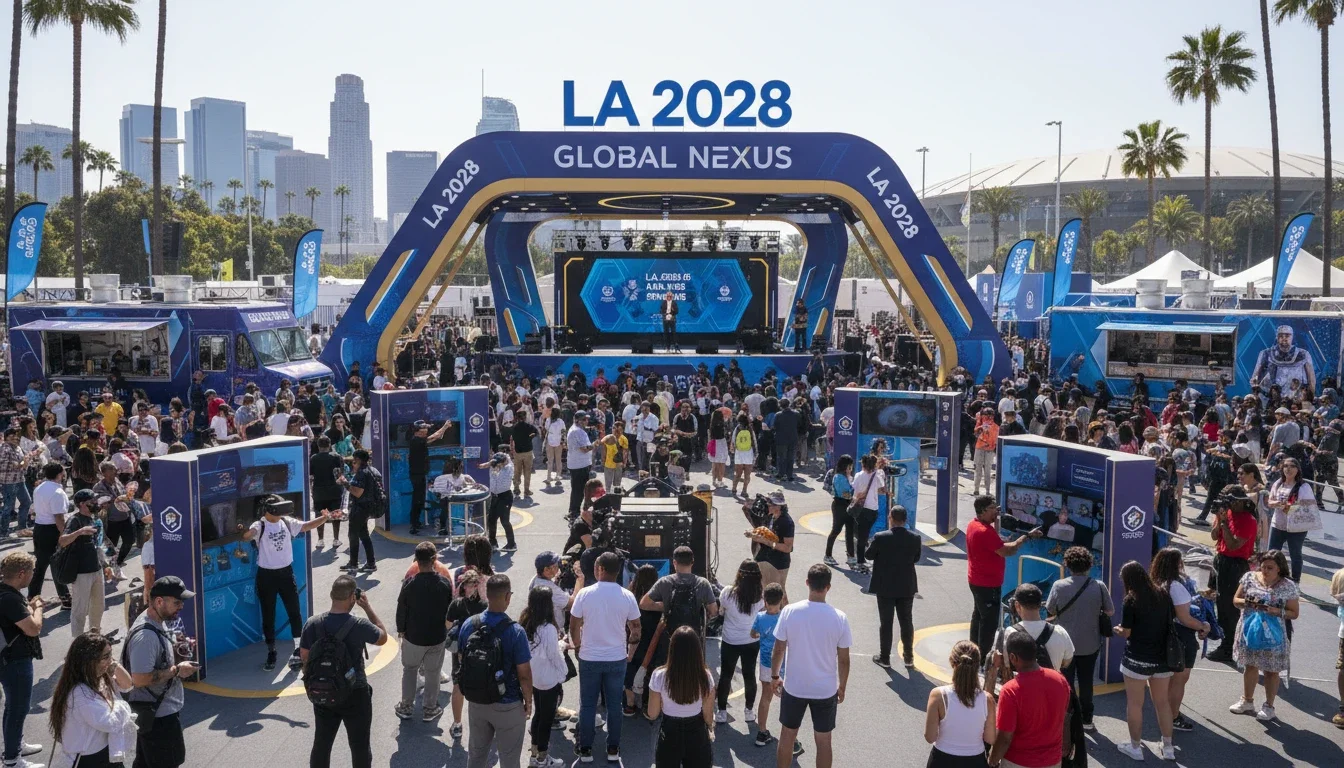
A phase-by-phase planning timeline for brand activation at the LA 2028 Olympic Games.
Phase 1 — Foundation (Now Through Mid-2026)
This is the strategy and relationship-building phase. If you haven't started here, start today.
What to do:
Define your brand's Olympic narrative and connection to the Games
Audit your internal stakeholders and get buy-in across departments
Evaluate sponsorship tiers: official partnership, category-level, athlete deals, or non-sponsor activation
Identify athlete partners coming out of Milano Cortina 2026 while media momentum and goodwill are at their peak
Start conversations with LA-based event staffing and brand activation partners
Begin scoping hospitality requirements and researching accommodation options (these will fill up)
Conduct audience research to understand how your customers connect with the Olympics
The strategic decisions made in this phase will define the entire program's potential ceiling.
Phase 2 — Build (Late 2026 Through 2027)
This is the infrastructure and content development phase. Contracts are signed, the creative is developed, and the operational machinery is assembled.
What to do:
Finalize athlete, influencer, and creator partnerships
Develop your campaign creative and content calendar (lead with athlete content)
Secure event venues, pop-up spaces, or activation sites near Olympic venues
Book your event staffing teams — elite LA brand ambassadors and experiential staff get committed early
Develop brand ambassador training programs and brand voice guides
Begin teaser content and audience warming across social media platforms
Coordinate cross-departmental programs (employee engagement, retail activations, trade activations)
Plan logistics for hospitality suites and VIP events
This is also the phase where you invest in pre-event awareness. Ralph Lauren's lift in Olympic relevance during Paris 2024 came from unveiling Team USA's uniforms before the Games — a lesson in timing content for the pre-event conversation window.
Phase 3 — Activate (Early to Mid-2028)
The Games arrive July 14, 2028. The months immediately preceding them are your runway for activation, not preparation.
What to do:
Launch pre-Games marketing campaigns and athlete content
Finalize on-the-ground activation logistics: staffing ratios, shift schedules, staff briefings
Brief and train all experiential and brand ambassador teams
Confirm hospitality guest lists, transportation plans, and event flow
Execute pre-Games PR and media outreach to build brand narrative momentum
Test activation technology (geofencing, digital check-in, social integrations)
Conduct on-site dry runs at activation venues
This is crunch time. Brands entering this phase unprepared will feel it acutely. Every logistical gap that wasn't addressed in Phase 2 becomes a fire in Phase 3.
Phase 4 — Game Time (July–September 2028)
The LA 2028 Olympic Games run from July 14 to July 30, 2028, followed by the Paralympic Games from August 15 to August 27. This is not the planning phase — it's the performance phase.
What to do:
Execute activations with a fully briefed, experienced event staff
Run real-time social and content operations responding to Olympic moments
Host hospitality events and VIP experiences
Monitor brand sentiment and activation performance daily
Capture content and case study materials in real time
The brands that arrive at Phase 4 with everything locked will be the ones making Olympic marketing history. The brands that treated this as their planning window will be running to catch up while their competitors own the moment.
What Makes LA 2028 Different From Every Previous Olympics
The conventional wisdom about Olympic marketing is worth revisiting, because LA 2028 is genuinely a different kind of Games.
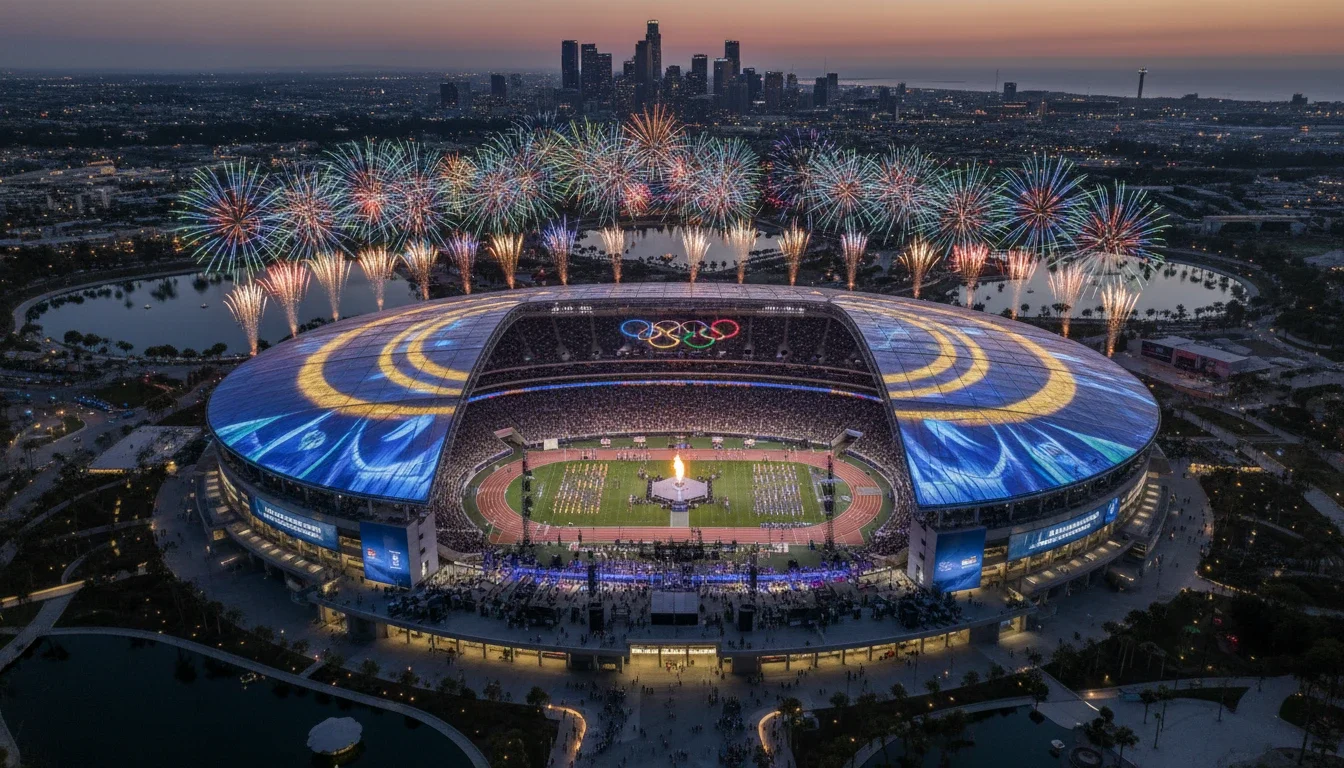
SoFi Stadium in Inglewood, California — home of the LA 2028 Olympic opening and closing ceremonies.
Prime Time for America
The majority of LA 2028's key competitions are scheduled in broadcast prime time for American audiences. That's a massive departure from Tokyo (which aired at odd morning hours) and even Paris (which had a significant time zone gap). NBC averaged 32 million viewers per day across linear and digital during Paris 2024. With prime time scheduling in the world's most media-saturated market, those numbers are expected to rise significantly.
The commercial implication is straightforward: LA 2028 will deliver the largest American audience in Olympic history. Brands that have invested in telling a compelling story before the Games arrive will be the ones that convert viewership into brand affinity.
New IOC Rules Give Brands More Freedom
Paris 2024 marked a turning point in how the IOC approaches marketing. Historically protective of its intellectual property, the IOC relaxed restrictions on athlete social media content before and during the Games — and it paid off spectacularly. Social media engagement with Olympic content reached 412 billion interactions during Paris, and the trend line points sharply upward for LA 2028.
For the first time in Olympic history, LA 2028 will also permit venue naming rights — but only for Worldwide Olympic Partners or Founding Partners. And the integrated sponsorship model now bundles rights across the Summer Olympics, Paralympics, and Team USA in a single package. These structural changes create new entry points and new creative freedoms that sophisticated brand marketers should be mapping now.
The Most Competitive Staffing and Logistics Market in Olympic History
Los Angeles is an extraordinary city for an event of this scale — and an extraordinarily complex one to execute in. The transportation infrastructure is under significant pressure. Housing and accommodation near key Olympic venues is among the most expensive and limited in any American city. And the talent market for experienced, brand-qualified event staff in LA is fiercely competitive in normal years.
During the Games, brands that haven't locked in their activation staff, hospitality teams, and on-the-ground operational support will find themselves unable to staff their experiences at the level their investment deserves.
You Don't Need a $200 Million Sponsorship to Win
One of the most damaging myths in Olympic marketing is that the Games are only accessible to mega-brands. That's simply not true — and LA 2028 arguably offers more entry points at varied budget levels than any prior Games.
Official Partnerships vs. Smart Activations
Yes, the founding partner tier (Honda, Starbucks, Google, Delta, T-Mobile, Intuit) is committed and very expensive. But additional official sponsorship tiers are offering meaningful rights at lower price points. And for brands that don't have official rights, the opportunity is still enormous — because the Olympics saturates every corner of culture in the host city for months before and during the event.
Proximity wins. Brands with activations, pop-ups, or experiential campaigns near Olympic venues and fan zones can generate real engagement without official rights. The key is execution quality — professional, brand-trained staff, memorable experiences, and smart social amplification.
Non-Sponsor Strategies That Work
The most effective non-sponsor strategies share a common characteristic: they meet Olympic audiences where they are, rather than trying to compete with official sponsors on their own turf.
Athlete creator partnerships: Breakout stars from Milano Cortina 2026 are available for partnerships right now — before their next-cycle fame drives up costs exponentially. Brands with budget flexibility should be in conversations today.
Content marketing and cultural storytelling: Brands that build connection to the LA moment through authentic storytelling (city culture, athlete journey narratives, community stories) can earn significant organic traction.
Fan zone and public space activations: LA28 will generate enormous foot traffic across public spaces in the city. Well-designed experiential activations staffed by trained brand ambassadors can generate strong organic engagement and word-of-mouth.
Hospitality and B2B entertaining: The Olympics is an unparalleled opportunity for client and partner entertainment. Companies across every industry use Olympic hospitality to strengthen relationships at a moment of peak shared emotion.
The Power of Athlete and Creator Partnerships
The IOC's shift toward supporting athlete social media content has fundamentally changed the landscape of Olympic marketing. Athletes are now media channels in their own right — with authentic followings, engaged audiences, and flexibility to partner with brands in ways that were impossible just one Olympic cycle ago.
For brands that can't afford official sponsorship, athlete and creator partnerships may be the highest-ROI play available. The window to lock in breakout stars from the 2026 Winter Games before their profiles peak is open right now — and it won't stay open long.
The Often-Overlooked Part of Olympic Planning: Staffing Your Activations
Marketing and creative strategy tend to dominate conversations about Olympic planning. But there's a critical operational layer that brands consistently underestimate until it's too late: who is actually going to staff your activations?
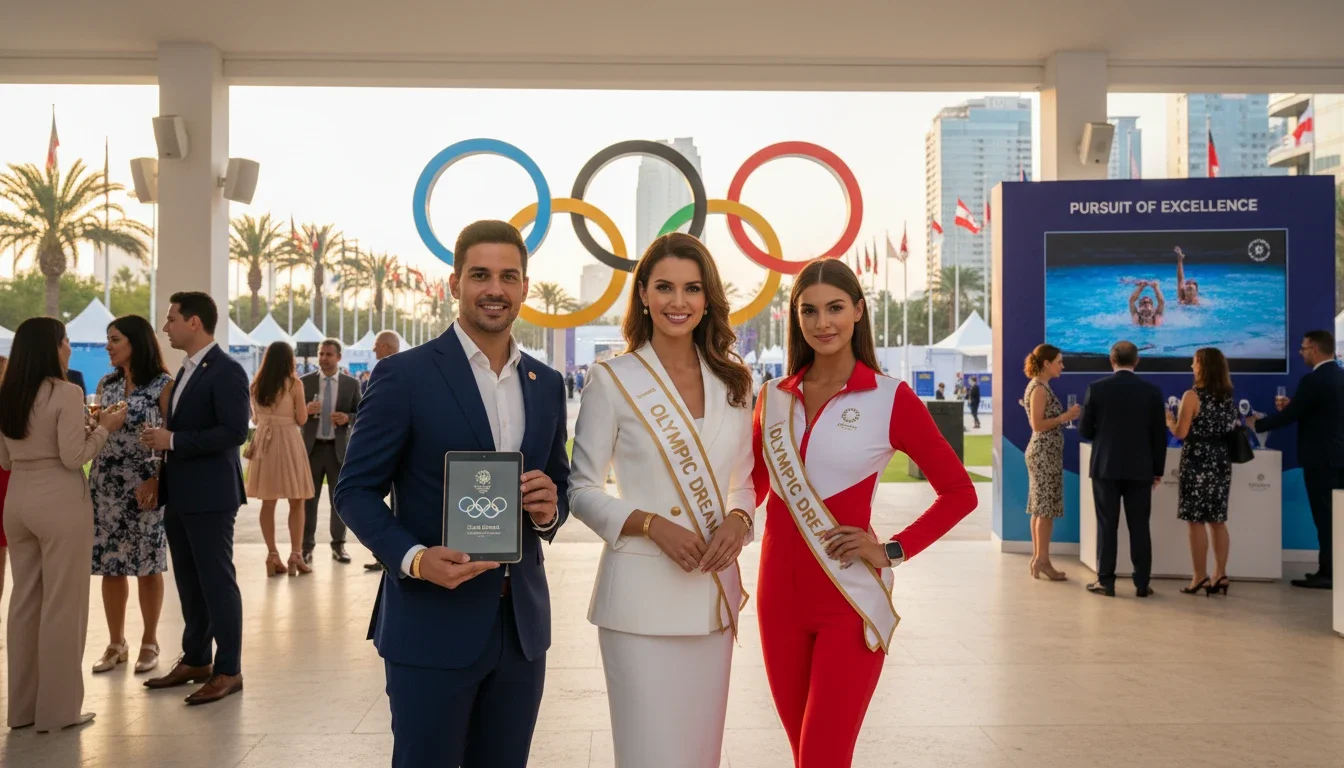
Professional brand ambassadors represent brands at high-profile events — a critical component of any Olympic activation strategy.
Why Staff Booking Timelines Are Just as Critical as Marketing Timelines
In a normal year, booking elite event staffing for a major LA activation requires lead time of several weeks to a few months. During a period when every major brand in the world is simultaneously running activations in the same city, that timeline extends dramatically.
The most qualified brand ambassadors, hospitality professionals, registration staff, and event coordinators in Los Angeles will be committed to the earliest-booking clients. Brands that wait until six months out to think about staffing will face a choice between inexperienced staff or premium last-minute rates — neither of which serves their activation well.
The staffing decision is also a brand decision. At the Olympics, every person who represents your brand is an extension of it. The quality, training, and professionalism of your on-the-ground team determine whether your activation delivers on its promise.
What Elite Olympic Event Staffing Looks Like
The bar for event staffing at a global event like the Olympics is meaningfully higher than a standard brand activation. You're dealing with international visitors speaking dozens of languages. You're operating in venues and spaces with strict credentialing and access protocols. You're representing your brand to an audience that has just watched the most emotionally resonant sporting event in the world.
Elite Olympic event staffing means:
Brand ambassadors who are fluent in your brand voice and values, not just reading from a script
Hospitality staff who can read a room, anticipate needs, and respond professionally to the unexpected
Multilingual capability to engage international visitors
Experience with high-volume, high-pressure event environments
A staffing partner with credentialing and compliance expertise for Olympic-adjacent venues
Eleven8 as LA 2028's Preferred Staffing Partner
Eleven8 is already an official preferred staffing partner for the LA 2028 Olympic Games, joining a short list of providers authorized to staff Olympic brand activations and sponsor experiences at the highest level.
As a company that has staffed FIFA World Cup 2026 activations in Los Angeles, Super Bowl 2027, and hundreds of major brand activations for Fortune 500 clients, including Nike, Netflix, Instagram, and White Claw, Eleven8 brings both the credentials and the track record that Olympic-scale activations demand.
For brands that want to ensure their activation will be staffed by professionals who understand high-stakes events in Los Angeles — and who are already operating within the LA 2028 ecosystem — contact Eleven8 early to discuss your staffing needs and reserve your team before availability closes.
You can also explore LA brand ambassador services and experiential marketing staffing to understand the breadth of what Eleven8 offers for Olympic-scale activations.
A Planning Checklist for Brands at Every Level
Mega-Sponsors (Official Partners, $50M+ Investment)
Treat the investment as a company-wide platform across all departments
Integrate Games assets across employee engagement, trade programs, and consumer marketing
Build multi-year content narratives from athlete partnerships through post-Games legacy
Secure hospitality accommodations and VIP logistics now
Appoint a cross-functional internal Olympic team with executive sponsorship
Book official venue naming rights if applicable
Develop AI and social content strategies for real-time Olympic moment activation
Mid-Market Brands (Category Sponsors, Athlete Deals, $500K–$50M)
Identify athlete partners from Milano Cortina 2026 while the window is open
Define your brand's authentic connection to the Olympic moment
Scope activation footprint: fan zones, pop-up spaces, digital experiences
Begin conversations with LA event staffing partners — timing matters here
Develop a pre-Games content calendar starting 6 months out
Plan a hospitality program for client and partner entertainment
Engage multilingual brand ambassador staff for international visitor engagement
Local LA Businesses (Up to $500K or Organic Strategies)
Research how your existing audience connects with the Olympics
Identify proximity opportunities near Olympic venues and fan zones
Develop a bilingual/multilingual customer experience for international visitors
Explore athlete ambassador or creator partnerships at accessible price points
Build a content marketing calendar around the Olympic moment and LA cultural story
Connect with LA event staffing partners for any activation support
Review and optimize local SEO for international visitor discovery
Plan traditional and out-of-home advertising for temporary audiences
For deeper strategic guidance on what activation strategies are emerging for LA 2028, see Eleven8's breakdown of 10 emerging marketing strategies for the LA 2028 Olympics.
The Brands That Wait Will Watch From the Sidelines
The LA 2028 Olympics represent the most significant marketing opportunity on American soil since the Atlanta Games in 1996. The scale is unprecedented. The audience is enormous. The creative and activation freedoms are greater than they've ever been in Olympic history.
But the window to secure the assets, partners, and operational infrastructure that make winning activations possible is closing. Athlete partnerships are being locked up now. Hospitality accommodation is being reserved. Elite event staffing partners in Los Angeles are building their Olympic rosters.
The answer to how far in advance brands should plan isn't two years, or three years, or even four. The right answer is: the moment you decide to participate, you should already be planning.
The race to LA 2028 started the moment the Olympic flag touched down in Los Angeles. The question is whether your brand is running.
Ready to begin? Contact Eleven8 — LA 2028's preferred event staffing partner — to start the conversation about how we can staff your Olympic activation with the team it deserves.