How to Ensure Brand Integrity on Every Stop of Your Tour
You've invested months into building a brand activation. The concept is sharp, the creative is dialed in, and the first stop is flawless. Then you hit city three. The staff doesn't quite deliver the message the way you trained them. City five, the energy is off. City eight, someone's ad-libbing the product pitch.
By the end of the tour, your brand has been represented in a dozen different ways — and none of them were the one you planned.
Brand integrity on a multi-city tour isn't a creative problem. It's an operational one. And solving it requires deliberate systems, the right people, and a staffing partner who understands that every stop is someone's first impression of your brand.
This guide breaks down exactly how to protect your brand at every activation — from the first city to the last.
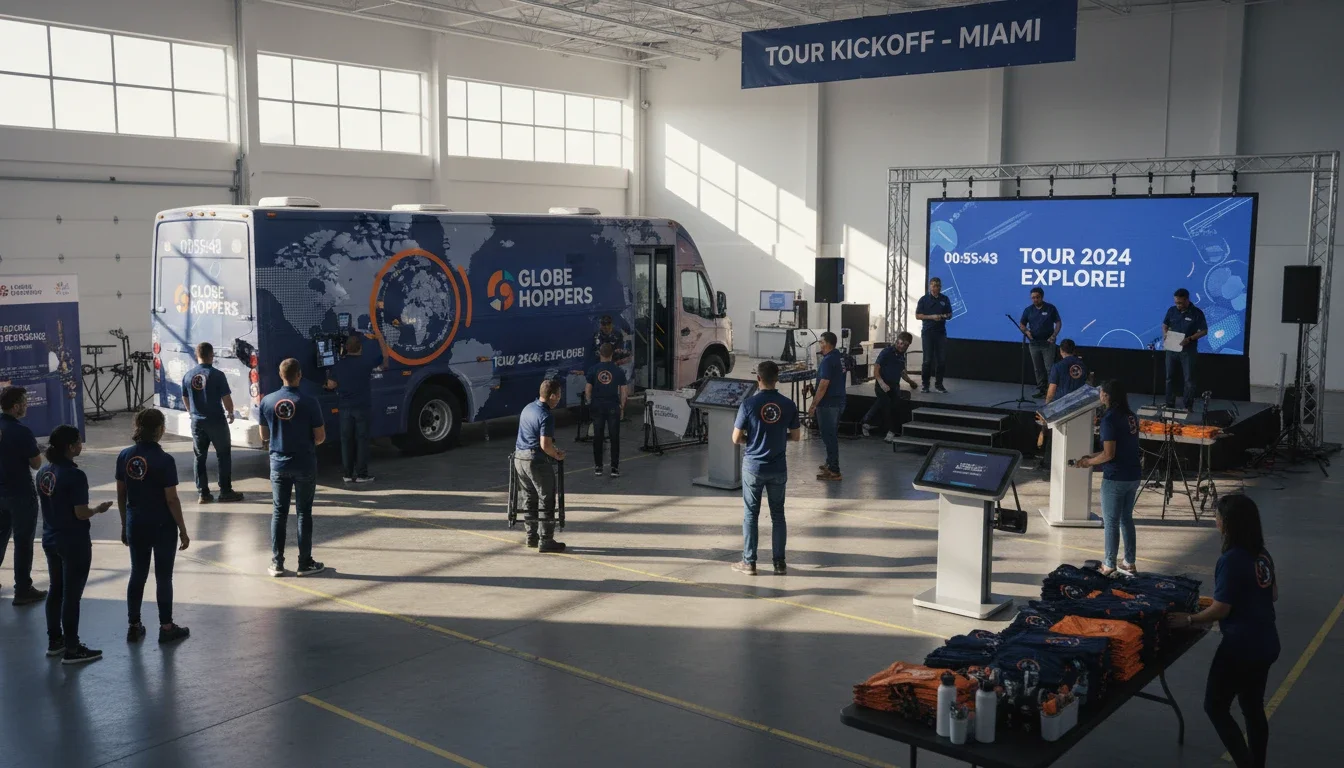
A branded activation staff team preparing for a multi-city tour kickoff
Why Brand Integrity Breaks Down on Multi-City Tours
The Consistency Problem Nobody Warns You About
Most brand managers focus on the visual layer — the wrap on the vehicle, the branded pop-up tent, the matching uniforms. Those things matter. But they're the easiest part to get right.
The hard part is the human layer.
Every stop on your tour introduces new variables: different venues, different crowd energy, different local nuances. If your team hasn't been systematically prepared to hold the brand standard regardless of those variables, inconsistency is inevitable.
The inconsistency usually isn't dramatic. It creeps in through softened messaging, inconsistent product explanations, different energy levels between markets, or staff who wing interactions rather than follow your engagement framework. None of it looks catastrophic in isolation. But it accumulates — and it shows up in post-tour data, social content, and consumer perception.
What's Actually at Stake When Your Brand Shows Up Differently City to City
Brand consistency isn't just about aesthetics. It's about trust. When consumers in Chicago have a different experience than consumers in Atlanta, you're essentially running two different campaigns under the same brand name.
The downstream effects are real:
Lower recall and recognition — Inconsistent messaging reduces the mental anchoring that makes experiential marketing effective.
Weaker social amplification — Off-brand moments don't get shared the way on-brand moments do.
Damaged internal confidence — When field teams see inconsistency going uncorrected, standards erode fast.
Higher post-tour remediation costs — Fixing brand perception problems after a tour is far more expensive than preventing them.
The brands that run high-impact multi-city tours — the ones that generate earned media, social buzz, and measurable lift — treat brand integrity as a non-negotiable operational standard, not a vague aspiration.
Build a Brand Playbook Before You Hit the Road
What a Tour Brand Playbook Should Include
Before a single staff member is briefed, you need a single source of truth. A brand playbook for a tour isn't the same as your general brand guidelines document. It's purpose-built for live activation — and it needs to be specific enough to guide split-second decisions on the floor.
A strong tour brand playbook covers:
Brand narrative and key messages — The three to five things every consumer should walk away knowing.
Product or service talking points — Scripted, tested, and approved by your marketing team.
Tone and energy benchmarks — How does the brand sound? Enthusiastic but not aggressive? Educational but not dry? Give examples.
What staff should do in common scenarios — a curious consumer, a skeptical consumer, a disengaged passerby.
What staff should never say — Clear no-go zones for off-brand responses.
Visual and uniform standards — Exact dress codes, grooming standards, and how to handle branded merchandise or materials.
Engagement goals per stop — Specific KPIs like leads collected, samples distributed, or conversations initiated.
This document should be short enough to read in 15 minutes and specific enough to leave no room for interpretation.
How to Make It Accessible to Every Team Member in Every Market
A playbook that lives in a Google Drive folder nobody opens is the same as no playbook at all. Build access into your onboarding workflow:
Send it to every staff member at least 48 hours before their shift
Require a confirmation read-through (a simple acknowledgment message works)
Have your on-site lead walk through the key points during the pre-event briefing
Keep a printed copy on-site at every activation
If you're working with a staffing agency, confirm that they incorporate your playbook into their pre-shift briefing process. The best agencies — like Eleven8 Event Staff — assign a dedicated account manager who ensures your materials are distributed and absorbed before the team hits the floor.

Event staff lead conducting a pre-activation brand briefing with the team
The Human Element Is Your Biggest Variable
Why Your Staff Is Your Brand at Every Stop
This is worth saying plainly: your event staff is your brand in the eyes of every consumer they touch.
Not your truck wrap. Not your booth design. Not your branded cups. The person making eye contact, starting the conversation, and delivering the pitch is what consumers remember.
Research consistently shows that human interaction is the most memorable element of experiential marketing campaigns. The quality of that interaction — whether it felt genuine, knowledgeable, and on-brand — determines whether the activation moves someone or just passes the time.
That's why staffing decisions are brand decisions. Hiring whoever is available, rather than who is right, is one of the most common ways tour's brand integrity erodes.
What "On-Brand" Actually Means for Frontline Event Staff
"On-brand" isn't just about appearance or scripted language. It means the staff member understands the brand well enough to represent it authentically under any condition — when the crowd is thin, when a consumer asks a tough question, when something goes wrong logistically.
On-brand staff:
Know the product or service they're representing well enough to have a real conversation about it
Understand the target consumer and adjust their approach without losing the core message
Maintain consistent energy and professionalism from the first interaction of the day to the last
Reflect the brand's values — not just its talking points
This level of preparation doesn't happen by accident. It requires deliberate training, quality hiring, and accountability structures that most generic staffing platforms simply don't provide.
How to Brief Staff for Consistent Brand Delivery
The Pre-Event Briefing Framework
Even the best-trained staff need a focused, structured briefing before each activation. Think of it as your last line of defense before the doors open.
An effective pre-event briefing should cover five things:
Today's objectives — What does success look like at this specific stop? What are the KPIs?
Key messages — The three most important things every consumer should hear.
Engagement framework — How to initiate a conversation, how to qualify interest, and how to close (lead capture, sample handoff, referral, etc.).
Venue-specific notes — Crowd profile, layout considerations, local context worth knowing.
Q&A — Open the floor for staff questions before the event, not during it.
This briefing should be led by an on-site captain or team lead. It should take no longer than 20 minutes. And it should happen at every single stop — not just city one.
How to Localize Without Losing Brand Voice
One of the more nuanced challenges in multi-city touring is the tension between localizing for relevance and maintaining brand consistency. You want your Houston activation to feel native to Houston — but it still needs to sound like your brand, not like a different campaign.
The key is localizing the context without localizing the message.
Swap in city-specific references, local events, or cultural touchpoints in conversation openers.
Keep product messaging, brand narrative, and engagement goals identical across markets.
Empower staff to read the room and adjust tone, while keeping content locked.
Brief regional leads on local nuances without giving them latitude to rewrite the pitch.
The best brand ambassadors understand this instinctively — they can make every consumer feel like the activation was built specifically for their city, while staying perfectly within the brand guardrails.
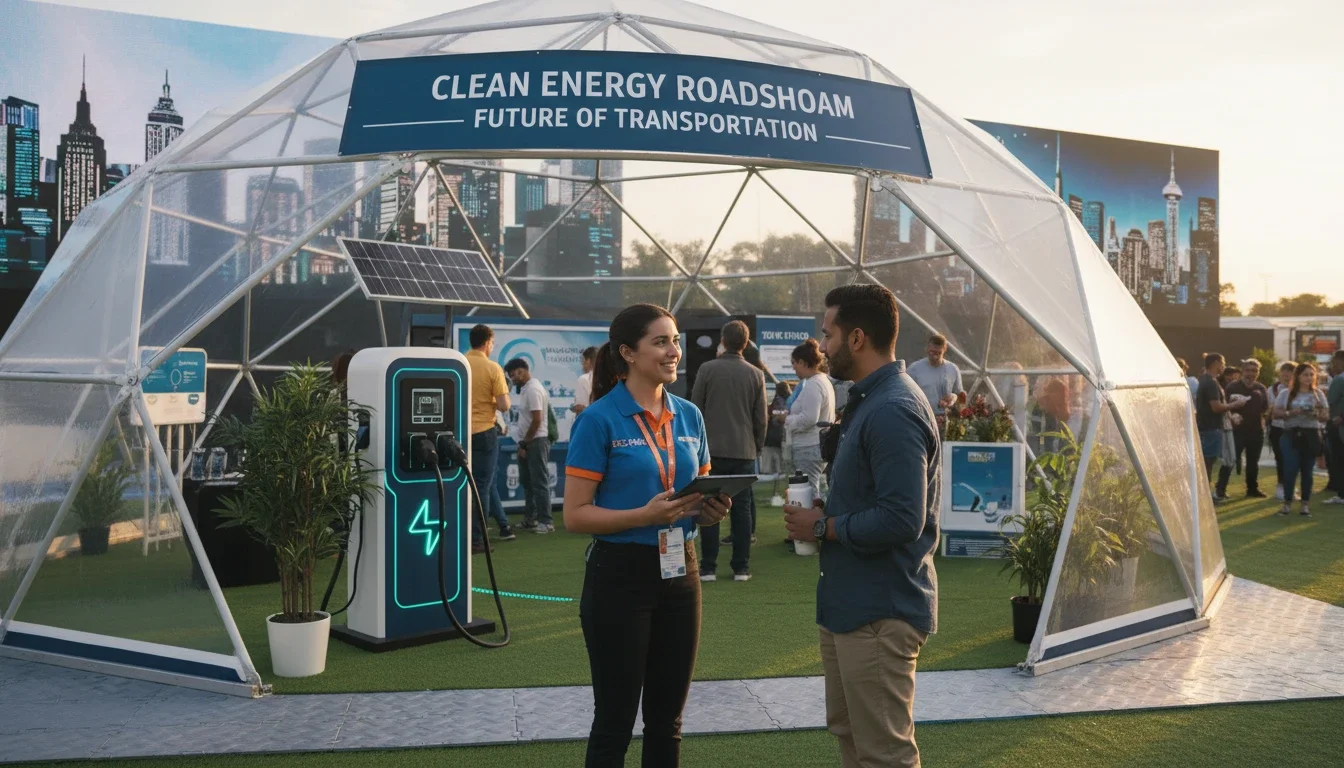
Brand ambassador engaging a consumer at a multi-city experiential marketing tour stop
Build Accountability Into Every Stop
Performance Tracking Across Multiple Markets
Accountability without data is just hope. For multi-city tours, you need a performance tracking system that captures consistent metrics across every stop so you can identify drift before it becomes a pattern.
Track at minimum:
Engagement volume — Conversations initiated, samples distributed, leads captured
Staff punctuality and attendance — Did the full team show? On time?
Brand message delivery — Spot-check conversations or use a brief post-shift debrief with the team lead
Consumer feedback — Informal pulse checks or formal QR-code surveys
Social content generated — Are consumers sharing? What does the content say about the experience?
Review this data after each stop. If City Four is underperforming City Three on engagement volume with comparable foot traffic, something changed. Find it before City Five.
What to Do When a Stop Goes Off-Brand
No matter how thorough your preparation, something will go sideways at some point during a long tour. A staff member goes off-script. A venue constraint forces an activation change. Local crowd energy requires a pivot.
The goal isn't a zero-deviation tour. The goal is fast identification and fast correction.
Build these mechanisms in:
Daily debrief — A 10-minute end-of-day call between your account manager and the on-site lead
Real-time escalation channel — A direct line (text or Slack) to someone with authority to make decisions
Corrective action protocol — When a staff issue is flagged, who addresses it, and how fast?
A staffing partner with 24/7 live operations support — not a shared inbox or a delayed callback — is essential for multi-city tours. When an issue surfaces at a Tuesday evening activation in Dallas, you need it handled before Wednesday morning in Denver.
Eleven8's operational model includes24/7 event day support with dedicated account managers on every booking — precisely because problems don't wait for business hours.
Choosing a Staffing Partner Who Can Hold the Standard Nationwide
What to Look for in a Multi-City Event Staffing Agency
Not all staffing agencies are equipped for multi-city tour work. Many are built for single-market placements, reactive recruitment, and volume-based availability matching. That model doesn't scale well across a 10-city tour where brand consistency is the primary deliverable.
When evaluating a staffing partner for a multi-city tour, ask:
Do they have an existing roster in each market, or do they recruit after you book? Recruiting after booking introduces unknowns — people who haven't been vetted against your brand requirements.
What does their briefing process look like? A strong partner incorporates your brand materials, not just a generic onboarding.
Can you choose or review staff profiles before the event? Visibility into who is representing your brand is non-negotiable.
What is their backup coverage model? No-shows happen. What's the plan?
Who is your single point of contact? Multi-market activations with fragmented communication break down fast.
What accountability tools do they use? Geo-clocked arrival, performance ratings, post-event debriefs — these are operational signals of a serious agency.
How Eleven8 Maintains Brand Standards Across 25+ Markets
Eleven8 Event Staff operates in 25+ markets with a pre-built, actively maintained roster of 24,821 staff members — not a directory of one-time applicants, but a working, rated, accountable workforce.
Their model is built specifically for the kind of tour work where brand integrity is the standard:
Top 3.5% hire rate — Only 2,476 of 97,003 applicants were hired last year. Staff are selected, not just accepted.
11-Step event process — Every activation follows a standardized operational protocol across every market.
Staff matching — Team members are selected based on event type, brand profile, and audience fit — not just availability.
Dedicated account manager — One contact manages your entire tour from booking to post-event recap.
Built-in backup coverage — One briefed backup per eight staff, included at no additional charge.
Client staff selection — Browse profiles, photos, and prior experience to choose your preferred team before event day.
Whether you're activating inLos Angeles,New York City,Chicago,Miami, or any of theother markets Eleven8 covers, the operational standard is identical. That's what brand integrity at scale looks like.

Eleven8 event staff team deployed at a branded multi-city activation
Tour Brand Integrity Checklist: City One to the Final Stop
Use this checklist to audit your tour readiness before hitting the road:
Pre-Tour:
Brand playbook created, reviewed, and approved
Staffing partner confirmed with pre-existing rosters in each market
Staff profiles reviewed and approved by the brand team
Uniforms/branded attire confirmed with all staff leads
KPIs defined per stop (not just per tour)
Escalation and communication channels established
Briefing protocol confirmed with staffing partner
Per Stop:
Pre-shift briefing completed by on-site lead
Brand playbook materials on-site and accessible
Backup staff confirmed and briefed
Performance metrics tracking is active
Real-time communication channel open
Post-Stop:
Debrief completed with team lead
KPI data logged and reviewed
Any off-brand incidents documented and corrected
Staff performance is rated and noted for future stops
Learnings communicated to the next-market team