How to Manage a Multi-Venue Brand Activation Across the LA 2028 Olympics
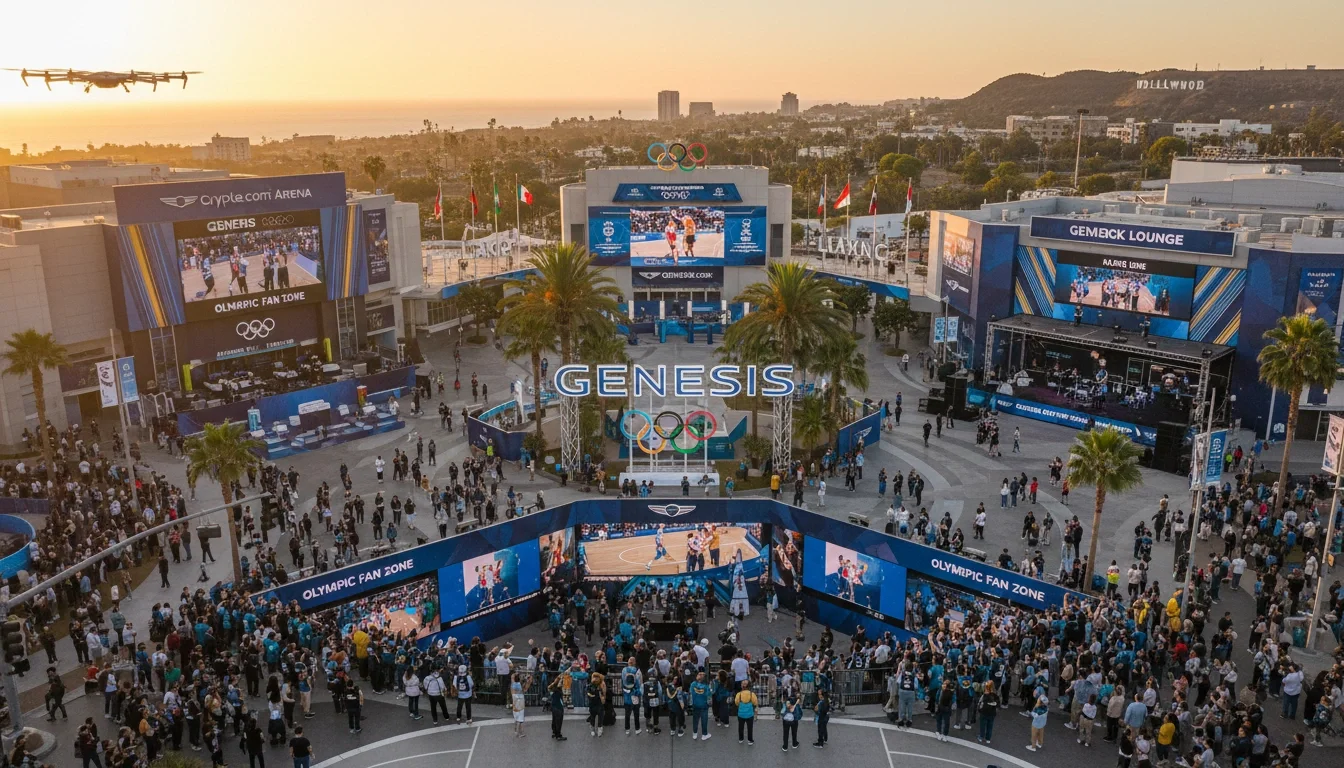
A brand activation team deployed across multiple LA venues during a major sporting event.
The LA 2028 Olympics are shaping up to be one of the most significant brand activation opportunities in modern history. With events spread across iconic Southern California venues — from SoFi Stadium in Inglewood to the beaches of Long Beach and the courts of UCLA — brands have an unprecedented canvas to work with. But that geographic spread also introduces a level of operational complexity that trips up even experienced marketing teams.
Managing a single pop-up is one thing. Running a synchronized, on-brand activation across five, eight, or ten venues simultaneously? That requires a fundamentally different kind of planning, staffing, and execution.
This guide is designed for brand activation managers, experiential marketing directors, and agency producers who are building their LA 2028 strategies now. We'll walk through everything from setting activation goals and understanding the venue landscape to building a scalable staffing model and measuring ROI across locations.
Let's get into it.
Why Multi-Venue Activations Are Different — And Harder
Most brand activation playbooks were built around a single-venue model: you pick a location, you set up your experience, you staff it, and you run it. Multi-venue operations break nearly every assumption that the model makes.
When your activation spans multiple locations across Greater Los Angeles — some of which may be 20 to 40 miles apart — you're no longer managing one experience. You're managing a brand ecosystem. And the risks compound accordingly.
The Scale of LA 2028: What Brands Are Working With
LA 2028 will use a decentralized venue model, relying on existing world-class facilities rather than newly constructed Olympic infrastructure. This is smart for the city, but it creates a logistical puzzle for brand partners. Venues will span multiple districts, including downtown Los Angeles, Inglewood, Long Beach, Pasadena, Carson, and UCLA's Westwood campus — each with its own traffic patterns, permitting requirements, and audience demographics.
According to LA28 and the IOC's evolving commercial framework, naming rights for up to 19 temporary venues will be available to qualifying partners, opening new on-site activation opportunities that didn't exist at previous Games. For brands not at the official sponsorship tier, the surrounding areas, fan zones, and ancillary event spaces represent equally valuable real estate.
The 3 Core Challenges of Multi-Venue Brand Management
Brand Consistency: How do you ensure that a guest at SoFi Stadium has the same brand experience as someone at the beach volleyball venue in Long Beach?
Staffing Coherence: How do you recruit, train, and deploy staff across multiple locations while maintaining consistent quality and messaging?
Operational Agility: How do you adapt in real time when something goes wrong at Venue 4 while Venue 2 is at peak capacity?
These aren't hypothetical challenges. They are the challenges that separate brands that generate buzz and loyalty from those that generate confusion and negative social media moments.
Step 1: Build Your Activation Strategy Before You Build Your Team
The most common mistake brands make with multi-venue activations is moving straight into logistics and staffing without a clear strategic foundation. The result is an operation that runs smoothly on paper and falls apart in practice — because each venue team is making independent decisions without a shared north star.
Define Your Activation Goals Venue by Venue
Start by asking a specific question for each venue: what does success look like here, for this audience, at this moment in the Games? The answer will be different at every location.
A venue hosting a high-profile track and field final will attract a global, sports-passionate crowd who want intensity and immediacy. A beach volleyball venue on a Tuesday afternoon might attract a more casual, social crowd who respond to lifestyle and fun. Your activation concept — and your staffing approach — should reflect those differences.
Assign a primary objective to each venue: awareness, trial, lead capture, hospitality, content creation, or a combination
Define your target audience profile per venue based on the sports, sessions, and expected demographics
Set measurable KPIs before you finalize any activation concept
Map Your Audience Movement Across the Games
One advantage of a multi-venue Olympic activation is the opportunity for sequential touchpoints. Audiences attending multiple events over the course of the Games will encounter your brand more than once — and a smart activation strategy accounts for that journey.
Work with your team to map likely audience movement patterns. Which venues are likely to draw repeat visitors? Where will international tourists cluster on their first day versus their last? Where is foot traffic highest mid-competition versus in the early rounds? These insights will shape not just where you activate, but when and how.
Choose Your Activation Formats Wisely
Not every format works at every venue. Large-scale immersive experiences need space, power, and dwell time. Sampling activations need foot traffic and proximity to audience flow. VIP hospitality needs privacy and exclusivity. The best multi-venue activations use a mix of formats, calibrated to each venue's constraints and opportunities.
Fan engagement stations (sampling, demos, gamification)
Branded hospitality lounges or viewing areas
Content capture experiences (photo moments, UGC-driving installations)
Lead generation and CRM-building activities
Staff-led brand storytelling and product education
Step 2: Understand the LA 2028 Venue Landscape
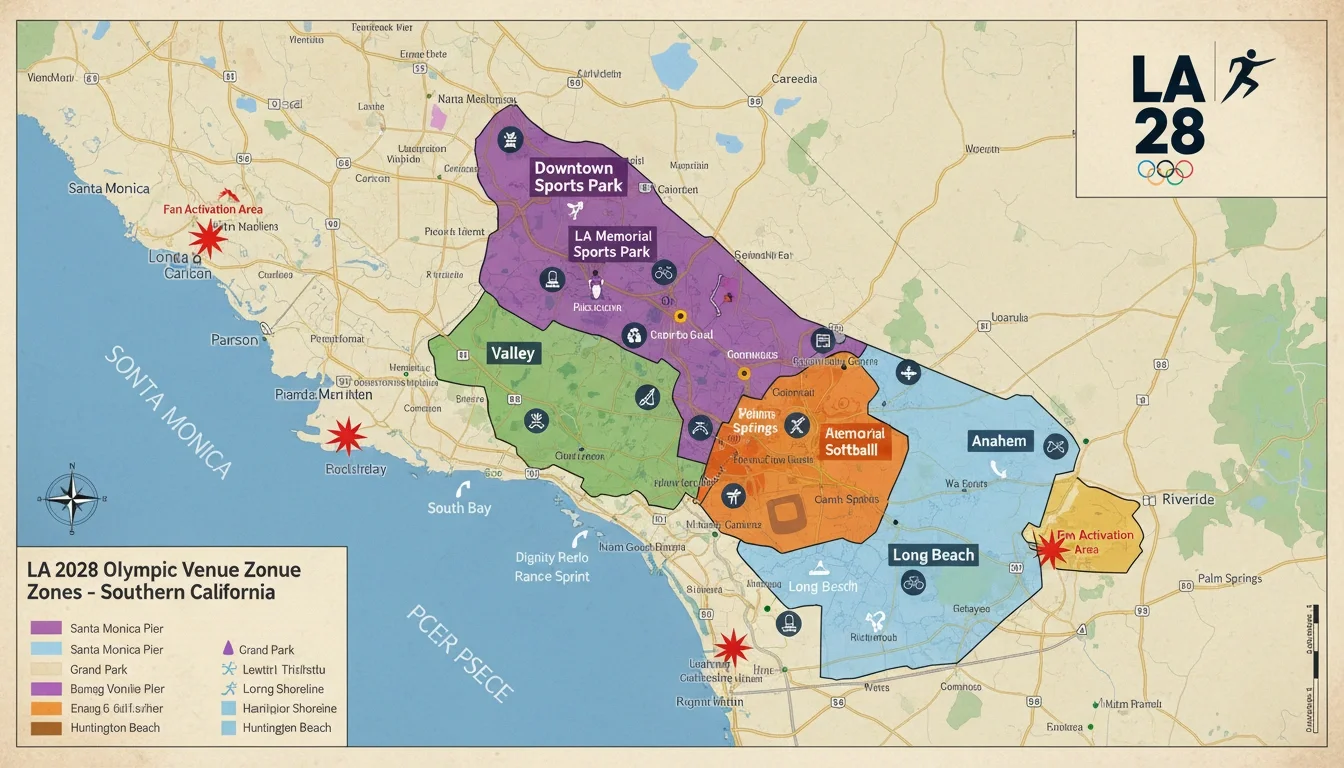
Map of LA 2028 Olympic venue zones across Southern California, showing key activation areas.
Key Venue Zones and Their Brand Activation Opportunities
While official venue designations continue to evolve, LA 2028's geographic spread creates distinct activation zones, each with unique characteristics for brand marketers.
| Venue Zone | Key Sports / Activation Notes |
|---|---|
| SoFi Stadium, Inglewood | Athletics, opening/closing ceremonies — highest-profile venue, maximum foot traffic, strong media presence |
| Crypto.com / Peacock Theater, DTLA | Boxing, weightlifting finals — urban core, connected to LA Live entertainment district, rich in ancillary activation space |
| UCLA Campus, Westwood | Swimming, gymnastics, volleyball — college atmosphere, strong international attendance, media hub |
| Long Beach | Rowing, sailing, open water — beachside setting, lifestyle-oriented audiences, strong content creation backdrop |
| Carson / Dignity Health Sports Park | Soccer, modern pentathlon — suburban setting, family-friendly, high repeat attendance |
| Pasadena / Rose Bowl | Football (soccer) — historic venue, large capacity, strong pre-game activation opportunities in surrounding areas |
| Rancho Palos Verdes | Equestrian, shooting — premium, affluent area, smaller crowds, excellent for VIP/hospitality activations |
Olympic IP Rules and What You Cannot Do Without Rights
This is non-negotiable, and it's an area where brands get into trouble every Olympic cycle. The IOC and LA28 have strict clean venue policies governing what can be displayed, promoted, and activated within and immediately around official venues. If your brand is not an official TOP sponsor, a LA28 commercial partner, or a USOPP rights holder, there are firm limits on what you can legally do.
Clean Venue Guidelines Explained
Under LA28's clean venue policy, unauthorized brands cannot display logos, signage, or branded materials within designated venue perimeters during the Games. Ambush marketing — using Olympic themes, imagery, or implied association without rights — carries serious legal risk.
You cannot use the Olympic rings, the words 'Olympics,' 'Olympic Games,' 'LA 2028,' or similar protected marks without authorization
You cannot place signage in proximity to official venues without proper permits and partner status
You CAN activate powerfully in public spaces, fan zones, transportation hubs, hotels, and retail environments outside the protected perimeters
You CAN use athlete and team sponsorships through National Olympic Committee (NOC) relationships, subject to Rule 40 compliance windows
Work with a sports marketing attorney familiar with IOC and USOPC regulations before finalizing any activation concept. This is a critical compliance step that should happen in parallel with your creative development, not after it.
Step 3: Build a Multi-Venue Staffing Model That Scales
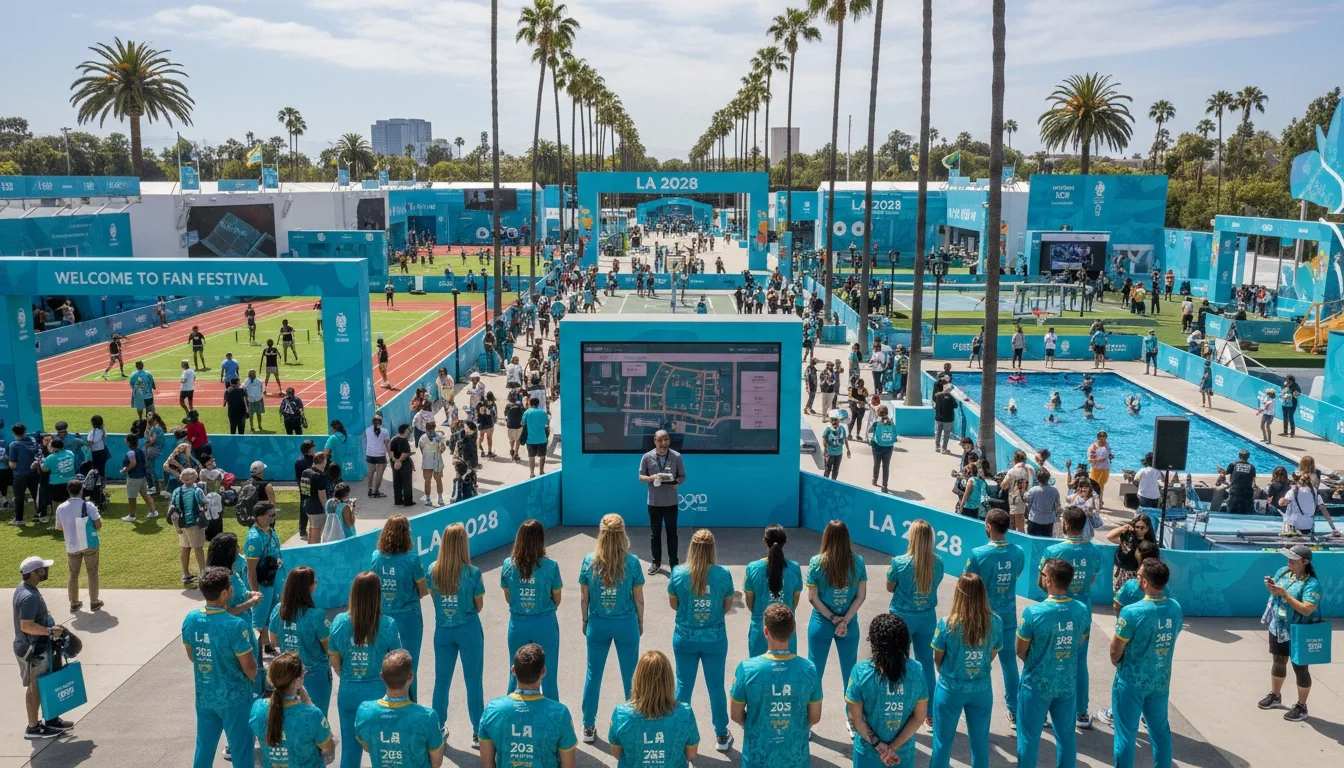
Professional brand ambassadors briefed and deployed at a large-scale Los Angeles event.
Why Staffing Is the Most Underestimated Variable in Multi-Venue Activations
Brands spend months perfecting their creative concept, and then scramble to staff it in the final weeks. This is backwards, and at Olympic scale, it's dangerous. Your staff are not props — they are the activation. Every guest interaction at every one of your venues is being filtered through the quality, training, and professionalism of the person standing there representing your brand.
At the LA 2028 Olympics, competition for qualified, experienced event staff in Los Angeles is going to be intense. Brands that wait until 2027 or early 2028 to think about staffing will find themselves competing with hundreds of other activation teams for the same pool of professionals. Brands that plan now — and partner with a dedicated LA-based staffing agency early — will have a significant operational advantage.
Staffing Ratios and Role Types for Each Venue
There is no universal staffing formula for a multi-venue activation, because venue size, activation format, and expected foot traffic vary enormously. However, there are guiding principles.
Brand Ambassadors: The frontline of your activation. Trained in product knowledge, brand messaging, and guest engagement. Deploy 1 per every 50–100 expected concurrent visitors for high-interaction activations; 1 per 150–200 for lighter sampling or awareness formats.
Venue Captains / Team Leads: Essential at every location. One experienced captain per venue who owns on-site decisions, manages staff, and serves as the direct communication link to your central command. Non-negotiable for multi-venue operations.
Check-in and Registration Staff: If your activation involves any form of lead capture, VIP experience, or ticketed access, dedicated check-in staff keep queues moving and data collection accurate.
Hospitality and VIP Service Staff: For branded hospitality areas, executive suites, or partner lounges, white-glove hospitality staff create the elevated experience that premium clients and guests expect.
Logistical and Setup Support: Often overlooked — the staff who arrive early, set up correctly, and break down efficiently are as important as the guest-facing team. Factor them into your headcount.
The Case for a Dedicated Venue Captain at Every Location
If there is one non-negotiable staffing recommendation for a multi-venue Olympic activation, it is this: every single venue needs its own dedicated captain.
A venue captain is not a senior brand ambassador with a clipboard. They are an experienced event operations professional who can make real-time decisions without needing to escalate every issue to central command. They know the venue layout, they know the staff, they know the brand standards, and they know when to improvise and when to escalate.
At Eleven8 Event Staff, every booking includes a designated event captain who is introduced to the client 24 hours before the event and serves as the primary on-site point of contact. For a 10-venue Olympic activation, that means 10 captains — each owning their venue, connected to a central coordination layer.
What to Look for in Olympic-Level Event Staff
Bilingual or multilingual abilities — LA 2028 will draw global audiences, and staff who can engage in multiple languages create significantly better guest experiences
Experience in high-pressure, high-volume environments — conventions, major sports events, or large-scale productions
Brand ambassador experience with demonstrable product knowledge capacity
Professionalism, presentation, and the ability to represent premium brands with confidence
Availability and scheduling flexibility across the Games period
Step 4: Create a Brand Consistency Playbook
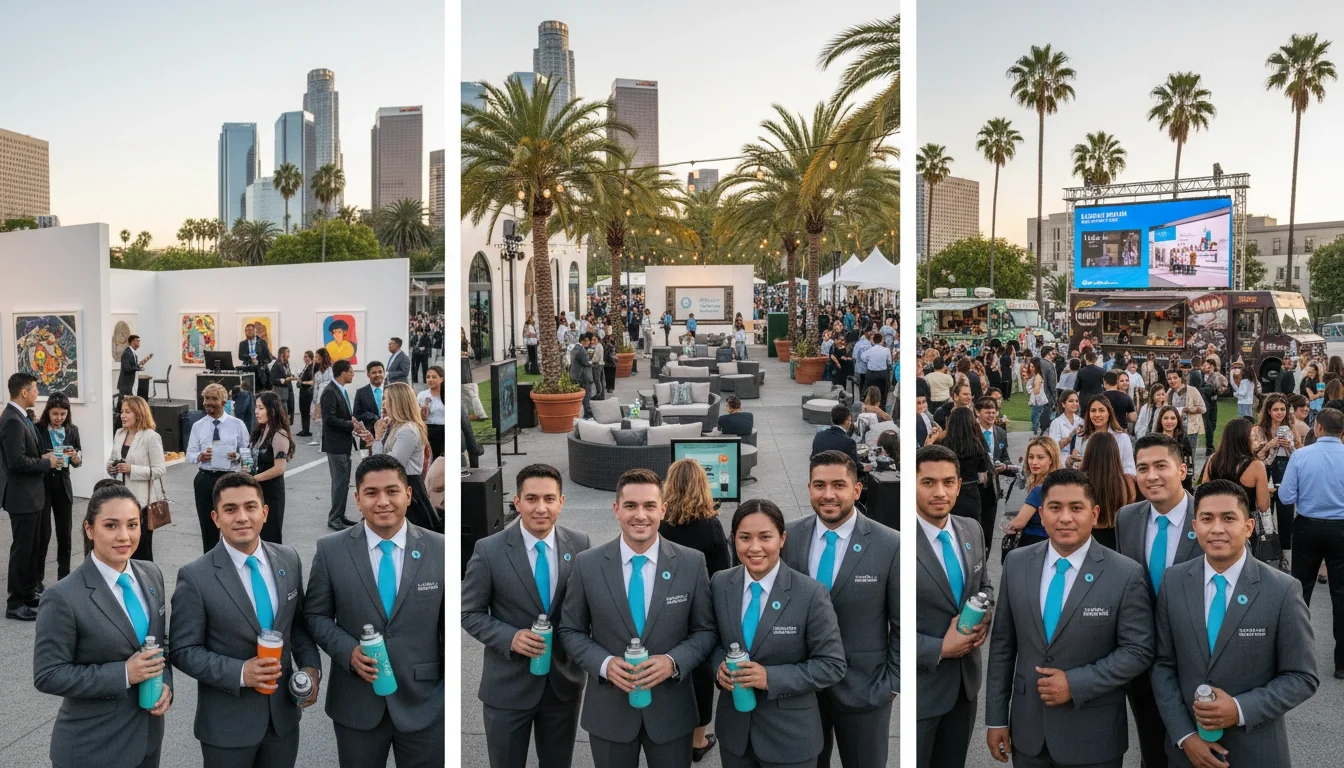
Uniformed event staff delivering consistent brand experience at a multi-venue activation in Los Angeles.
The Brand Consistency Problem Across Multiple Venues
Here's the uncomfortable truth about multi-venue activations: without a deliberate consistency system, each venue will gradually develop its own micro-culture, its own interpretation of the activation, and its own version of your brand. It happens naturally, because humans adapt. The question is whether that adaptation is controlled and on-brand, or chaotic and damaging.
A guest who has a five-star interaction at your Long Beach activation and then walks into your SoFi activation the next day should feel like they are experiencing the same brand — even if the physical format is different. That kind of consistency is not accidental. It is engineered.
How to Build a Staff Training and Brand Briefing System
Your brand playbook for a multi-venue activation should be a living document that every staff member has been trained on before they ever set foot in a venue. It should cover:
Brand voice and key messages — what your staff say, and how they say it
Product knowledge and talking points — venue-specific where relevant
Guest journey mapping — the ideal interaction flow from approach to close
FAQs and objection handling
Prohibited language and actions
Escalation procedures
Emergency protocols
Training should not be a one-time pre-Games briefing. Build in venue-specific onboarding sessions for each location, daily team check-ins during the Games, and a feedback loop that allows frontline staff to report what's working and what isn't.
Uniform, Messaging, and Guest Experience Standards
Standardize the physical brand experience across every venue. This means:
Consistent uniforms, adjusted where appropriate for venue context (a beach venue may call for different attire than an indoor arena while maintaining brand identity)
Standardized collateral, signage, and branded materials across all locations
A common guest experience script, flexible enough for natural conversation but consistent in its core brand messaging
Consistent data capture processes so your CRM and lead data from all venues are uniform and usable
Step 5: Nail Your Logistics and Operations Plan
Creativity and strategy mean nothing if your team can't get to the venue on time, can't communicate in real time, and doesn't know what to do when something goes sideways. Operational planning is where Olympic-scale activations succeed or fail.
Transportation and Staff Deployment Logistics
Los Angeles traffic is a variable you absolutely must account for. During the Games, major arteries will experience disruption, road closures, and increased congestion, which makes normal commute times unreliable. Your staffing logistics plan needs to account for:
Staff arrival time buffers — plan for a minimum 60–90-minute buffer before activation open, more for venues in historically congested areas
Transportation partnerships — coordinate with a transportation vendor or agency that can provide reliable, punctual staff transport across venues
Split deployment — for same-day multi-venue staffing, stage staff geographically to minimize transit requirements
Contingency rosters — maintain a pool of on-call staff in each geographic area who can be deployed within 90 minutes if a primary team member is unable to perform
Working with a staffing agency that has deep LA operational experience — and an established network of vetted professionals across the city — dramatically reduces the risk of deployment failure. This is not a task for an out-of-town staffing vendor unfamiliar with LA's geography and traffic patterns.
Real-Time Communication Protocols
Your venue captains need to be in constant communication with each other and with your central command team. Establish your communication stack before the Games, test it thoroughly, and train every team member on it.
Primary channel: a dedicated communications platform (Slack, WhatsApp Business, or a purpose-built event management tool)
Secondary channel: direct phone contact between each venue captain and the central operations manager
Status reporting cadence: 30-minute check-ins during active periods, immediate escalation protocol for any P1 issues
Guest incident reporting: a standardized digital form that every captain can complete in real time
Contingency Planning for the Unexpected
At an event the size of the LA 2028 Olympics, unexpected challenges are not a possibility — they are a certainty. Weather disruptions, venue access changes, security incidents, staff no-shows, equipment failures, sudden crowd surges. Plan for all of them.
For each venue, prepare a contingency card that outlines the top five most likely scenarios and the pre-approved response for each. Give every captain authority to execute contingency responses without waiting for approval. Speed of response at the venue level is more valuable than perfect centralized control.
Step 6: Measure What Matters — Activation ROI Across Venues
A multi-venue activation at the Olympics is a significant investment. Brands that don't build measurement into their operational plan from the start will struggle to justify the spend and learn for future activations.
Setting KPIs Before You Activate
Your KPIs should be defined at the strategy stage (Step 1) and should be specific, measurable, and tied to your activation objectives. Common multi-venue activation KPIs include:
Total impressions and estimated reach per venue
Guest interactions and dwell time
Lead capture volume and quality
Product trials or samples distributed
Social media content generated (UGC volume and reach)
Brand awareness lift (measured via pre/post surveys if budget allows)
VIP engagements and hospitality touchpoints
On-Site Metrics Your Staff Can Track
Your brand ambassadors and venue captains are your most valuable real-time data collectors. Train them to log interaction volume, common guest questions, and qualitative feedback throughout every shift. Build simple, fast data entry into their workflow — a complicated tracking system will not get used during a busy activation.
Post-Activation Analysis and Reporting
After the Games, consolidate data from all venues into a single performance report. Compare venue-by-venue results against your pre-activation KPIs, identify what worked and what didn't, and document the operational learnings that will improve your next campaign. If you are planning continued Olympic marketing through the Paralympic Games or future Olympics cycles, these insights are invaluable.
Partnering With an LA-Based Event Staffing Agency for the 2028 Games
The operational demands of a multi-venue brand activation at the LA 2028 Olympics are not something you want to improvise. The difference between a flawless brand experience and a chaotic, off-brand one often comes down to a single factor: the quality and preparation of your on-the-ground team.
Eleven8 Event Staff has been the go-to event staffing partner for brands like Nike, Porsche, Netflix, Versace, and The Academy — clients who cannot afford to compromise on guest experience. With 30+ years of LA-based event staffing experience and a roster of vetted professionals experienced in brand activations, conventions, VIP hospitality, and large-scale productions, Eleven8 is purpose-built for the demands of LA 2028.
Services available for Olympic-scale activations include:
Brand ambassadors are trained in product knowledge and guest engagement.
Convention and large-venue staffing for high-volume attendee management.
Check-in and registration staff for lead capture and credentialed access.
VIP hospitality and premium service staff for executive and partner lounges.
Trade show and experiential event staff for product demonstrations and activations.
For a multi-venue Olympics activation, Eleven8 can build a bespoke, scalable staffing solution that covers every location with trained, on-brand professionals — each venue captained by an experienced event lead and backed by 24/7 management support.
The time to start the conversation is now. Staff who work at Olympic-caliber events plan their availability years, and the most experienced professionals in LA will be committed early.