
How to Staff Your Restaurant or Bar for FIFA World Cup Match Days
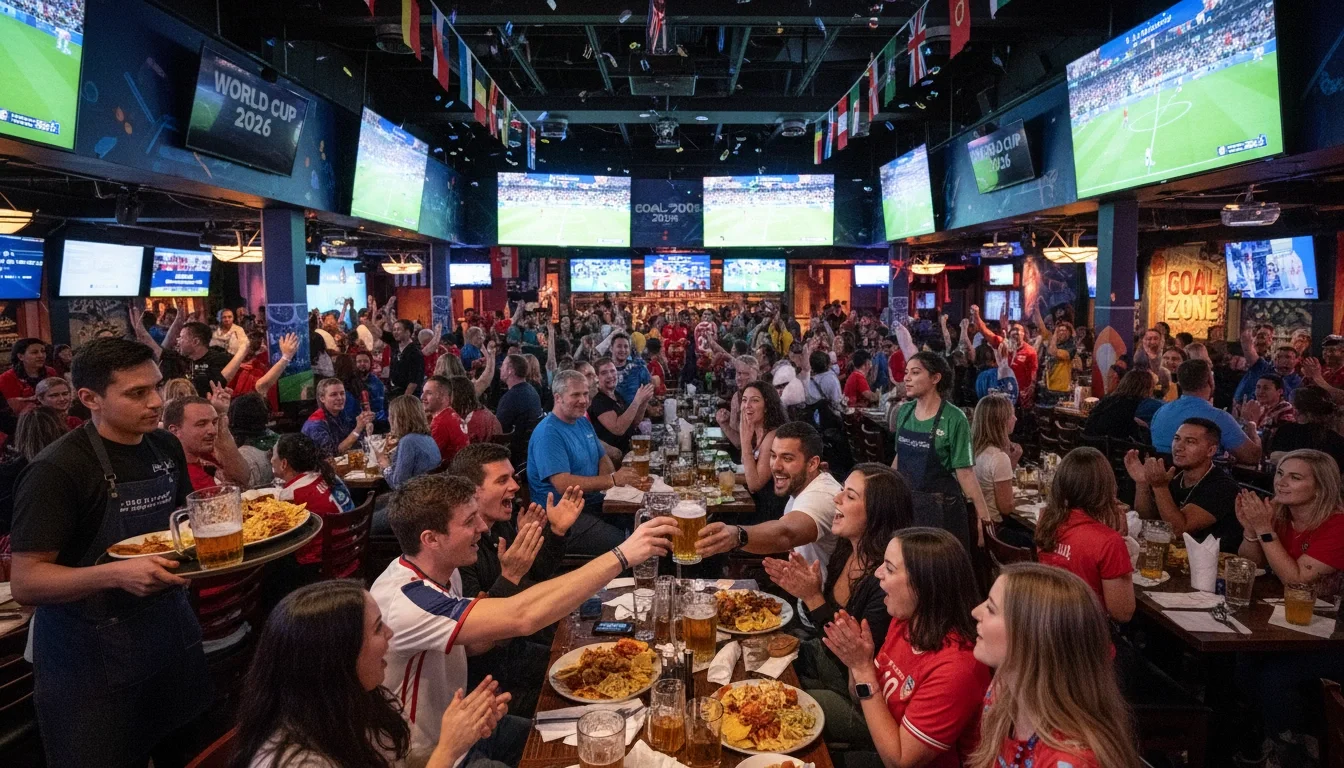
Restaurant staff serving customers during a World Cup watch party at a packed sports bar.
The FIFA World Cup arrives in North America in June 2026 — and for restaurant and bar owners, that means one thing: opportunity. Across 16 host cities in the United States, Canada, and Mexico, millions of fans will be looking for somewhere to watch, eat, drink, and celebrate. Many of them will end up at your venue.
But match days during a World Cup aren't just busy nights. They're a different category of event entirely. The crowd is bigger, louder, and more international than you're used to. The alcohol consumption timeline runs differently. The energy spikes at unusual hours. And if your team isn't ready — in terms of numbers, training, and preparation — you'll lose revenue, damage your reputation, and turn what should be your most profitable weeks of the year into a series of complaints and chaos.
This guide is written specifically for F&B operators who want to get staffing right. Whether you run a neighbourhood sports bar, a full-service restaurant planning a match day menu, or a venue hosting formal World Cup watch parties, here's what you need to know.
Why World Cup Match Days Are Different from Normal Busy Nights
Most bar and restaurant operators are comfortable managing a busy Friday or Saturday. World Cup match days require a different kind of planning, and the differences are significant.
Match Schedule Variability and Early Morning Kickoffs
The FIFA World Cup features matches played across North America, meaning kickoff times will vary dramatically depending on which teams are playing. Some matches will kick off as early as 6:00 AM local time to accommodate international broadcast schedules. Others will run into the late evening. A venue in Los Angeles may find itself slammed at 7:00 AM on a Tuesday or see an unexpected rush on a weekday afternoon.
Your staffing plan can't be a single template applied to every match day. You need a flexible schedule that accounts for each match's kickoff time, the nationalities of the teams playing, and the likely composition of your crowd for that specific game.
International Crowd Dynamics
World Cup fans are not a monolithic group. Brazilian fans celebrate differently from German fans. Argentine fans are known for their intensity. Fans from nations playing their first World Cup in decades may be emotionally overwhelmed in their joy. This is part of what makes the tournament so special — and it's also part of what makes staffing more complex.
Depending on which matches you're showing and which communities are near your venue, you may be serving customers who speak limited English, have different expectations around service pace, or are unfamiliar with local tipping customs. Having multilingual staff — even just a few team members who speak Spanish, Portuguese, or French — can dramatically improve service quality and customer experience during peak matches.
Alcohol Service Duration and Compliance Risks
A 90-minute match, plus halftime, added time, and potentially extra time and penalties, can mean your bar is at maximum capacity for three or more hours — often with escalating alcohol consumption throughout. In some cities, local regulations around last call and closing times are already being revisited specifically because of the World Cup. Philadelphia, for example, is actively pushing for special permits allowing bars to serve alcohol until 4:00 AM on match nights.
Whatever your local rules allow, the point is clear: match days create sustained high-volume alcohol service that puts pressure on your staff's ability to serve responsibly while keeping service fast. That balance requires more than just extra bodies — it requires well-trained staff with experience in high-energy, high-volume environments.
Start With a Staffing Forecast, Not a Gut Feeling
The biggest mistake bar and restaurant owners make when preparing for major sporting events is eyeballing their staffing needs. 'We'll add a couple of extra servers and see how it goes' is not a staffing plan. Here's how to build one.
Reviewing the Match Schedule and Projecting Attendance
Start by pulling the full FIFA World Cup 2026 match schedule and identifying the games most relevant to your local audience. If you're in a city with a large Mexican-American community, El Tri matches will draw significantly larger crowds than average. The US Men's National Team games will be universally high-demand across all host cities. Matches involving traditional soccer powerhouses — Brazil, Argentina, Germany, France, England — also tend to drive strong bar attendance even among casual fans.
For each high-demand match, project your expected covers. Use your historical data from past sporting events, Super Bowl weeks, or MLS playoff nights as a baseline. Then apply a multiplier based on your assessment of the match's draw for your specific market.
Building a Staffing Matrix
Once you have a rough projection of expected covers by match, build a simple staffing matrix. Map each match against the roles you need — bartenders, barbacks, servers, hosts, floor supervisors — and fill in the number of staff required for each. This gives you a clear picture of your staffing gaps well before the tournament begins, which is critical for booking reliable temporary staff.
Pro tip: Build your staffing matrix at least 6–8 weeks before the tournament starts. Premium temporary event staff in host cities like Los Angeles, New York, and Miami will be in extremely high demand during the World Cup window.
The Key Roles You Need on Every Match Day
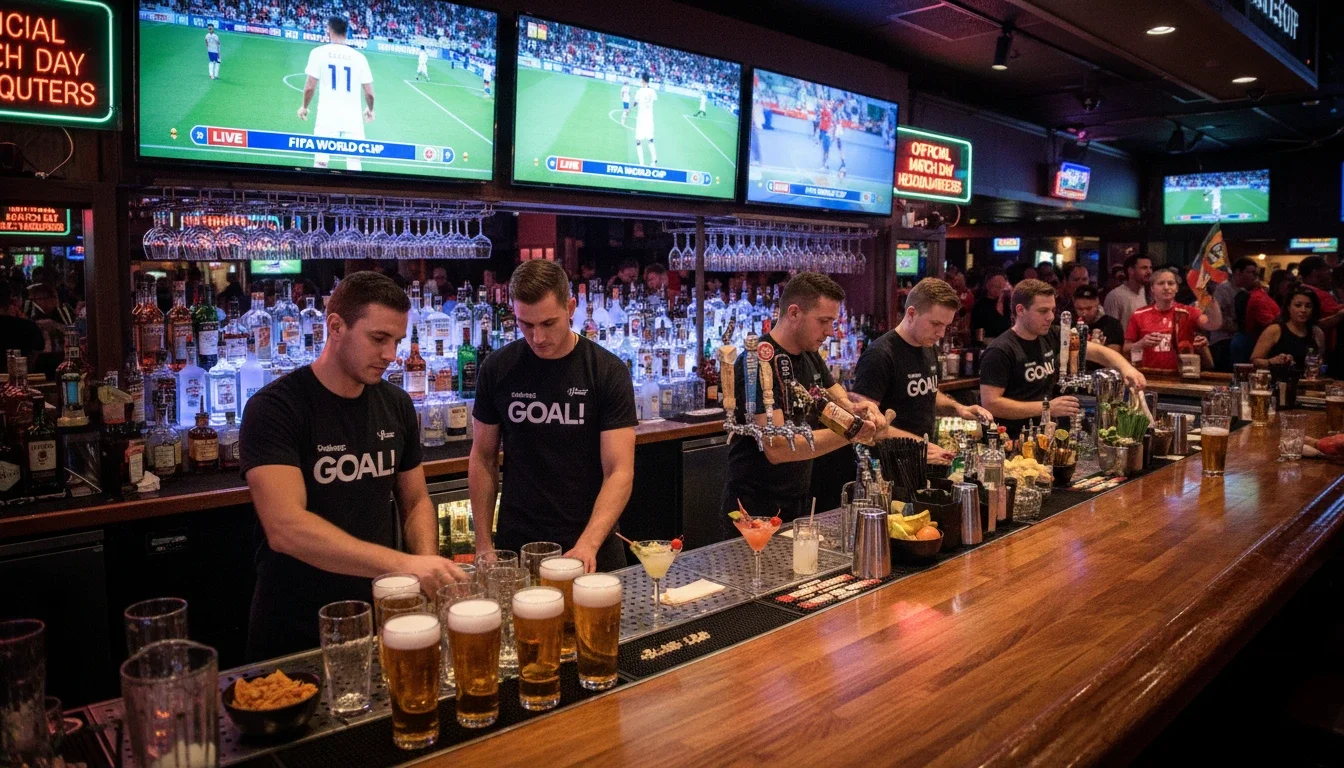
Bartenders preparing for high-volume service at a sports bar during a FIFA World Cup match.
Bartenders — The Engine of Your Match Day Service
During a World Cup match, your bar is the centre of gravity. Every bartender you have working needs to be experienced with high-volume service — not just technically skilled, but fast, composed under pressure, and capable of maintaining quality when they're slammed. This is not the time to put a new hire on the bar.
For match days that you expect to be significantly busier than normal, consider bringing in additional certified bartenders from a professional staffing agency. Look specifically for staff who have experience at sporting events, concerts, or large festivals — environments where the tempo is unrelenting and guest patience is short.
Barbacks — The Unsung Heroes of High-Volume Service
If your bar doesn't typically run barbacks, World Cup match days are the time to add them. A skilled barback — stocking ice, restocking spirits, pulling kegs, clearing glassware — can effectively double the output of your bartenders. During peak match moments (halftime, full-time, penalty shootouts), drink orders surge dramatically. A barback ensures your bartenders are never chasing supplies when they need to be serving.
Plan for at least one barback per two bartenders on your highest-demand match days.
Servers and Food Runners
If your venue serves food during matches, your floor service team is equally critical. Match day crowds eat differently from dinner guests. They want fast, shareable food. They don't want long waits between drink rounds. They may order multiple rounds in quick succession around key moments in the match.
Your servers need to be experienced with multi-table, high-volume service and comfortable in loud, crowded environments. Food runners who can efficiently deliver large orders to crowded tables are valuable additions for busy match days.
Door Staff, Hosts, and Crowd Managers
Crowd management is often overlooked in staffing plans for watch parties and match days. When your venue reaches capacity, how are you managing entry? Is someone monitoring your headcount and preventing fire code violations? Is there a clear process for guests who arrive without reservations?
Having dedicated door staff and a host for major match days is not just good service — it's a safety and compliance necessity. A professional host sets the tone at the entrance and prevents the chaos that undermines the experience for everyone.
A Dedicated Floor Supervisor
Every match day above a certain volume threshold should have a dedicated floor supervisor whose job is to manage the team — not serve guests. This person watches for service gaps, manages staff rotations, handles conflicts, and acts as the point of contact for anything that goes wrong. When you're running with an expanded staff that includes temporary team members, a strong supervisor is what holds the operation together.
Staff-to-Guest Ratios for Match Day Events
These ratios are starting points. Adjust based on your specific venue layout, service model, and the intensity of a given match.
For Sports Bars and Casual Venues:
1 bartender per 30–40 guests (standing room / bar-forward)
1 barback per 2 bartenders
1 server per 5–6 tables (if table service offered)
1 floor supervisor per 50–75 guests
For Full-Service Restaurants Hosting Watch Parties:
1 bartender per 20–25 guests (higher drink volume expected)
1 server per 3–4 tables
1 food runner per 3 servers
1 host/door person per entrance point
For Outdoor or Expanded Patio Setups:
Add 15–20% more staff than your indoor equivalent
Ensure dedicated staff for outdoor bar stations
Have a roving staff for areas not covered by fixed stations
If you're in the LA area and need professionally certified bartenders or catering staff for high-volume match days, Elevate's team has staffed 10,000+ events and can scale to your needs. See our catering and bartender staffing services.
How to Prepare Your Existing Team for Match Day Volume
Pre-Shift Briefings and Match-Specific Prep
Every match day should begin with a pre-shift briefing. This doesn't have to be long — 10 to 15 minutes — but it should cover the match being shown, the expected crowd composition, your table turnover targets, your drink special promotions, and any specific service notes for the day. A team that's briefed is a team that performs.
For your most experienced staff, brief them on the match narrative: who's playing, what's at stake, when tension is likely to spike. Staff who understand the game can better anticipate when drink orders will surge (halftime, goals, end of match) and prepare accordingly.
Streamlining Your Menu for Speed
A match day is not the right time to debut a complex new menu. Simplify. Feature your fastest-moving food items. Design a match day drinks menu that prioritises speed — pitchers, towers, beer buckets, and simple cocktail specials are easier to execute at volume than multi-ingredient craft cocktails.
If you do want to offer signature cocktails, pre-batch them in quantity before service begins. Many successful sports bars pre-batch their most popular match day cocktails by the gallon, allowing bartenders to pour and serve in seconds rather than building each drink from scratch.
Pre-Batching Cocktails and Beer Bucket Strategies
Pre-batching is one of the highest-leverage tactics available to a busy bar during a major event. Popular cocktails like margaritas, sangria, and themed punches can be prepared in bulk before service, dramatically reducing bartender workload during peak rushes. Beer buckets pre-chilled and ready to go eliminate the time cost of individual pours during key drinking moments like halftime.
Your barbacks should be responsible for maintaining your pre-batch supply throughout the shift, ensuring that when you hit a post-goal surge, you're ready.
When to Bring in Extra Staff — and How to Find Them
Recognizing When Your Core Team Won't Be Enough
There are clear signals that your in-house team won't be sufficient for a given match day. If you're forecasting covers that are more than 40% above your typical busy night, plan for additional staff. If the match is a high-profile game for your specific market (a US match in a US host city, a Mexico match in a city with a large Mexican fan base), add staff aggressively. If you're opening a temporary outdoor space or expanding capacity, you need dedicated staff for those areas — not stretched coverage from your existing team.
The Case for Working With a Professional Event Staffing Agency
For World Cup 2026, the hospitality staffing market in host cities is going to be competitive. Venues across every host city are simultaneously planning for their busiest weeks in years. If you wait until June to start hiring temporary staff, the best candidates will already be committed.
Working with a professional event staffing agency gives you access to pre-vetted, food-safety-certified, experienced hospitality professionals — staff who have worked high-volume events before and don't need to be trained from scratch. A good agency can also scale quickly, giving you the flexibility to increase or decrease your team based on confirmed reservations or last-minute booking surges.
Elevate Event Staff has been supplying premium hospitality and event staff to Los Angeles and nationwide clients for over 30 years. Our team is certified, insured, and available for match-day staffing throughout the World Cup 2026 window. Explore our hospitality staffing services or contact us to build your match day team.
What to Look for in Temporary Hospitality Staff
Not all temporary staff are created equal. For match day service, prioritise the following when evaluating temporary or agency-sourced hospitality staff:
Proven experience in high-volume, high-energy environments (festivals, sporting events, concerts)
Food handler certification and responsible alcohol service training
Ability to work effectively as part of a large, mixed team on short notice
Composure and professionalism when crowds are loud, demanding, and emotionally intense
Multilingual ability is a genuine asset for World Cup settings with international crowds
Compliance, Licensing, and Alcohol Service on Match Days
Extended Hours and Special Event Permits
If you're planning to stay open beyond your normal closing time for late-running matches — or to open early for morning kickoffs — check your local licensing requirements well in advance. Some cities are creating special event permit pathways specifically for the World Cup. In Philadelphia, industry groups are actively lobbying for 4:00 AM service permits for match nights. Similar discussions are happening in other host cities.
Do not assume that your standard liquor license covers extended hours or capacity expansions. Confirm with your local licensing authority months before the tournament, not days before.
Responsible Service of Alcohol in High-Energy Environments
World Cup crowds are emotionally charged. Wins, losses, and penalty shootouts create extreme mood swings in your venue. This puts unusual pressure on your bar staff to monitor individual guest intoxication while keeping service moving.
Ensure all staff serving alcohol have current responsible service training. Brief them specifically on the dynamics of sports-event alcohol consumption — slower meals, faster drinking pace, longer dwell times. Establish a clear internal protocol for when to stop service to an individual guest, and empower your supervisors to enforce it without hesitation.
The Match Day Staffing Checklist
6–8 Weeks Before the Tournament:
Pull the full match schedule and identify your 8–12 highest-demand match days
Build your staffing matrix by role for each targeted match
Contact your event staffing agency to reserve temporary staff for peak matches
Review and confirm your liquor license coverage for extended hours
Design your match day food and drinks menus for speed and volume
2–3 Weeks Before Each Match Day:
Confirm all staff assignments — in-house and temporary
Brief your full team on the specific match, expected crowd, and match day protocols
Prepare pre-batched cocktail recipes and quantities
Confirm bar supply inventory — spirits, kegs, glassware — relative to projected volume
Set up crowd flow and capacity management protocols with your door staff
Day of Match:
Hold a 15-minute pre-shift briefing with all staff
Ensure pre-batched cocktails are prepared and stored
Confirm barback stations are fully stocked
Position your floor supervisor for visibility across the entire venue
Brief door staff on capacity limits and entry protocols
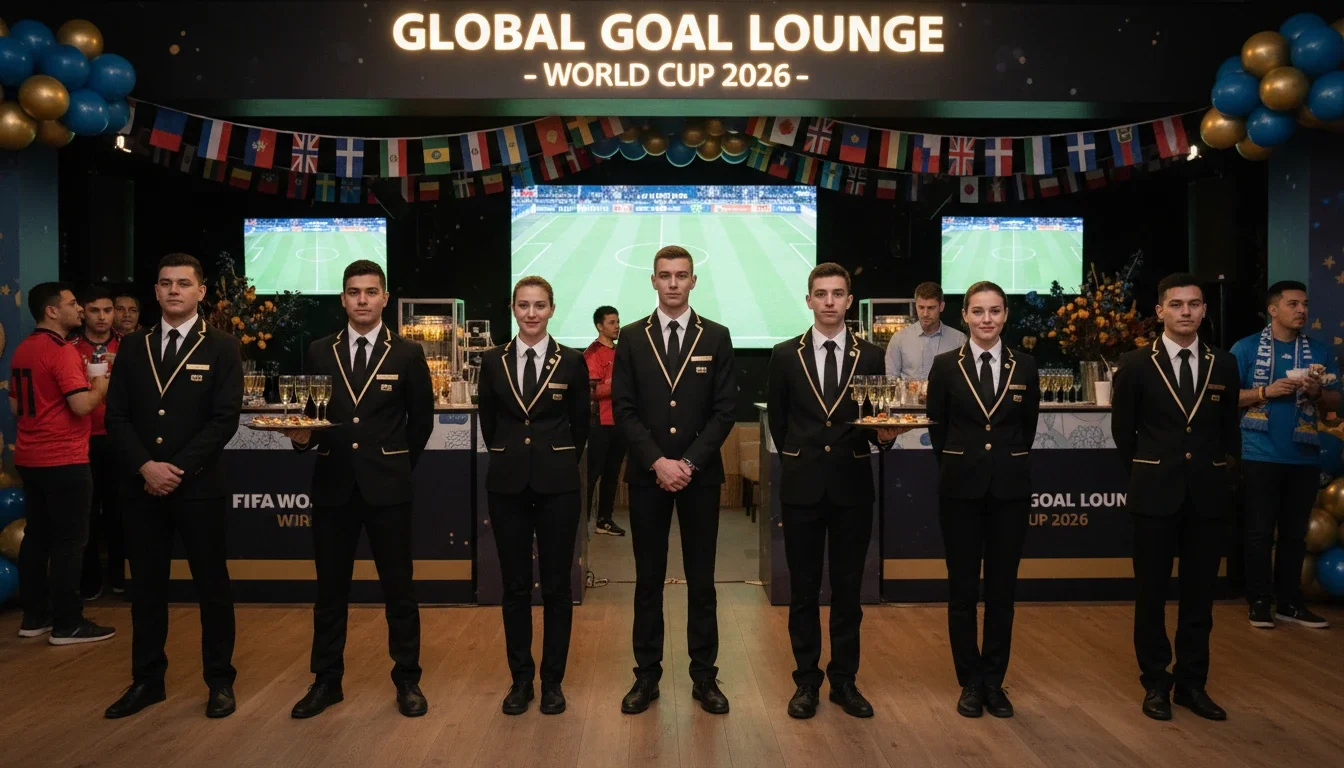
Professional hospitality event staff in uniform ready to serve at a FIFA World Cup watch party venue.
Final Thoughts — Don't Let Understaffing Cost You the Season
The FIFA World Cup 2026 is a once-in-a-generation opportunity for food and beverage businesses in North American host cities. The crowds are coming. The spending is coming. The question is whether your venue is ready to capture it.
The single biggest risk for most F&B operators isn't the crowd — it's running a shorthanded team in front of that crowd. Understaffing on match days means slower service, longer queues, stressed employees, and guests who leave frustrated and never return. It means lost beverage revenue during the exact moments when fans want to celebrate. And in the age of social media, it means negative reviews that last longer than the tournament itself.
Start your staffing plan early. Use the match schedule strategically. Invest in your team — both through preparation and by bringing in proven professional reinforcements for your highest-demand match days. The venues that do this right will find that the World Cup doesn't just deliver a profitable month — it delivers a new customer base that keeps coming back long after the final whistle.
If you're in the Los Angeles area or need staffing support in any of the 2026 World Cup host cities, Elevate Event Staff is ready to help. We've staffed over 10,000 events and counting — and we're already building our World Cup roster. Get in touch to reserve your team.