
The Staffing Mistakes Businesses Made During Past World Cups (And How to Avoid Them)
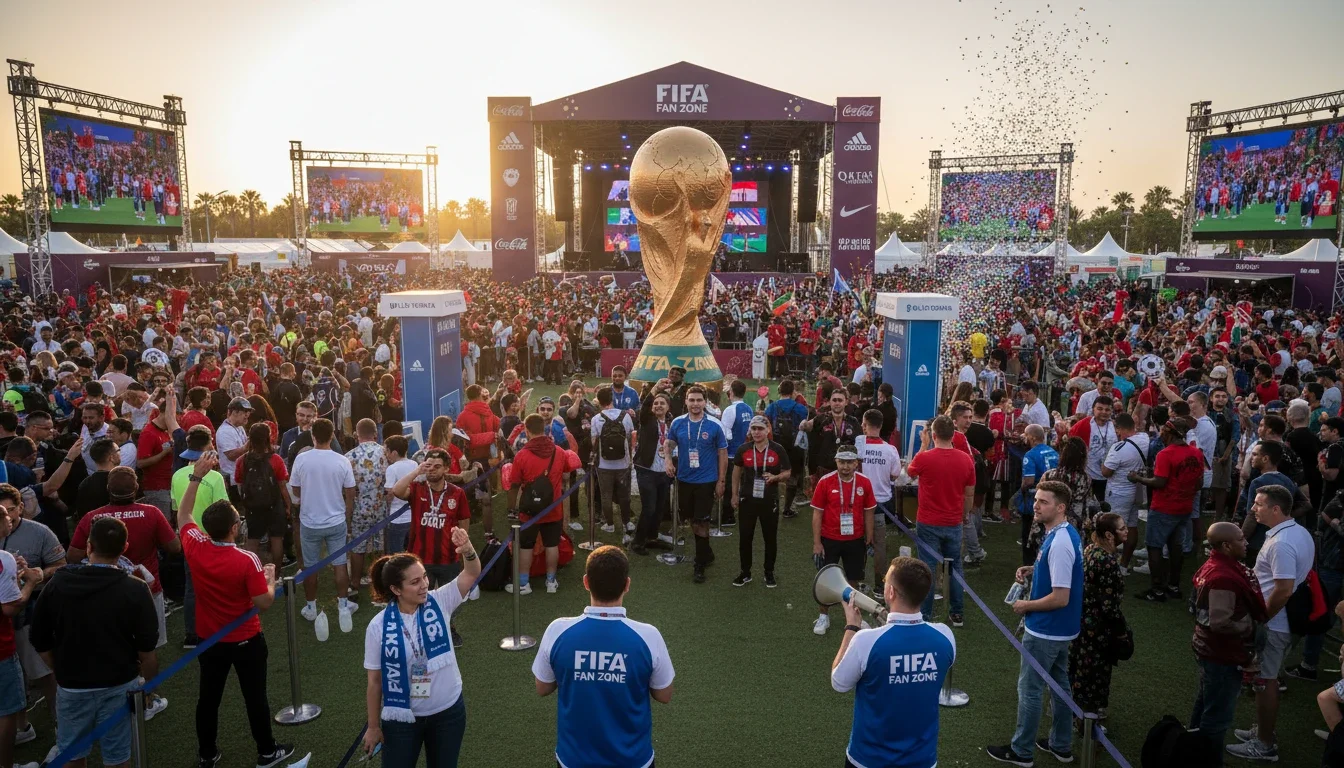
An energetic World Cup fan zone activation with professional event staff managing crowd flow and brand engagement.
Every four years, the FIFA World Cup doesn't just stop the world — it redraws the entire map of consumer behavior. Cities transform overnight. Foot traffic surges. Brand activation budgets explode. And businesses that weren't ready for any of it spend the tournament scrambling to fix entirely avoidable problems.
With the World Cup set to span 16 cities across the United States, Canada, and Mexico — making it the largest in the tournament's history — the stakes have never been higher. Millions of international visitors. An unprecedented number of brand activations. And an event staffing pool that will be stretched to its absolute limit.
The good news? Every past World Cup has left behind a detailed record of exactly what went wrong. From understaffed hospitality suites in Brazil to brand activations in Qatar that collapsed on day one, the patterns are consistent, the mistakes are predictable, and nearly all of them trace back to staffing decisions made months before the opening whistle.
Here's what really happened — and what it takes to not repeat it.
Why the World Cup Is Unlike Any Other Business Surge
Most businesses have experience managing demand spikes — a holiday weekend, a local festival, a product launch. The World Cup is not that. It's a sustained, month-long global event that compresses the unpredictability of five busy seasons into a single window, with an international audience that has expectations your regular crowd never brings.
International visitors arrive with different languages, different service expectations, and very little patience for friction. Media coverage is relentless. Social media amplifies every failure instantly. And because so many businesses in any given host city are trying to capitalize on the same surge simultaneously, competition for quality staff reaches a level that most event planners have never experienced.
The businesses that do well during a World Cup don't just get lucky. They start planning earlier, hire smarter, and build contingency into everything. The ones that struggle almost always make the same handful of mistakes — starting with this one.
Mistake #1 — Waiting Too Long to Book Staff
What Happened at the 2014 Brazil World Cup
The 2014 World Cup in Brazil was a landmark event for brand activations. Major sponsors and mid-sized companies alike poured resources into fan experiences, pop-up venues, and promotional campaigns across host cities like São Paulo, Rio de Janeiro, and Fortaleza. But many of those activations ran into a wall they hadn't anticipated: the best hospitality and event staff had been booked months earlier.
Companies that waited until six to eight weeks before their activation launched found themselves competing for the bottom of the available talent pool. Agencies that had locked in agreements early walked away with experienced, professionally vetted teams. Latecomers were left piecing together last-minute hires, accepting staff who lacked the training or temperament for high-visibility brand work. The results — slow service, guest complaints, and brand experiences that fell far short of what had been planned — were direct consequences of a booking timeline problem, not a budget problem.
What This Means for 2026
For the World Cup, with 16 host cities and significantly more brand activations than any previous tournament, the booking competition will be even more intense. Los Angeles alone is expected to host matches and serve as a global media hub for weeks, meaning demand for experienced event staff in the LA market will be unlike anything most agencies have seen.
The practical rule: if you're planning any kind of activation, hospitality experience, or brand presence tied to the 2026 World Cup, your staffing conversations should be happening now. Waiting until early 2026 — or worse, until the tournament begins — means accepting whoever is left.
→ Internal link: [Link to elev8.la/la-2028-olympic-staffing or main event staffing page]
Mistake #2 — Hiring the Wrong Type of Staff
The Brand Activation Mismatch
One of the most common and costly mistakes businesses make during major sporting events is treating all event staff as interchangeable. They hire catering professionals and expect them to run a brand activation. They book general hospitality staff and expect them to engage proactively with international fans. The two roles require fundamentally different skills.
During the 2018 Russia World Cup, several European brands running fan experience activations in Moscow and Saint Petersburg reported that their on-site teams were technically present and professionally dressed — but unable to do the one thing that actually mattered: engage. Staff who were comfortable with service-oriented hospitality roles froze when asked to approach strangers, demonstrate products, or manage interactive experiences. The activations looked right from a distance. They just didn't work.
Hospitality Staff vs. Promotional Staff: Know the Difference
Hospitality staff — bartenders, servers, registration teams — are trained for reactive service. Someone approaches them, and they deliver. Promotional and brand ambassador staff are trained for proactive engagement: they initiate, they sell the experience, they represent your brand narrative in real time.
Both are essential for a well-run World Cup activation. But they're not the same, and staffing one type when you need the other is a setup for an expensive miss.
Use hospitality staff for: check-in, food and beverage, VIP suite management, registration
Use brand ambassadors for: product demos, fan engagement, sampling, audience interaction
Use experiential staff for: immersive activations, photo moments, interactive installations
Mistake #3 — Underestimating Crowd Volume and Staffing Ratios
The 2022 Qatar World Cup Lesson
The 2022 Qatar World Cup was a masterclass in logistical extremes — and a cautionary tale for anyone planning a public-facing operation near a major venue. Several hospitality operators around Doha's FIFA Fan Festival underestimated how quickly their spaces would fill and how long guests would stay. Staff ratios that looked reasonable on paper became completely inadequate within the first hour of matches.
When service slows during peak moments at a global sporting event, the backlash is swift and very public. Photos of overloaded service areas, frustrated guests, and long queues spread across social media within minutes. For brands that had spent significantly on their World Cup presence, the images told a story they hadn't planned for.
How to Calculate the Right Staffing Ratio
There is no one-size-fits-all formula, but experienced event staffing professionals generally apply these benchmarks as a starting point:
Seated dining events: 1 server per 8–10 guests
Cocktail receptions: 1 server per 25–30 guests
Brand activation with product sampling: 1 ambassador per 30–50 attendees
High-volume check-in (1,000+ guests): 1 staff member per 75–100 check-ins per hour
Beyond ratios, experienced event planners also account for shift fatigue. Staff working a six-hour activation in an outdoor fan zone during summer matches will have diminished performance by hour four without rotation planning. The number on the schedule matters less than how well the schedule is designed.
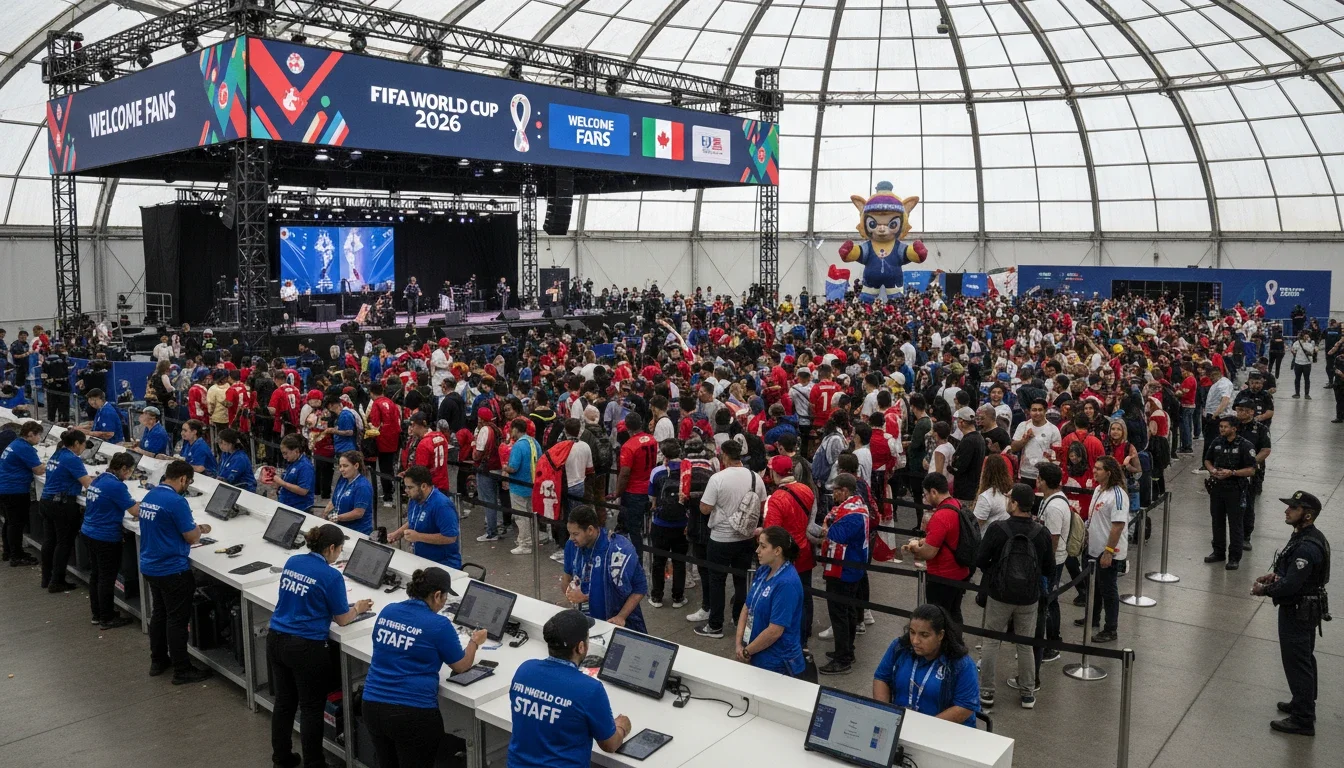
Professional event staff managing high-volume guest check-in at a major sporting event fan zone.
Mistake #4 — Ignoring Multilingual and Multicultural Needs
Why Language Matters at International Events
The World Cup draws fans from every corner of the globe. In any given host city venue, you'll have guests who speak Portuguese, Spanish, French, Arabic, German, Japanese, Korean, and dozens of other languages — often simultaneously. For a business running a brand activation or hospitality experience, being able to communicate with those guests isn't a nice-to-have. It's the difference between a successful interaction and a missed connection.
What Businesses Got Wrong in 2018 Russia
Following the 2018 World Cup, post-event analysis from hospitality operators in several host cities highlighted a consistent theme: businesses that had invested in multilingual staff saw dramatically higher guest engagement scores and social sharing rates than those that hadn't. Several sponsors running activations in Moscow noted that their English-only teams struggled to connect with the large Latin American and Asian fan contingents who made up a significant portion of their target audience.
It's worth noting that multilingual staffing isn't just about basic translation — it's about cultural fluency. A staff member who speaks the language but doesn't understand the cultural context still leaves guests feeling like an afterthought. The best outcomes came from teams that were genuinely reflective of the event's international audience.
For 2026, with events in cities like Los Angeles, Miami, and New York that already have large Spanish-speaking and multicultural populations, the expectation for multilingual capability will be especially high. Brands that treat this as an afterthought will feel the gap.
Mistake #5 — Having No Contingency Plan
When Staff Don't Show: A Common Crisis
No matter how well you hire, event staffing at scale always carries some risk of day-of attrition. A staff member gets sick. Someone's car breaks down in LA traffic. A scheduling conflict slips through. At a regular event, losing one or two staff members is manageable. At a World Cup activation during peak match hours, it can unravel the entire operation.
This scenario played out repeatedly during the 2014 Brazil and 2018 Russia tournaments. Businesses that had booked through less rigorous channels — freelance platforms, informal networks, or agencies without proper vetting — found themselves with gaps they couldn't fill at short notice. The result was overloaded remaining staff, degraded guest experiences, and in some cases, activations that had to close early.
What a Proper Backup Staffing Plan Looks Like
A real contingency plan has three layers:
On-call roster: Confirmed backup staff who are briefed on the event and available on short notice.
Agency partnership: A staffing agency with local depth — meaning they have additional qualified staff in the same market who can be deployed quickly.
Day-of coordinator: A dedicated point of contact managing staff logistics in real time so you're not discovering problems when they've already escalated.
Agencies that specialize in large-scale event staffing maintain on-call staff pools specifically for this reason. When something goes sideways, they can dispatch replacements without requiring you to manage a crisis while your event is actively running.
Mistake #6 — Skipping the Pre-Event Briefing
Why Briefing Is Non-Negotiable at High-Stakes Events
It sounds basic, but it's among the most consistently underperformed parts of event planning: actually briefing your staff on who you are, what you need, and what success looks like for this specific event.
At World Cup activations, staff members often rotate across multiple clients and events within a short window. A brand ambassador who worked a tech product launch yesterday and a luxury automotive activation today needs to understand your brand, your audience, your messaging, and your expectations before they arrive on-site. Assuming they'll figure it out when they get there is how you end up with staff who are professionally present but strategically absent.
The best-prepared businesses during past World Cups sent briefing materials 48–72 hours before the event. They held a short video call or an in-person walkthrough the day before. They provided clear visual references for dress code, tone, and brand behavior. The result was staff who felt invested in the outcome — and who showed up ready to deliver it.
What the Best-Prepared Businesses Did Differently
Looking across multiple World Cups, the businesses that came out ahead shared a few clear patterns. They booked their staffing partner early — often four to six months before the event — and used that lead time to build a genuinely customized team rather than accepting whoever was available. They were specific about roles, differentiating between hospitality functions and engagement functions rather than treating all staff as interchangeable.
They invested in multilingual capability and didn't treat it as a budget line to cut. They built contingency into their scheduling from the start, including on-call staff and a dedicated day-of coordinator. And critically, they treated their staffing agency as a strategic partner rather than a last-minute vendor — sharing their brand brief, their audience profile, and their goals early enough that the agency could actually match them with the right people.
The common thread in all of it was time. Every advantage listed above requires lead time. Every mistake documented in this article was, at its root, a consequence of not having enough of it.
How to Build Your World Cup 2026 Staffing Plan Today
The Early Booking Advantage
For the World Cup, the calendar window between now and the tournament is the most valuable asset you have. Experienced event staff across Los Angeles, Miami, New York, Dallas, Seattle, and other host cities are already fielding inquiries. Agencies that specialize in large-scale activation staffing are building their rosters now — and the best talent goes first.
Every month you wait narrows your options. The most qualified brand ambassadors, the experienced convention leads, the multilingual hospitality teams — they have priorities. Businesses that reach out early get to build the team they actually want. Businesses that wait get what's left.
Partnering with the Right Event Staffing Agency
Not all staffing agencies are built for this scale. For a World Cup activation or any high-visibility major event, you need a partner who has:
A deep, vetted talent pool in your host city market
Experience staffing large-scale international events
The ability to provide multilingual and multicultural staff
A genuine contingency infrastructure — not just a promise
Dedicated coordinator support before, during, and after your event
At Eleven8, we've spent over 30 years building exactly this kind of capability in the LA market and beyond. Our team has staffed events for Nike, Porsche, Netflix, The Academy, and hundreds of brands that needed more than bodies at a venue — they needed people who could represent their brand under pressure, at scale, in front of a global audience.
The 2026 World Cup is coming to Los Angeles. If your brand plans to be here, your staffing plan should already be in motion.
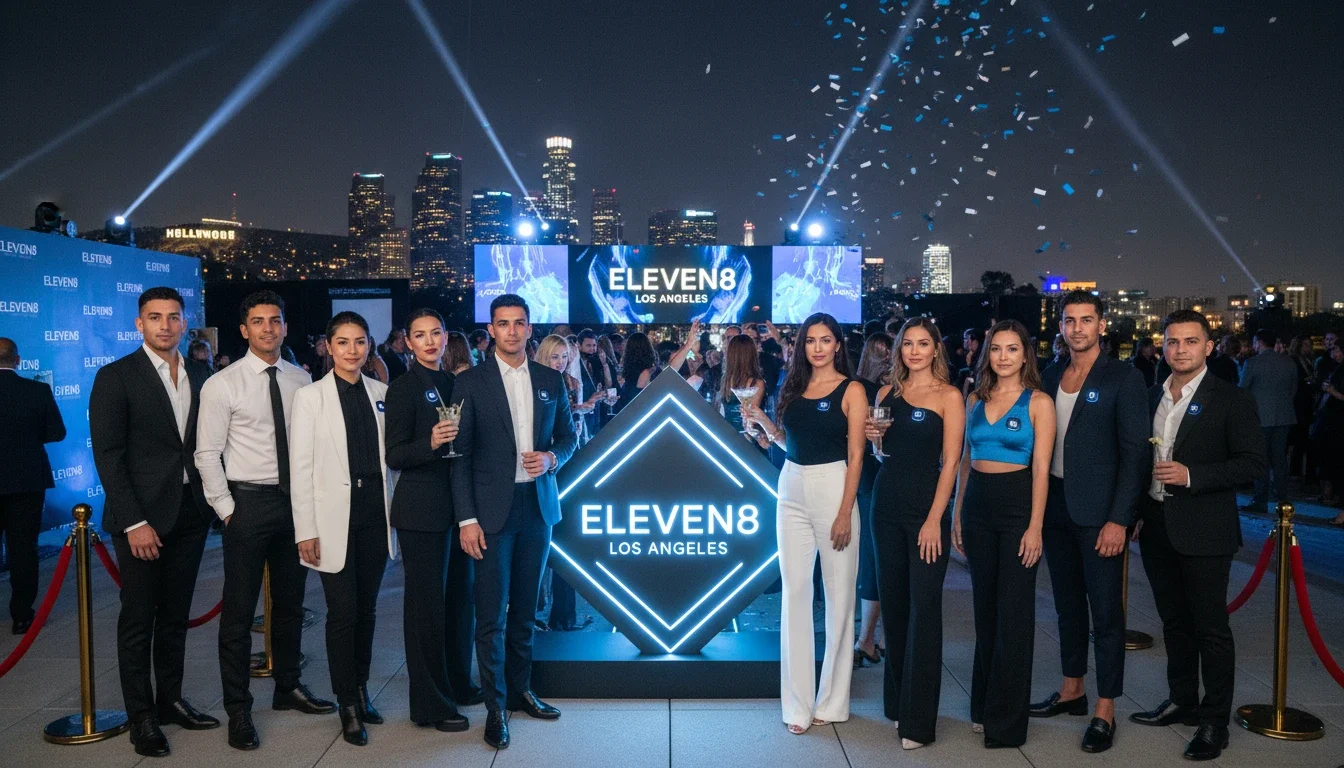
Eleven8 brand ambassadors at a high-profile event activation in Los Angeles.