What to Expect When Staffing a Fan Zone at the LA 2028 Olympic Games
The 2028 Los Angeles Olympic Games are shaping up to be one of the most expansive and brand-activated sporting events in history. With over 55 sports, 800+ competition sessions, and a global audience expected in the tens of millions, the opportunity for brands to create meaningful fan zone experiences is unprecedented. But the size of the opportunity comes with an equally significant operational challenge: staffing.
Fan zones don't run on good intentions. They run on trained, professional, experienced people — brand ambassadors who know how to hold a crowd's attention, registration staff who can process thousands of arrivals per hour, VIP hosts who understand international hospitality standards, and supervisors who can make real-time decisions when a crowd surges or a sponsor's activation pivot is needed.
If you're a brand, sponsor, event organizer, or experiential marketing agency planning a fan zone presence at LA 2028, this guide covers everything you need to know — from the specific roles required and how many staff you'll need, to the operational realities of working in a city the size of Los Angeles during one of the world's biggest events.
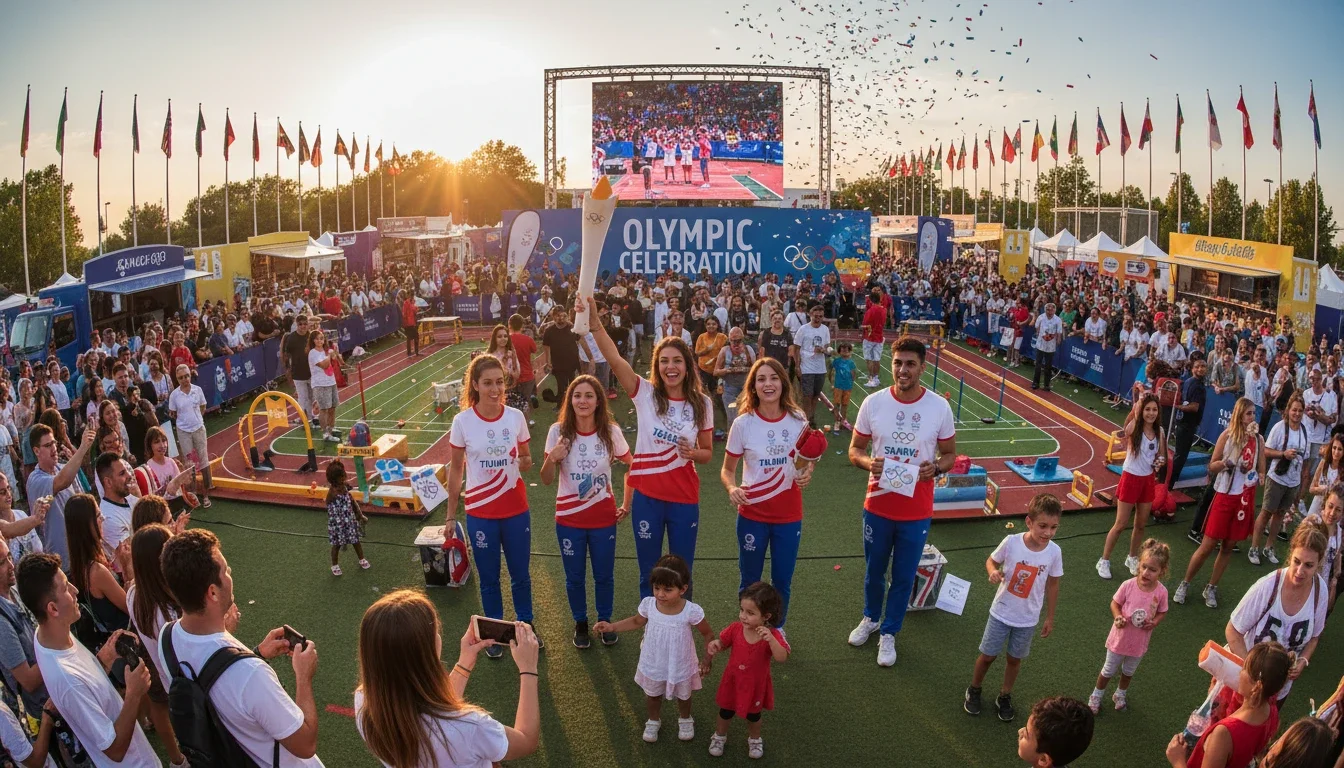
Event staff brand ambassadors engaging fans at an Olympic fan zone activation.
Why Fan Zone Staffing Is Different at the Olympics
Staffing a fan zone for a weekend festival or corporate brand activation is one thing. Staffing one for the Olympic Games is an entirely different undertaking — in scale, complexity, and consequence.
At a typical brand activation, a staffing miscalculation might mean some fans wait a few extra minutes at a booth. At the Olympics, the same miscalculation can result in crowd safety issues, sponsor reputation damage broadcast to a global audience, and compliance violations with venue security protocols. The stakes are categorically higher, and the preparation needs to match.
The Scale of LA 2028 — And What It Means for Event Teams
LA 2028 is projected to welcome hundreds of thousands of international visitors over the Games period. With over 55 Olympic and Paralympic sports, 800+ events, and more than 3,000 hours of live action, fans can expect unbeatable spectating experiences LA 2028 — but that volume of activity also means fan zones across the city will be competing for attention and managing enormous foot traffic simultaneously.
For staffing teams, this translates to the need for larger rosters, more supervisory layers, faster onboarding pipelines, and contingency staffing built into every deployment plan from day one.
How LA's Geography and Zone Structure Shapes Staffing Needs
Los Angeles is not a single-venue city. Unlike Paris 2024, where venues were clustered in a compact urban core, the LA28 Games span a genuinely sprawling metropolitan area. The LA28 Games include zones across Los Angeles, Southern California, and Oklahoma City — geographic areas containing one or more LA28 venues that provide a simple way for fans to understand where competitions will take place. LA 2028
This zone-based structure has direct staffing implications. A brand running fan zone activations across multiple zones — say, the DTLA Zone near the LA Convention Center and the Inglewood Zone near SoFi Stadium — is essentially running two separate operational footprints simultaneously. Staff in one zone cannot easily cover for a gap in another. Each zone needs its own fully resourced team, its own on-site captain, and its own contingency plan.
Agencies that understand LA's geography — who know the difference between managing a crowd at LA Live versus staffing an outdoor fan village in the San Fernando Valley — are going to be an enormous asset for brands navigating this complexity.
Key Staffing Roles for an Olympic Fan Zone
No two fan zones are identical, but most large-scale Olympic activations will require some combination of the following roles. Understanding each one helps you build a staffing brief that's accurate from the start.
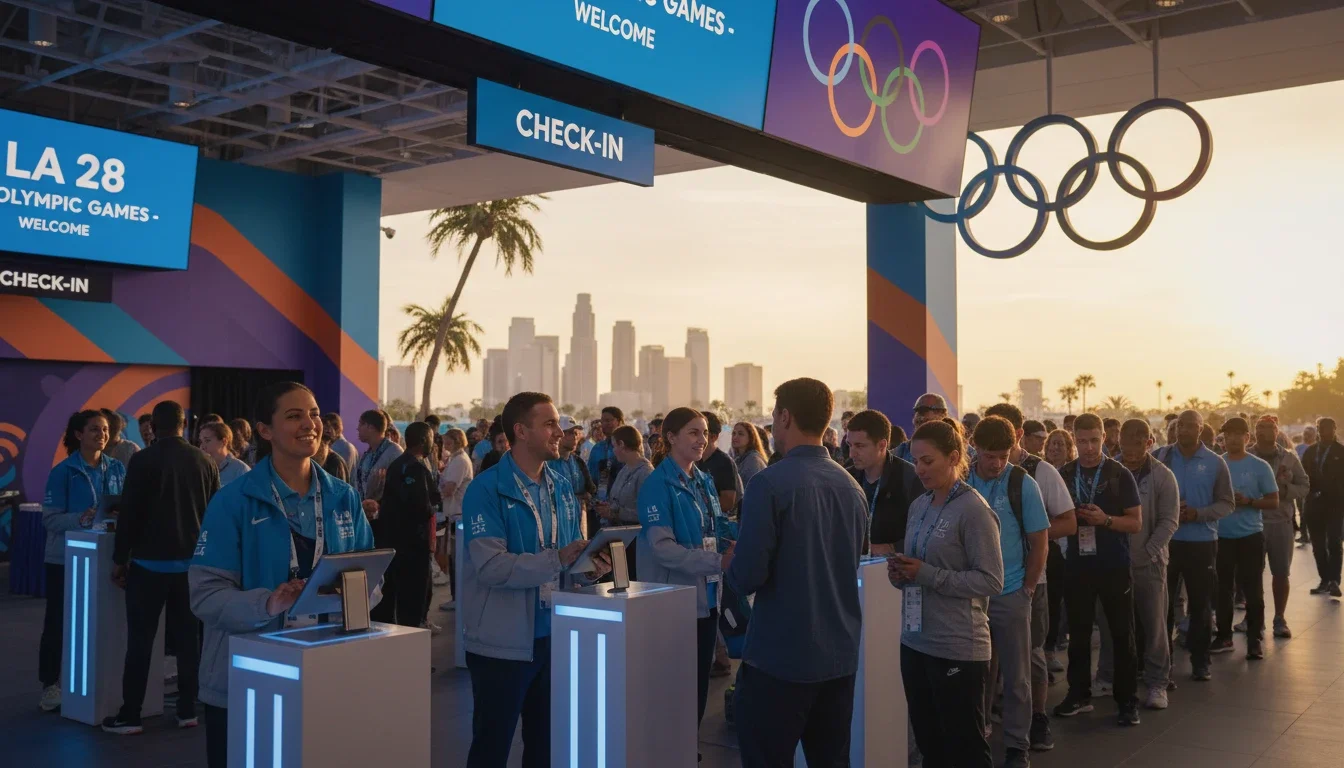
Professional event staff checking in guests at a major sporting event in Los Angeles.
Brand Ambassadors and Fan Engagement Staff
Brand ambassadors are the heartbeat of any fan zone. These are the staff members who interact with fans directly — running games and competitions, demonstrating products, distributing samples, facilitating photo opportunities, and embodying your brand's personality in every interaction.
For Olympic fan zones, ambassadors need to be more than just outgoing and presentable. They need to be trained on your brand story and messaging, comfortable managing unpredictable crowd energy, knowledgeable about the Olympic program (fans will ask where events are, how to get tickets, which sports are nearby), and physically prepared for long shifts in an outdoor or high-traffic environment.
The ratio that works well for active engagement zones is roughly one ambassador per 75–100 visitors per hour for high-touch interactions. For lighter sampling or giveaway stations, that ratio can stretch, but never at the expense of wait times that kill brand sentiment.
Registration and Credential Check-In Staff
For ticketed activations, sponsor hospitality tents, or any fan zone with controlled access, you'll need dedicated registration staff. At the Olympic Games level, these staff members may also be responsible for verifying accreditation, distributing RFID wristbands, scanning QR codes, and cross-referencing guest lists against secure databases.
Speed matters enormously here. If your registration process creates a 20-minute queue at peak arrival, the fan experience begins badly before a single activation has been seen. Look for staffing agencies with demonstrable experience in high-volume check-in environments — large conventions, major expos, and ticketed festivals are good proxies.
Hospitality and VIP Hosts
Sponsor villages and premium experiences at the Olympics will demand a level of hospitality staffing that goes well beyond handing out lanyards. VIP hosts are responsible for welcoming guests, managing seating arrangements, coordinating food and beverage service, escorting guests between event areas, and handling requests with discretion and professionalism.
For global brands hosting international clients, athlete meet-and-greets, or C-suite entertainment during the Games, this role requires staff with genuine hospitality training, poise under pressure, and the kind of polished presence that makes a premium experience feel effortless.
Crowd Management and Guest Flow Staff
Fan zones on the Olympic scale will regularly hit capacity. Whether it's a bottleneck at an entrance, a surge after a competition ends nearby, or a queue that's grown faster than anticipated, crowd management staff keep things from becoming chaotic.
These roles are often underestimated in planning. Every fan zone activation needs guest flow staff positioned at key chokepoints — entrances, transitions between zones, queues for popular experiences, and exits. They need clear communication with supervisors, an understanding of evacuation protocols, and the judgment to call for support before a situation escalates.
On-Site Supervisors and Event Captains
Every activation, regardless of size, needs a designated on-site captain. This person is the operational lead — managing the full staff team, communicating directly with your brand or agency contact, making real-time decisions when plans need to change, and serving as the escalation point for any issue that floor staff can't resolve.
At major Olympic fan zones, you'll often need multiple supervisory layers: lead ambassadors who manage a pod of staff, shift supervisors who manage multiple leads, and an overall event captain who owns the full operation. Getting this hierarchy right before Day 1 is one of the most important staffing decisions you'll make.
How Many Staff Do You Need for an Olympic Fan Zone?
There's no universal formula, but here's a practical framework to use as a starting point:
For a mid-size fan zone (1,000–3,000 visitors per day), a baseline staffing plan typically includes:
6–12 brand ambassadors (depending on the number of activation stations)
2–4 registration/check-in staff
2–3 crowd flow and guest management staff
1–2 supervisors
1 event captain
For large-scale sponsor villages or fan fest areas (5,000–15,000+ daily visitors), multiply those figures significantly and plan for shift overlaps, meal breaks, and surge coverage during peak hours (typically at event start and end times for nearby competition venues).
One industry benchmark worth keeping in mind: for every 10 or more staff deployed, you need a dedicated on-site supervisor who is focused exclusively on managing the team, not executing activation tasks themselves. This is a commonly violated ratio that leads to coordination failures at the worst possible moments.
Book more than you think you need. Overstaffing an Olympic activation is recoverable. Being understaffed with a global press corps and 10,000 fans watching is not.
Multilingual Staffing: A Non-Negotiable for LA 2028
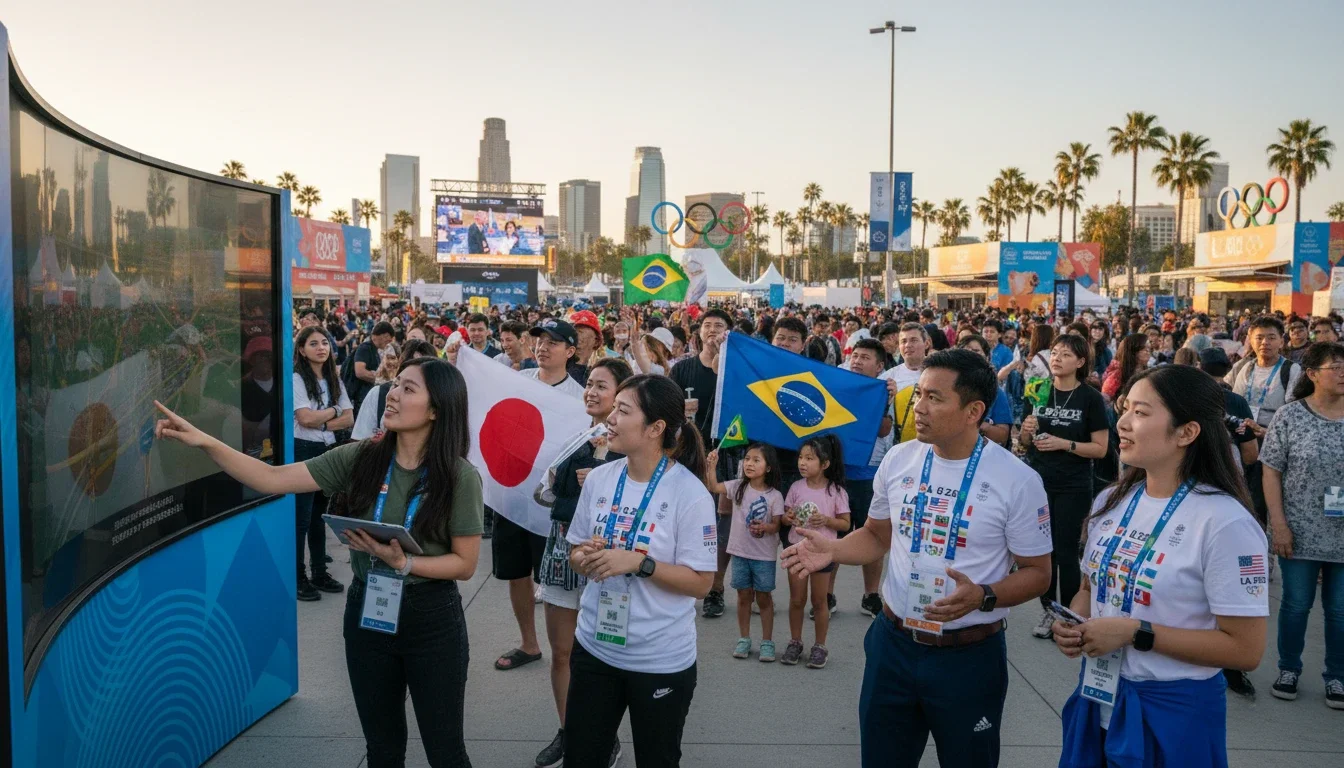
Multilingual brand ambassadors assisting international fans at a global sporting event.
Why Language Diversity Is an Operational Requirement, Not a Nice-to-Have
The Olympic Games draw attendees from every corner of the world. At LA 2028, you can expect significant visitor populations from across Latin America, East Asia, Europe, and the Middle East — many of whom will have limited English fluency and will be navigating an unfamiliar city in an unfamiliar language.
If your fan zone staff can only communicate in English, you're immediately excluding a significant portion of your target audience. More critically, you're creating frustrating experiences for guests who may not understand directions, can't follow instructions for a competition or activation, or can't get help when they need it.
Los Angeles has a natural advantage here. The city's diverse population means there's an existing talent pool of fluent Spanish, Mandarin, Korean, Farsi, Tagalog, and Japanese speakers who are also trained event professionals. Working with an LA-based staffing agency that has deep roots in this community means accessing that talent naturally — not scrambling for translators at the last minute.
For the Olympics specifically, consider building multilingual capability directly into your core staffing brief rather than treating it as an add-on. Define the top three or four languages your audience is likely to speak and make proficiency in at least one of those a hiring filter for ambassador roles.
The Staffing Planning Timeline: When to Start Booking
One of the most common and costly mistakes brands make when planning for mega-events is treating staffing as a last-minute logistics item. At the Olympic Games scale, staffing is a strategic decision that needs to begin well ahead of the Opening Ceremony.
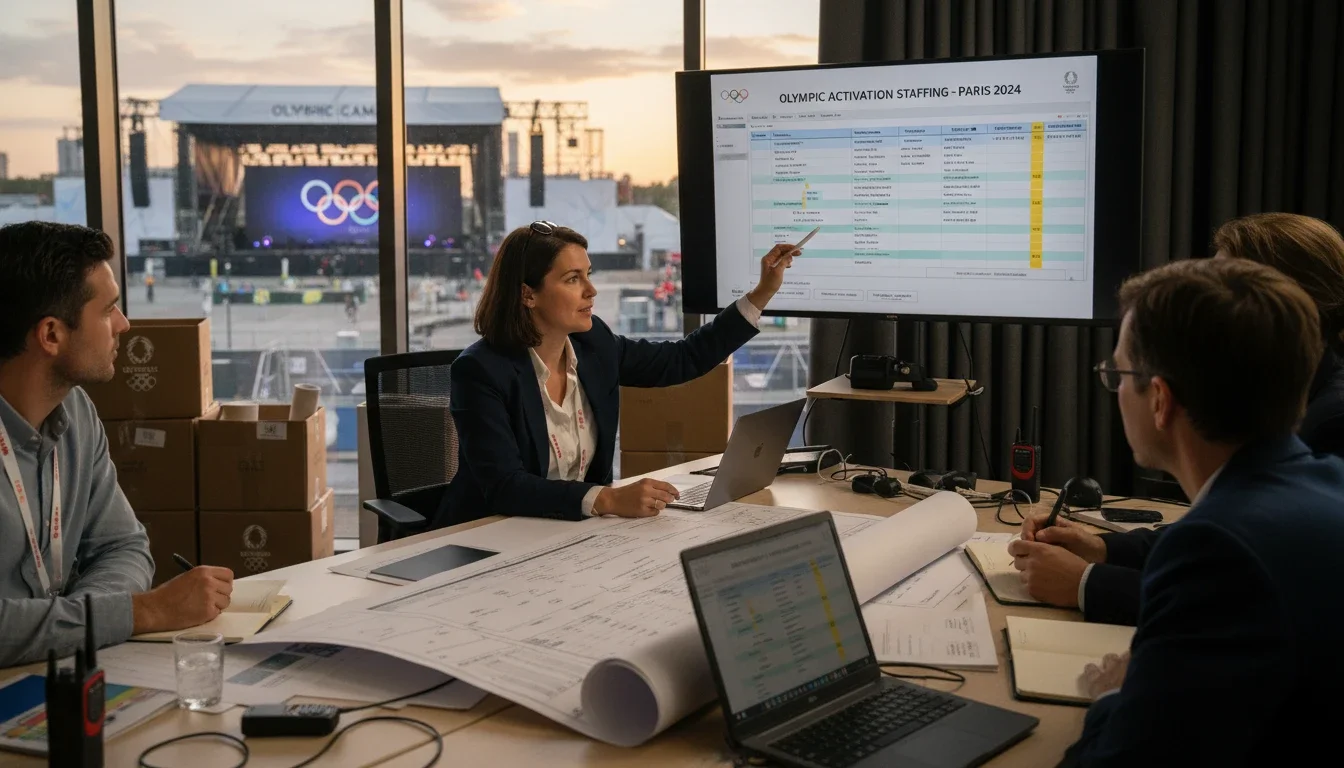
Event coordinator reviewing staffing plan for a large-scale Olympic brand activation.
18–24 Months Out: Scope and Strategy
This is the phase for identifying your activation concept, estimating staffing headcount, and beginning conversations with potential agency partners. The best talent in LA goes fast — particularly for a once-in-a-generation event like the Olympics. Agencies with Olympic experience, proven LA rosters, and the operational infrastructure to support a multi-week activation will fill their capacity early.
Use this phase to define your activation footprint, identify which LA28 zones you'll be operating in, and understand the accreditation requirements for staff working in or near official Olympic venues.
12 Months Out: Agency Selection and Roster Building
By this stage, your agency partner should be confirmed and actively building your preferred team roster. This is when deeper briefing conversations happen — brand training requirements, uniform specifications, language needs, and specialized skills (hospitality certification, bilingual fluency, specific product knowledge).
For activations requiring large rosters (50+ staff over multiple weeks), your agency partner should begin talent confirmations well in advance of the Games to avoid competition from other Olympic clients who are recruiting from the same talent pools.
3–6 Months Out: Briefings, Uniforms, and Training
With your roster confirmed, this phase is about preparation. Brand training, product knowledge sessions, uniform fittings, and site walkthroughs (where access is available) should all happen here. The more prepared your staff are before Day 1, the more confidently they'll execute — and the less time your activation team spends correcting avoidable errors during the Games.
Final 30 Days: Logistics, Accreditation, and Dry Runs
The final month is operational. Staff accreditation and credentialing (where required), transportation logistics and call-time planning for LA's notoriously challenging traffic, emergency contact protocols, and ideally a dry run of your activation's staffing workflow. Your event captain should be fully embedded with your brand team by this point, with a clear chain of communication established for every scenario.
Operational Realities: Staffing a Fan Zone in Los Angeles
Planning an Olympic fan zone activation in LA requires understanding the city as an operational environment — not just a backdrop.
Traffic, Transport, and Call Times
Los Angeles traffic is not a minor inconvenience during the Olympics — it's a mission-critical variable. Staff commuting from the San Fernando Valley to an Inglewood venue during rush hour on a competition day could easily face 90-minute delays that would be 30 minutes on a normal Tuesday. Your staffing agency needs to factor this into call times, build in buffer windows, and have contingency staff on standby for late arrivals caused by traffic and transit disruptions.
For multi-venue or multi-zone activations, staff transportation logistics may need to be coordinated centrally rather than left to individual staff members. Agencies with established LA operational experience will have protocols for exactly these scenarios.
Credentialing and Security Protocols
Fan zones adjacent to official Olympic venues will have security requirements that typical brand activations don't. Staff may need to pass background checks, carry specific credentials, and comply with venue protocols for entry, exits, and bag search policies. These processes take time, and they cannot be rushed.
Work with your staffing agency early to understand which roles require what level of accreditation, and build that process into your planning timeline well before the activation start date.
Weather, Outdoor Venues, and Contingency Staffing
Los Angeles summers are hot, and many LA28 competition venues and fan zones will be outdoor or semi-outdoor. Staff scheduled for 8-to-10-hour shifts in direct sun need appropriate preparation — hydration stations, shade rotation, heat management protocols — and your staffing agency should have clear policies on staff welfare in extreme conditions.
Contingency staffing matters too. Over a multi-week Olympic activation, illness, personal emergencies, and unexpected schedule changes are inevitable. Agencies with deep LA rosters can fill gaps quickly. Those without local depth cannot.
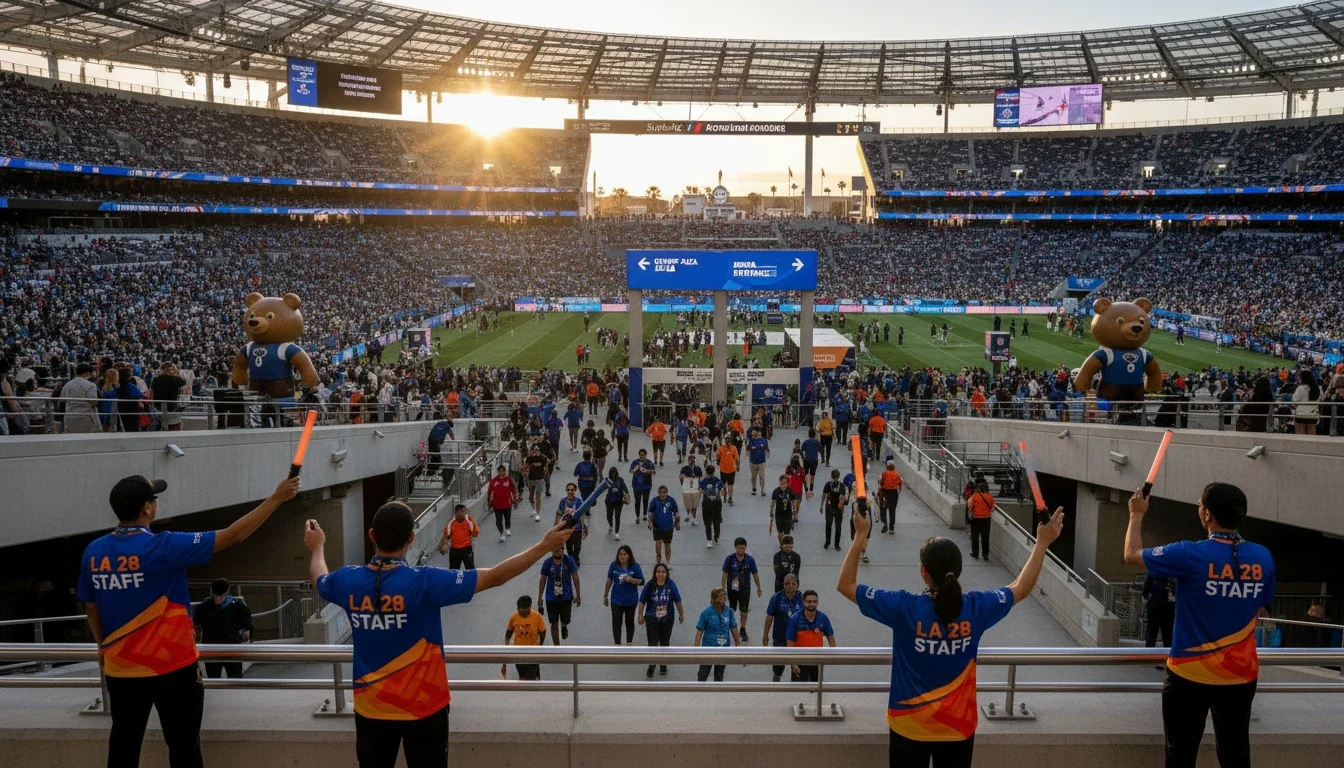
Crowd management event staff directing guests at a large capacity LA 28 Olympics venue.
What Makes a Great Olympic Fan Zone Staff Member?
Not every excellent event professional is the right fit for an Olympic fan zone. The specific demands of this environment reward a particular combination of skills and qualities:
Composure under pressure. Olympic fan zones can shift from calm to completely overwhelming in minutes. Staff who stay calm, keep smiling, and execute their role consistently under pressure are the difference-makers.
Cultural awareness and sensitivity. With a genuinely global audience, staff who approach every interaction with curiosity and respect — regardless of language barriers or cultural differences — create far better fan experiences.
Brand fluency. Staff need to know your brand deeply enough to answer questions, tell your story naturally, and handle off-script moments without defaulting to "I don't know." This comes from thorough pre-event training.
Physical and mental endurance. Olympic activations run long. Staff standing, engaging, and performing for 8+ hours over multiple consecutive days need genuine stamina — not just willingness.
Initiative and problem-solving. At the scale of the Olympics, not every situation will be in the briefing manual. Staff who think on their feet and make smart, brand-aligned decisions without escalating every minor issue are invaluable.
These qualities don't develop during a single event briefing. They come from experienced professionals who've worked major events, understand high-stakes environments, and have been vetted and trained by an agency that takes quality seriously.
How Eleven8 Event Staff Supports LA 2028 Activations
Eleven8 Event Staff has been staffing LA's most demanding events for over 30 years — from intimate luxury gatherings to large-scale conventions with 50,000+ attendees. Clients like Nike, The Academy, Versace, and Adidas trust Eleven8's team precisely because of their ability to deliver consistent, professional, brand-appropriate service at scale.
As the world prepares to turn its eyes toward Los Angeles in 2028, Eleven8 is actively building the infrastructure needed to support Olympic-scale activations. Their existing network of vetted LA-based professionals, many of whom are multilingual and have experience at major venues like SoFi Stadium, the LA Convention Center, Crypto.com Arena, and the Los Angeles Memorial Coliseum, positions them as a natural partner for brands entering the LA market for the Games.
Specific capabilities relevant to fan zone staffing at LA 2028 include:
Brand ambassadors and fan engagement staff trained for high-energy, high-traffic environments
Convention and large-event staffing with proven crowd management experience at 50,000+ attendee events
Hospitality and VIP hosting for sponsor lounges and premium Olympic experiences
Booth and activation staffing for branded sponsor zones and fan engagement stations
Nationwide scalability for brands activating across multiple LA28 zones or other Olympic host cities
For brands serious about their LA 2028 presence, the conversation with your staffing partner shouldn't start in 2027. It should start now.
Explore Eleven8's LA 2028 Olympic staffing capabilities →