
How to Onboard Temporary FIFA World Cup Staff Quickly Without Sacrificing Quality
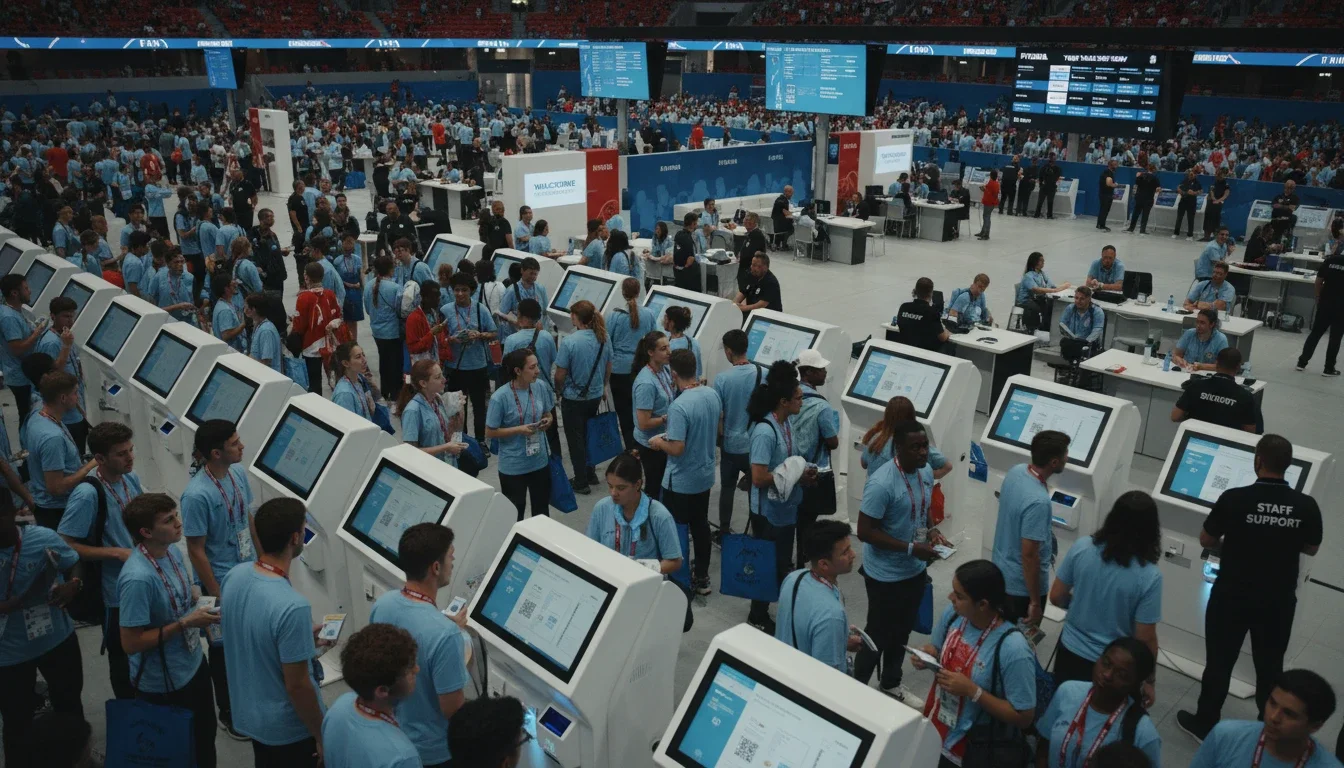
The FIFA World Cup 2026 is set to be the largest single-sport event in history — 48 teams, 16 host cities across the United States, Canada, and Mexico, and an estimated audience of millions descending on venues over five weeks. For businesses operating within or adjacent to those host cities, the event represents an enormous commercial opportunity. But seizing that opportunity depends entirely on one thing: your people.
The challenge isn't just hiring fast. It's hiring well, training thoroughly, and deploying confidently — all within a window that's far shorter than a typical onboarding timeline allows. Businesses that master this will run smooth, memorable operations. Those that don't will find their brand reputation taking the hit.
Rapid onboarding for temporary event staff means compressing the learning curve without removing the substance — giving workers the context, clarity, and confidence they need to perform from day one.
This guide walks you through exactly how to do that. Whether you're managing hospitality staff at a World Cup fan zone, deploying brand ambassadors for a tournament activation, or coordinating a full registration and guest services team, the principles here will help you onboard temporary staff quickly without cutting corners on quality.
Why the World Cup Creates a Unique Staffing Challenge
Scale and Speed Like No Other Event
FIFA is recruiting 65,000 volunteers alone for the 2026 tournament. For the businesses and contractors surrounding the event — hospitality venues, sponsor activations, transportation hubs, retail operations, and fan experiences — the staffing demands are exponentially larger. And unlike a recurring annual conference where you can refine your onboarding process year over year, the World Cup is a four-year cycle. You don't get a second chance.
Most businesses will need to bring on temporary workers in batches, with very little lead time between hire and deployment. In some cases, workers might have 48 to 72 hours between being confirmed and showing up for their first shift. Your onboarding system has to be built for that reality.
The Quality Trap — Where Businesses Cut Corners and Pay for It
Under time pressure, the most common mistake is treating onboarding as optional or purely administrative. The worker gets a quick verbal briefing, a t-shirt, and a post on the schedule. Within hours, they're interacting with thousands of international guests — and they have no idea what to do when something goes wrong.
The quality trap isn't about laziness. It's about not having a system. With the right framework in place, you can onboard temporary World Cup staff in hours, not weeks — and still maintain the professional standards your brand and your clients expect.
Step 1 — Build Your Staffing Blueprint Before You Hire
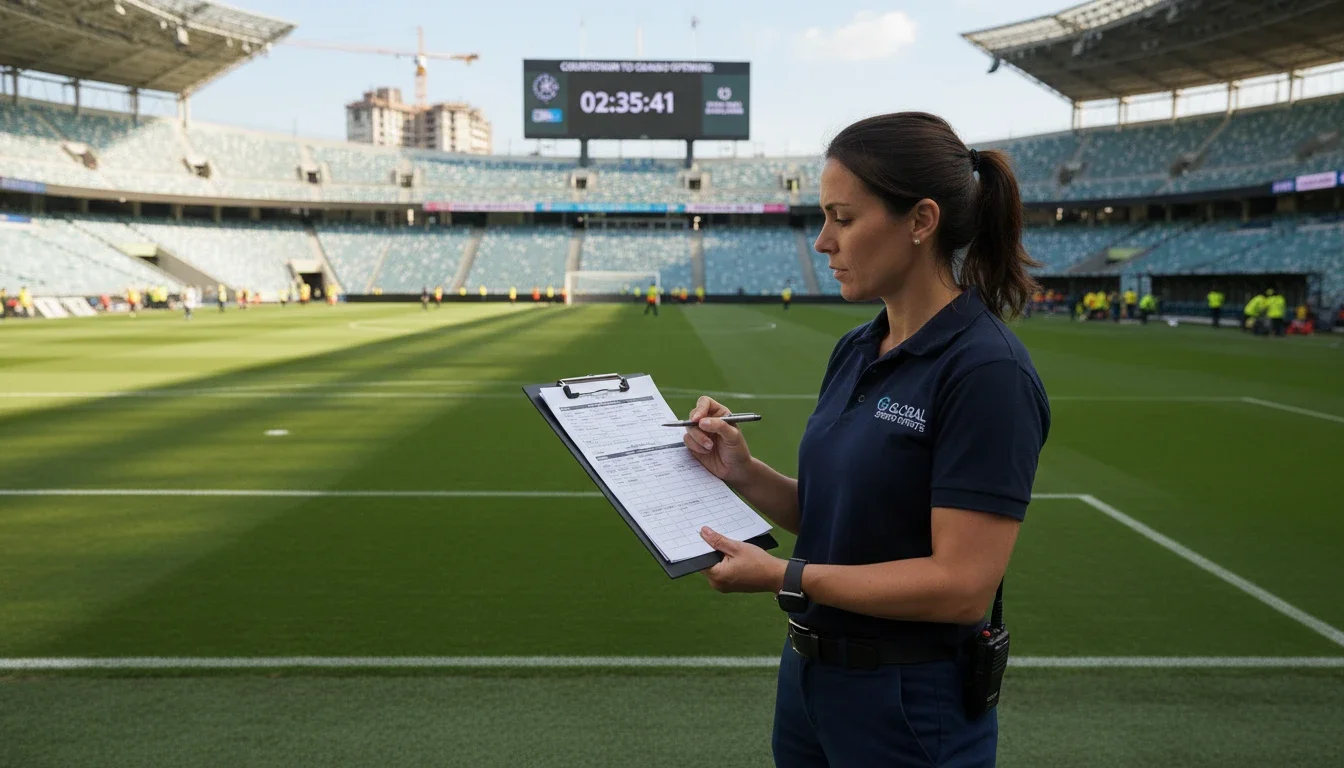
Event manager reviewing staffing plan and role assignments on a clipboard at a large sporting venue.
Define Every Role With Precision
Before you post a single job listing, every role in your operation needs a one-page role definition. This isn't a job description in the traditional HR sense — it's an operational brief. It should answer four questions: What does this person do in the first 30 minutes of their shift? Who do they report to if something goes wrong? What does success look like at the end of the day? What are the two or three things they must never do?
Clear role definitions do two things simultaneously. They make screening faster because you know exactly who you're looking for. And they make onboarding faster because there's less ambiguity for the new hire to absorb.
Set Minimum Standards and Non-Negotiables
Not every temp role at a World Cup event requires the same skill level. But every role requires a baseline. For hospitality and guest-facing staff, that baseline typically includes professional appearance and conduct, ability to follow instructions under pressure, experience in crowd or high-volume settings, and basic English proficiency (with multilingual ability as a strong plus given the international audience).
Establish these standards in writing before you recruit. This becomes your screening filter and your onboarding benchmark.
Step 2 — Streamline Your Hiring and Vetting Process
Partner With a Pre-Vetted Staffing Agency
The single most effective way to compress onboarding timelines without sacrificing quality is to start with people who are already vetted. A specialized event staffing agency maintains a roster of pre-screened, experienced professionals who have already proven themselves in high-volume, high-stakes environments. That means the "screening" phase of onboarding — background checks, skills verification, professionalism assessment — is already done.
For a World Cup-scale event, this matters enormously. Rather than spending your first two weeks filtering through applications, you can focus on role-specific training. Agencies like Eleven8 Event Staff, which accept only the top 3.5% of applicants and have staffed events for brands like TikTok and Dior at venues nationwide, allow you to skip straight to deployment preparation.
Use Structured Screening to Save Time
If you're doing any direct hiring, structured interviews beat casual conversations every time. Use a set of standardized scenario-based questions — "What would you do if a guest became agitated in your area?" or "Describe how you've managed multiple tasks during a high-pressure event" — that reveal judgment, not just experience. Score answers against a rubric so multiple interviewers stay consistent.
For World Cup contexts, add a scenario about international guests: "A guest approaches you speaking only Spanish and is visibly frustrated. Walk me through how you'd handle that." The answer tells you a lot about someone's composure, empathy, and problem-solving instincts.
Step 3 — Create a Fast-Track Onboarding System
The One-Page Event Brief
Every temporary staff member, regardless of role, should receive a single-page event brief before their first shift. This document should cover the event name and dates, the client and their brand tone (e.g., premium, family-friendly, high-energy), the specific venue and their assigned zone, key contacts and the escalation chain, and three measurable KPIs they personally own.
The one-page format is intentional. Lengthy onboarding documents get skimmed, not read. A single page gets studied. Keep it focused, visual where possible, and written in plain language.
Micro-Training Modules Over Marathon Sessions
Research consistently shows that people retain significantly more information when training is delivered in short, focused bursts rather than long sessions. For temporary World Cup staff, structure your pre-shift training into five-to-ten-minute modules, each covering exactly one topic: guest greeting protocols, escalation procedures, language access tools, emergency response basics, or prohibited behaviors.
These modules can be delivered as short video clips, voice memos with a visual cue sheet, or a brief live walk-through by a shift supervisor. The medium matters less than the focus — one concept, clearly explained, immediately relevant to what they're about to do.
Role-Play and Scenario Simulation
The fastest way to build competence under pressure is to simulate pressure in a low-stakes environment. Before the event opens, run a 20-minute scenario simulation. Give staff real situations they're likely to encounter: an international guest with a language barrier, a VIP who's arrived at the wrong gate, a sudden surge at a registration point, or a guest who's behaving erratically.
Watch how people respond. You'll identify your highest performers for leadership positions and your at-risk hires who need additional support — both valuable pieces of information before the doors open.
Step 4 — Prioritize Multilingual and Cultural Readiness
Why Language Access Is a Quality Signal
The FIFA World Cup draws fans from every corner of the globe. In 2026, host cities like Los Angeles, Miami, New York, and Houston will see massive influxes of international visitors speaking dozens of languages. For businesses staffing guest-facing roles, language capability is a direct quality signal — it's the difference between a guest who feels welcomed and one who feels invisible.
You don't need your entire staff to be multilingual. But you do need a plan. Identify the top five languages expected in your host city based on team demographics — Spanish, French, Portuguese, Arabic, and German are common starting points for World Cup audiences — and ensure at least one fluent speaker per zone or shift. For higher-volume roles, bilingual staff should be prioritized in your hiring brief.
What Your Multilingual Staffing Plan Should Cover
Map expected guest nationalities based on participating teams in your host city's match schedule
Identify key roles where language barriers create the highest risk (entry/exit points, registration, complaint resolution)
Recruit bilingual staff for those roles as a priority, not an afterthought
Equip monolingual staff with translation cards or apps as a backup tool
Brief all staff on cultural courtesies — greetings, eye contact norms, personal space — relevant to the nationalities they'll encounter
Agencies with experience staffing international events already maintain a roster of bilingual and multilingual professionals. Elevate's Miami team, for example, specializes in bilingual brand ambassadors for major international events like Art Basel and Miami Swim Week — the same cultural fluency that makes them exceptional for World Cup deployments.
Step 5 — Put Strong Leadership Structures in Place
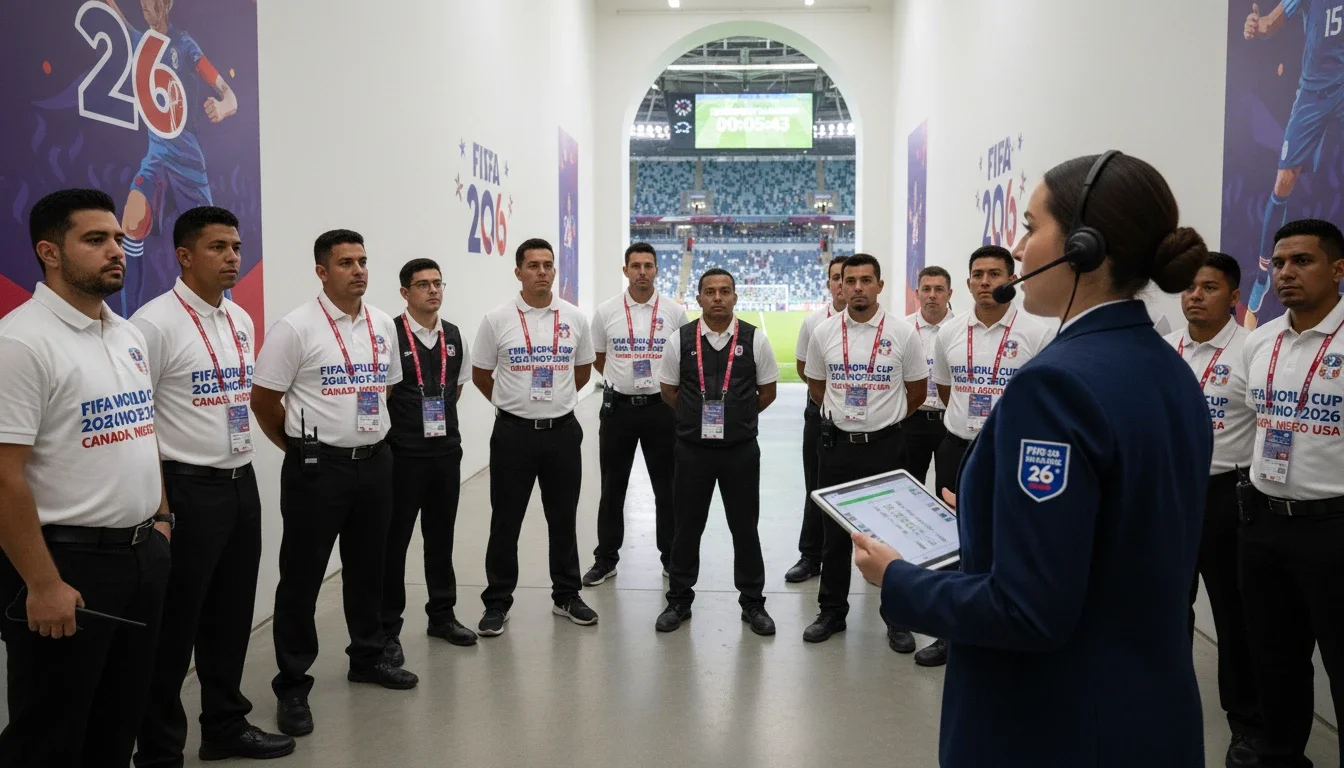
An event captain giving a pre-shift briefing to a team of uniformed event staff inside a stadium corridor.
The Supervisor-to-Staff Ratio That Works
Temporary workers, by definition, have less institutional knowledge than permanent employees. This makes leadership density more important, not less. For most event roles, a supervisor-to-staff ratio of 1:15 to 1:20 is a workable baseline. For high-touch roles like VIP concierge or hospitality suites, tighten that to 1:10. For simpler, static roles like badge scanning or crowd direction, 1:25 can work if supervisors are mobile and visible.
The key isn't just the ratio — it's that supervisors are empowered to make real-time decisions without escalating every issue. Brief your supervisors separately and in advance. They need to know not just the playbook, but the spirit behind it.
Designate an Event Captain for Every Shift
Above the supervisor layer, every shift needs a single point of accountability: an event captain. This person owns the shift. They manage supervisor communications, respond to escalations the supervisors can't resolve, liaise with venue management, and serve as the primary contact for your client or internal stakeholder.
Elevate Event Staff, for example, assigns a designated event captain to every booking — a professional who is introduced to the client 24 hours before the event and available throughout the shift. This single practice eliminates the communication gaps that turn small problems into visible ones.
Step 6 — Use Technology to Accelerate Coordination
Scheduling and Communication Tools
Coordinating dozens or hundreds of temporary workers across multiple shifts and venues requires more than a group text. Scheduling platforms designed for event staff — such as Quickstaff, Deputy, or When I Work — centralize availability management, shift confirmations, automated reminders, and real-time updates in one place. They reduce no-shows significantly and give supervisors instant visibility into coverage.
For communication during the event, establish a clear channel hierarchy: what goes through the app, what gets a direct call, and what warrants an in-person escalation. Define this in your pre-event briefing so temporary staff aren't guessing when something urgent happens.
Digital Onboarding Documents and E-Signatures
Administrative friction slows onboarding. Replace paper packets with digital onboarding workflows. Platforms like DocuSign or Workbright allow you to send new hires their contracts, training acknowledgment forms, and compliance documents digitally — and get them back signed before the person ever arrives on-site. This frees up your pre-shift window for actual preparation rather than paperwork.
Common Onboarding Mistakes to Avoid During Major Events
Onboarding to the job rather than to the event — generic training that doesn't reflect the specific context, brand standards, or guest demographics of a FIFA-scale activation
Skipping site orientation — temporary staff who don't know the venue geography make visible mistakes in front of guests, especially in the early hours of an event
Neglecting the "why" — staff who understand the purpose behind their role (and the brand they're representing) make better judgment calls than those who are just following a checklist
Overloading the first briefing — information overload before a shift leaves people anxious and forgetful; focus on the most critical 20% of information
No contingency plan — at large events, no-shows happen. Without a standby pool of 5–10% of your team size, a single gap in coverage becomes a visible service failure
Skipping a debrief — the first shift generates irreplaceable data. A 15-minute post-shift debrief catches gaps before they compound
Should You Handle Staffing In-House or Work With an Agency?
This question comes down to your internal capacity and the scale of the event. If you're deploying fewer than 10 people for a single activation, managing the process in-house is reasonable — provided you have the hiring infrastructure, compliance knowledge, and training time to do it well.
If you're coordinating 20 or more temporary workers across multiple shifts, multiple roles, or multiple venues, the case for a specialized event staffing agency becomes very strong.
The Case for Outsourcing to a Specialized Event Staffing Agency
A qualified event staffing agency eliminates the most time-intensive parts of the process. The hiring, background checks, skills verification, and basic orientation are already handled. What you receive is a team of professionals who understand how to behave at events, represent brands, manage guests, and adapt under pressure.
More specifically, for World Cup activations across host cities, an agency with an established national roster can provide bilingual staff, vetted hospitality professionals, and trained brand ambassadors in Los Angeles, Miami, New York, Houston, Dallas, and Kansas City — without you needing to build local hiring pipelines in cities where you have no existing relationships.
Pre-vetted staff with verified event experience
Flexible scaling from 5 to 100+ workers
Insurance and liability coverage included
A dedicated account manager and on-site captain
Post-event performance reporting and feedback
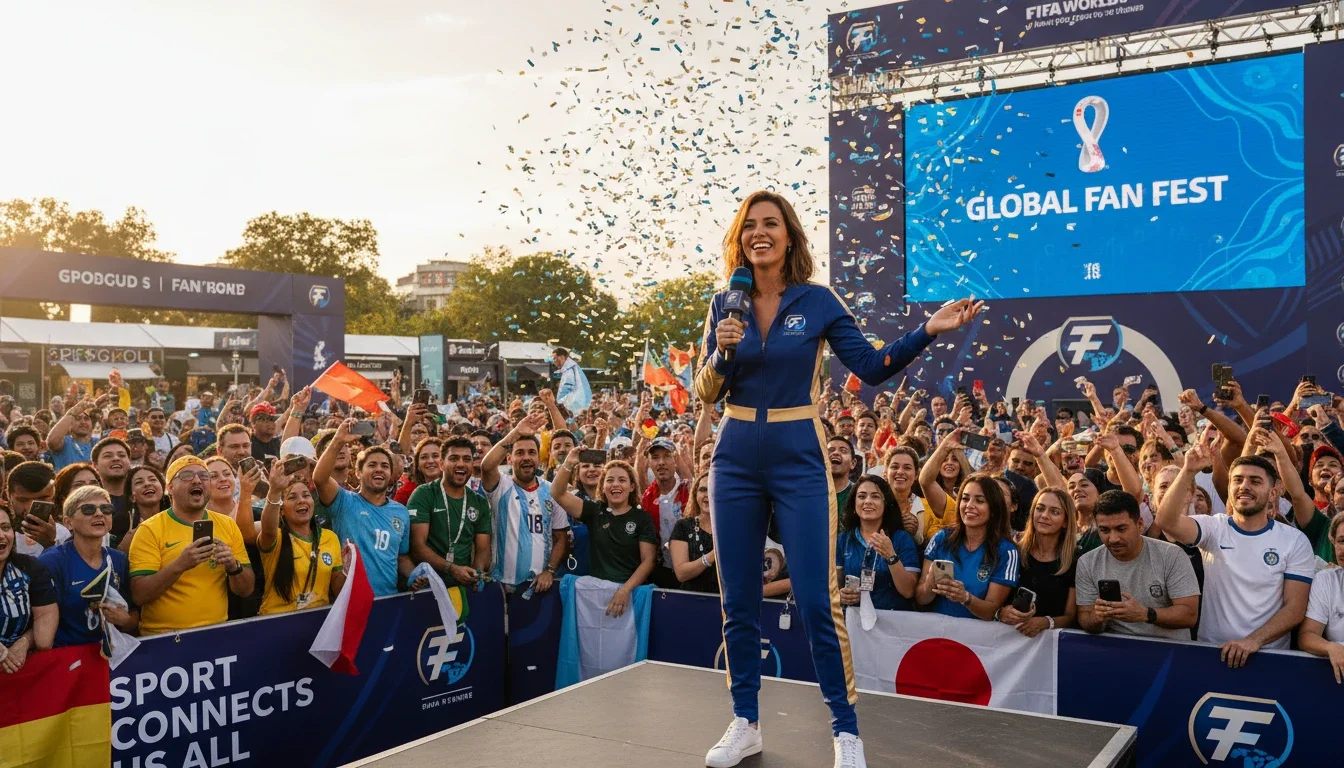
A professional brand ambassador engaging enthusiastic international fans at a World Cup fan zone activation.
Conclusion — Speed and Quality Are Not Opposites
The assumption that onboarding speed and staff quality conflict is the most common mistake event operators make when preparing for large-scale tournaments. The World Cup 2026 doesn't require you to choose between the two — it requires you to have a system that delivers both.
Build your staffing blueprint before you hire. Create a fast-track onboarding system with micro-modules and scenario simulation. Prioritize multilingual readiness. Put experienced leadership at every level. And if the scale of the event exceeds your internal capacity, partner with an agency that has already done this at World Cup-caliber events.
The visitors arriving in your city for the 2026 tournament are there for a once-in-a-generation experience. Your staff are the first people they meet, the faces they remember, and often the reason they leave feeling great about your brand — or don't. That's not a staffing problem. It's a business opportunity.