
The True Cost of Being Understaffed During the FIFA World Cup
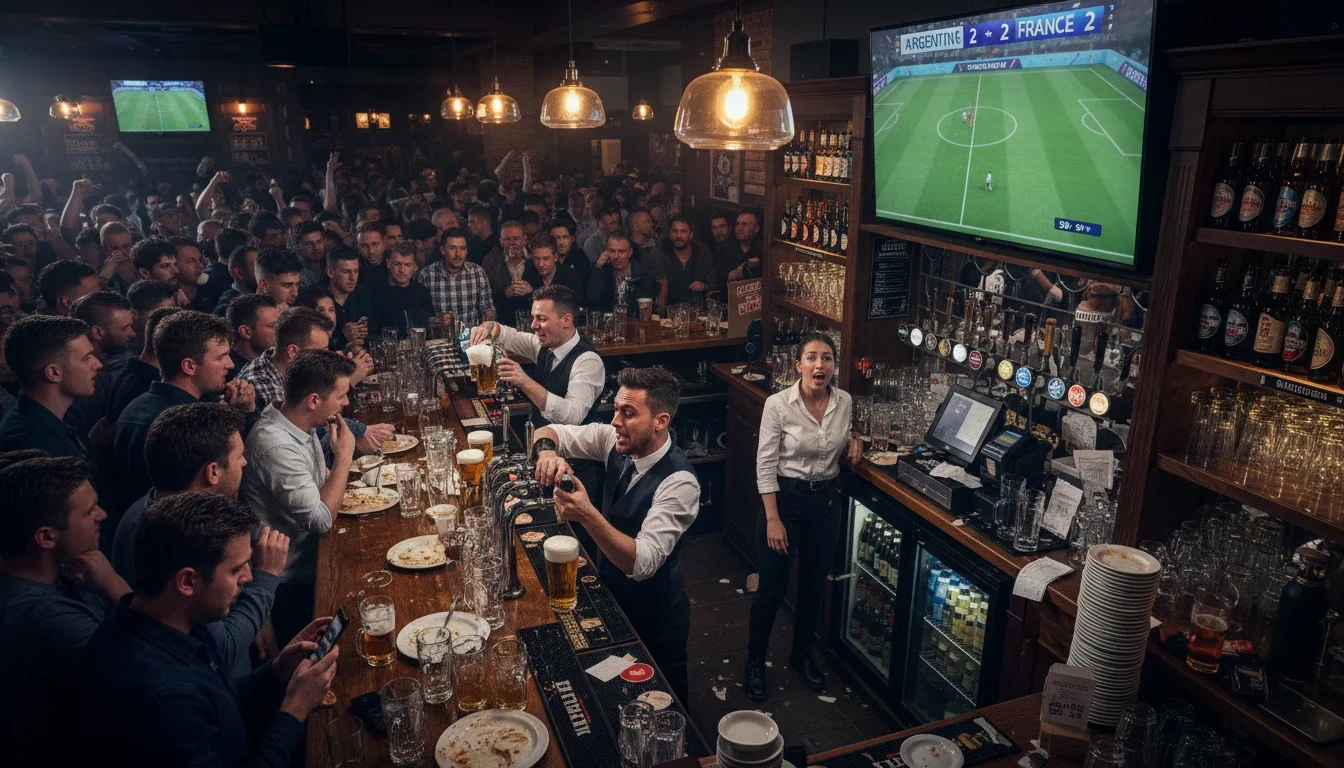
When the FIFA World Cup arrives in the United States, it doesn't just bring soccer fans. It brings 5 to 6 million international visitors, a spending surge unlike anything most American cities have ever absorbed, and a window of commercial opportunity that will not open again for decades.
For venues, brands, restaurants, and event operators in host cities, this is the moment. But here's the uncomfortable truth that most businesses won't confront until it's too late: being understaffed during the World Cup doesn't just create a difficult service day. It translates directly into lost revenue, permanent reputational damage, and missed brand opportunities — all of which are entirely preventable.
This isn't about being short one or two people. It's about what happens when demand multiplies by a factor of five and your operation runs at normal capacity.
Why the FIFA World Cup Is Unlike Any Event You've Staffed Before
The Scale of Demand in Host Cities
The 2026 FIFA World Cup will be hosted across 11 U.S. cities: Los Angeles, New York/New Jersey, Dallas, Houston, Atlanta, Miami, Seattle, San Francisco, Kansas City, Philadelphia, and Boston. Each host city will see foot traffic and hospitality demand spike to levels that dwarf even the busiest local events.
To put this in perspective: Super Bowl weekend typically generates around $500 million in economic impact for its host city. The World Cup, spread over weeks rather than one weekend, is projected to generate over $5 billion in economic activity across the U.S. alone. The crowds aren't just large — they're sustained, international, high-spending, and concentrated around specific activation windows.
Bars within walking distance of stadiums can realistically serve 10 to 15 times their normal daily traffic on match days. Hotels become regional hubs. Brand activations compete for eyeballs on every major street corner. Every segment of the hospitality and events industry will feel this — and every segment will be competing for the same pool of qualified temporary staff.
A Compressed Timeline with No Room for Error
Unlike a festival or a trade show, where the stakes are contained to a few hours, the World Cup creates a cascading staffing challenge. Match days come in waves. The group stage alone involves 48 games across multiple cities over the course of three weeks. For businesses near stadium zones, this means recurring surges — not one big day, but many.
If your staffing plan falls apart during the group stage, you don't get a recovery period. The next match is in three days. The tournament doesn't pause while you regroup, re-hire, and retrain.
The Revenue You'll Leave on the Table
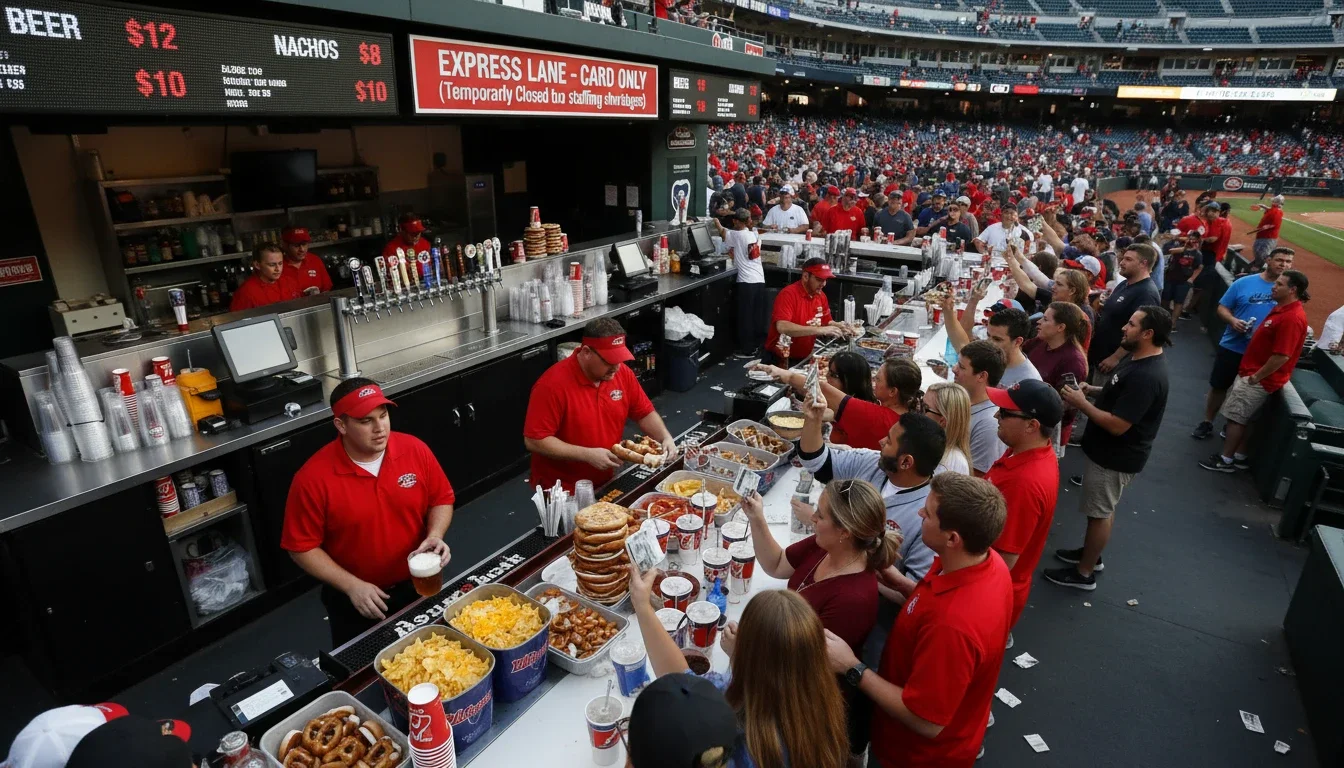
A high-volume bar and concession operation at a major sports event — understaffing here translates directly to uncaptured revenue per hour.
Lost Sales at the Point of Service
The most direct cost of understaffing is transactionally simple: if you don't have enough people to take orders and serve guests, you sell less. At an event-adjacent venue during World Cup match days, this isn't a marginal loss. It's potentially thousands of dollars per hour.
Consider a mid-volume bar near a stadium that normally turns $8,000 on a busy Friday night. On a World Cup match day, with proper staffing and preparation, that same venue could realistically generate $30,000 to $50,000 in a single shift. With inadequate staffing — too few bartenders, no bar backs, a skeleton floor team — guests wait too long, leave, and the revenue ceiling drops back toward normal.
That gap between what you could have made and what you actually made? That's not recoverable. World Cup match days are finite. They don't come back.
Upsell Opportunities That Never Happen
Understaffed operations default to survival mode. Staff focuses on getting orders out, not on engagement. The attentive upsell — "Would you like to try our limited World Cup cocktail?" or "We're doing bottle service packages for the match" — never happens because there's no bandwidth for it.
Premium experiences and higher-ticket offerings require staff who aren't drowning. An overstretched team with a 45-minute drink queue doesn't have the capacity to drive incremental spend. At a mega-event like the World Cup, that incremental spend per table, per guest, per activation interaction adds up to enormous revenue across a single day.
The Bar and F&B Revenue Gap
Food and beverage is where host city businesses will make or lose the most during the World Cup. The average international sports tourist spends significantly more on food and beverage than a domestic visitor — research consistently shows spending premiums of 30 to 50 percent among international travelers attending major events. These are customers who are primed to spend, in celebration mode, and are largely unfamiliar with local venues, meaning they rely entirely on the in-person experience to make purchase decisions.
If that experience is a 40-minute wait for a beer served by an overwhelmed, frantic staff member, the spend stops there. If it's smooth, attentive, and well-executed, the table stays longer, orders more, and tells others.
The Reputation Damage That Outlasts the Tournament
One Weekend of Bad Reviews Can Follow You for Years
Google reviews, Yelp, and TripAdvisor don't care that you were "slammed" or "understaffed." Visitors from Brazil, France, Germany, and Argentina who have a poor experience at your venue don't give partial credit for extenuating circumstances — they leave a one-star review that lives permanently on your profile.
What makes this particularly damaging for World Cup host venues is the review concentration. Millions of international visitors who may have never previously heard of your business will encounter it for the first time during a tournament window. A wave of negative reviews acquired during those weeks becomes the first impression for every future potential customer who searches your business online.
The math is sobering: a venue that enters the World Cup with a 4.4-star rating and accumulates 200 negative reviews in three weeks for poor service and long wait times could exit the tournament at 3.7 stars. That's not just an embarrassment — studies on consumer behavior consistently show that star ratings below 4.0 lead to measurable declines in foot traffic and reservation rates.
How Slow Service Goes Viral
Social media and understaffing are a disastrous combination at high-profile events. An international soccer fan waiting an hour for service at an activation or bar isn't going to stay silent — they're going to post about it. Videos of chaotic, understaffed venues spread quickly, especially when tied to a globally followed event like the World Cup.
The inverse is equally true: a brand activation or venue that delivers a seamless, impressive, well-staffed experience gets shared in a positive way by the same massive, engaged audience. A single viral post from a fan with millions of followers can do more for a brand than a six-figure media buy. But it only happens when the experience is worth sharing.
The Brand Activation Opportunity You'll Miss
What Sponsors and Brands Are Spending — and What They Need
The commercial ecosystem around a FIFA World Cup is extraordinary. Official sponsors alone invest hundreds of millions in activations, pop-up experiences, sampling campaigns, and consumer engagement programs. But the opportunity extends far beyond official sponsors — thousands of non-endemic brands leverage the cultural moment to run their own World Cup-themed activations, street teams, and experiential marketing programs.
Every single one of these activations depends entirely on the quality of the staff executing them. A brand ambassador who is well-briefed, engaging, and energetic turns a product sampling into a genuine connection point. A disengaged or overwhelmed activation staff member with three times too much responsibility and no support makes the brand look indifferent.
The World Cup draws some of the most culturally diverse and globally minded consumers in the world. This is not the moment for brands to cut corners on the people representing them.
Under-Resourced Activations Don't Convert
Brand activation ROI is measured in consumer interactions, samples distributed, leads captured, and content generated. All of these metrics drop sharply when activations are understaffed. If your street team is running half-capacity or your pop-up experiential space has one brand ambassador managing what should be a four-person setup, throughput plummets.
For brands investing in World Cup activations — many of which represent the largest experiential investment of their marketing year — this isn't just disappointing. It's a failure to justify the budget, a miss on performance benchmarks, and often a conversation-starter about whether to continue the agency relationship.
Proper brand ambassador staffing isn't a line item to trim. At an event like the World Cup, it's the difference between a memorable activation and money spent on a tent nobody visited.
The Hidden Operational Costs Nobody Talks About
Overworked Staff Make Expensive Mistakes
When servers, bartenders, and event staff are operating beyond sustainable capacity, errors multiply. Wrong orders, spilled drinks, missed allergen communications, and incorrect billing — each of these is a small problem in isolation, but a systemic one when staff is stretched thin during a multi-week event.
In food and beverage specifically, errors under pressure carry liability exposure that goes beyond the inconvenience of a wrong order. An overworked bartender over-serving guests isn't just a service problem — it's a legal one.
Turnover Triggered by Burnout
One of the most underappreciated hidden costs of understaffing is what it does to your existing team. When permanent staff are consistently pushed to cover gaps, the burnout that follows isn't theoretical — it results in resignations that arrive at the worst possible moment.
Losing two or three experienced servers mid-tournament because they've been worked into the ground isn't just an operational setback. It means emergency hiring, rushed onboarding, lower quality service, and the real dollar cost of replacing employees, which research from the Society for Human Resource Management estimates at roughly one-half to two times the employee's annual salary.
Compliance and Liability Exposure
Large sporting events come with heightened regulatory scrutiny. Health department presence increases in host cities. Crowd management and alcohol service compliance are closely watched. Understaffed operations are more likely to fall short on compliance requirements simply because there isn't enough bandwidth to manage both high volume and proper protocol simultaneously.
For venues that hold special event liquor licenses or have temporary health permits tied to World Cup-adjacent programming, a compliance incident during the tournament isn't just a fine — it can result in permit revocation that ends your World Cup revenue window early.
What Proper Staffing Actually Looks Like for World Cup Events
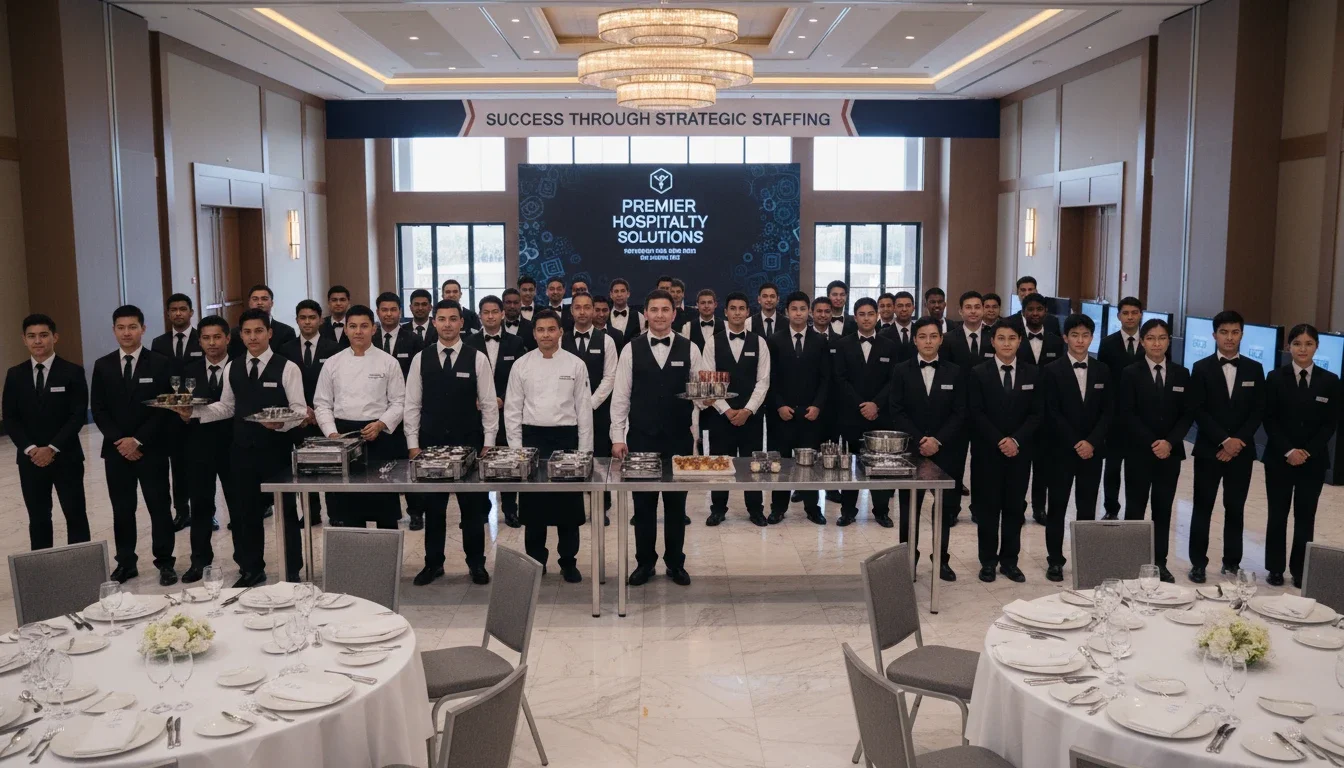
A professional event staffing team prepared for a large-scale hospitality operation — the right ratios and roles make all the difference.
Staffing Ratios for Different Venue Types
There is no universal answer to "how many staff do I need?" — it depends entirely on venue type, service format, and expected volume. That said, the following benchmarks offer a useful planning framework for World Cup operations:
Full-service restaurant or sports bar (match day): One server per 3 to 4 tables; one bartender per 25 to 30 guests at the bar; one barback per 2 bartenders; one floor manager per 40 to 50 guests.
Brand activation/pop-up: One brand ambassador per 50 to 75 square feet of active interaction space; one production assistant per major interactive element; one registration/check-in staff member per every 100 anticipated visitors per hour.
Convention or fan fest zone: One greeter or usher per major entry point; one hospitality staff member per 75 to 100 attendees for information and crowd guidance; dedicated first-response coordinator for every 500+ person capacity zone.
These ratios need to be recalibrated upward for the intensity of World Cup traffic, which in stadium-adjacent areas can arrive in sudden, concentrated waves at kick-off and final whistle.
The Roles You'll Actually Need
Depending on your operation, a complete World Cup staffing plan will likely require some combination of the following:
Bartenders certified in responsible beverage service who can work at volume without sacrificing quality or compliance. Catering and wait staff who are trained for high-pace service and familiar with large-group dynamics. Brand ambassadors who are multilingual, where possible (the World Cup audience is genuinely international), engaging, and briefed deeply on brand messaging. Registration and check-in staff for any ticketed or access-controlled event or activation. Production assistants to support logistics, setup, breakdown, and real-time problem-solving. Crowd management staff for any outdoor or high-density environment.
For operators in host cities, convention staff experienced in managing large-scale, multi-day engagements are also essential — particularly for hotel operators hosting extended team or media contingents.
Planning Your Staffing Timeline
The window to secure high-quality event staff for the World Cup is already closing. This isn't hyperbole — staffing agencies and experienced freelancers in host cities will be booked months in advance. The competitive staffing market during a mega-event means that operators who wait until 30 or 60 days out will be left choosing between under-qualified candidates or paying significant premiums for last-minute availability.
The recommended timeline looks like this: Assess your needs now. Begin conversations with staffing agencies at least four to six months before tournament games begin in your city. Lock in confirmed commitments no later than three months out. Leave a budget for a small backup reserve of staff you can activate if surges exceed projections.
How to Secure Qualified Event Staff Before the Rush
The World Cup is, by every measure, the largest commercial opportunity many host city businesses will encounter in a generation. The businesses that capitalise on it will be the ones that treat staffing not as an expense to minimise, but as the infrastructure that makes revenue possible.
Eleven8 specialises in exactly this kind of high-stakes, high-volume event staffing. Our FIFA World Cup staffing services are built for the scale and intensity of a global tournament — from brand ambassador teams fluent in multiple languages to professional bartenders and catering staff who can perform under sustained pressure.
We've staffed over 2,000 events for clients, including Nike, Porsche, and Netflix. We maintain a 101% fulfillment rate specifically because we plan, vet deeply, and don't treat staffing as an afterthought.
Whether you're operating in Houston, Miami, Atlanta, Los Angeles, or any other host city, the time to plan is now — not when the opening match is two weeks away.
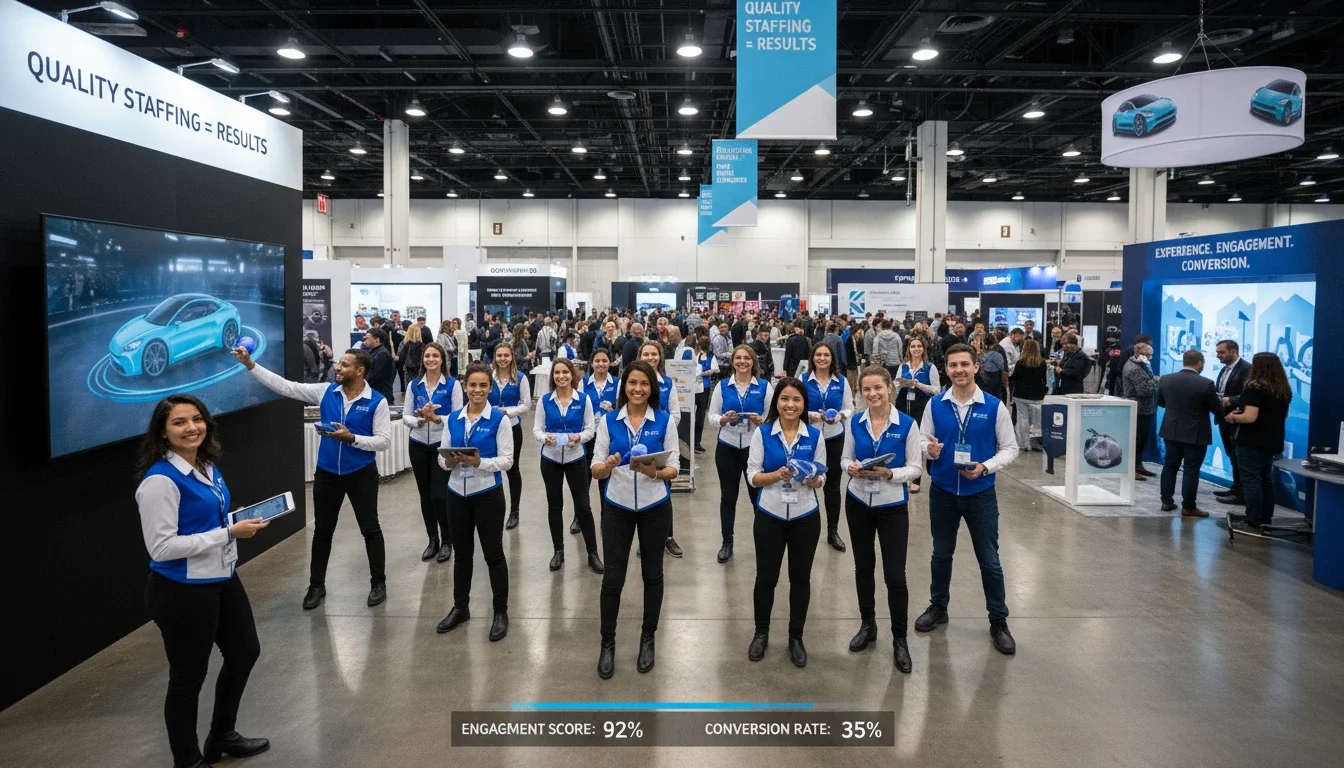
Event staffing professionals representing a brand at a major activation — quality staffing directly drives engagement and conversion.