Olympic Hospitality Staffing: How to Run a VIP Suite or Sponsor Lounge at LA 2028
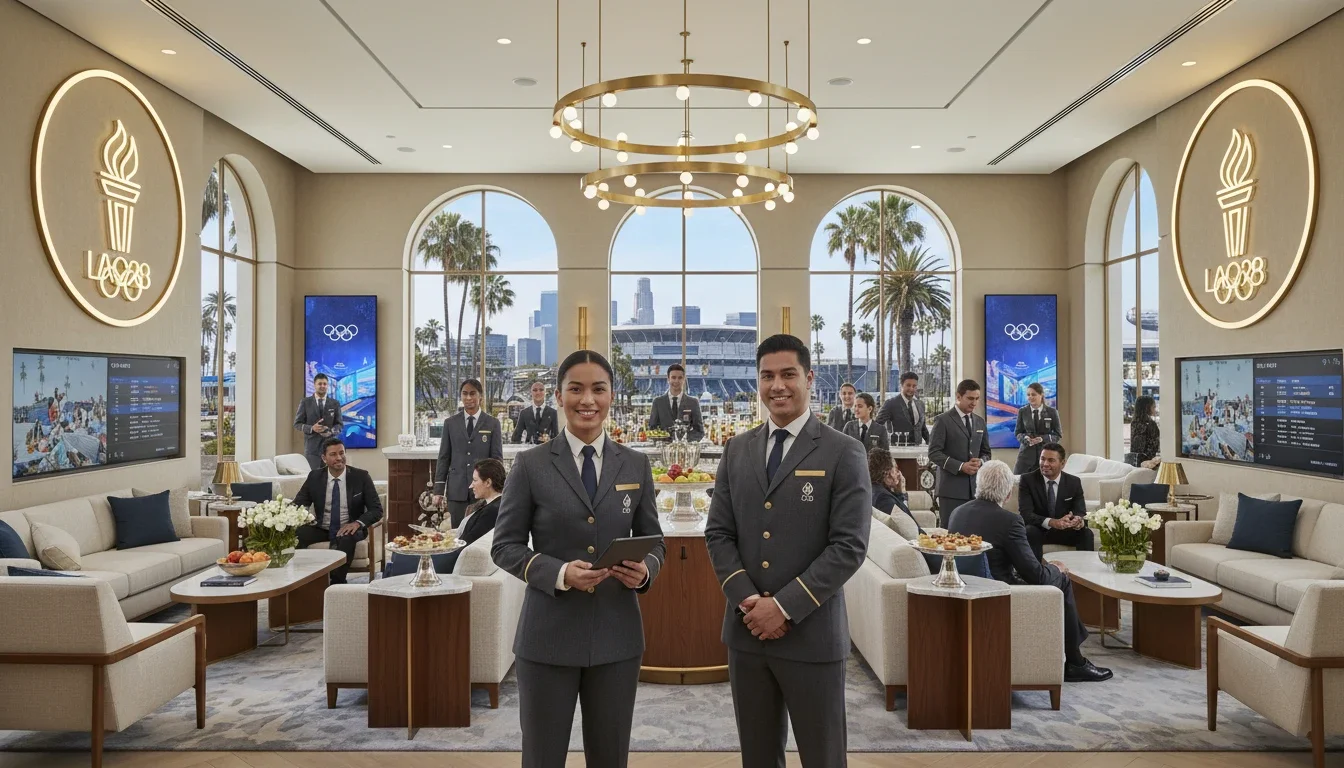
An elegantly staffed VIP hospitality lounge at a major international sporting event, featuring uniformed greeters and branded decor.
When the world descends on Los Angeles for the 2028 Olympic and Paralympic Games, the competition won't only happen inside the stadiums. For brands, sponsors, and corporate hosts, the real battleground will be in the suites, the lounges, and the private hospitality spaces where relationships are built, clients are rewarded, and brand stories come to life.
Running a VIP suite or sponsor lounge at the LA 2028 Olympics is one of the most high-profile hospitality challenges an event team will face. The stakes are global. The guests are discerning. And the margin for error is essentially zero.
This guide covers everything you need to know — from designing the guest experience and understanding staffing requirements to the operational timeline and common pitfalls that trip up even experienced teams. If you're a brand manager, corporate event planner, or Olympic sponsor gearing up for 2028, this is your playbook.
What Is Olympic Hospitality — And Why Your Brand Needs to Get It Right
Olympic hospitality refers to the premium, curated experiences that brands, sponsors, and corporate entities create for guests during the Games — separate from (though complementary to) the official ticket and hospitality packages sold by the organizing committee.
At LA 2028, On Location is the official IOC hospitality provider, offering vetted packages with access to premium seating and private areas. But beyond the official program, thousands of brand-hosted experiences will take place across the city: private suites at competition venues, sponsor activation lounges in hotels, rooftop receptions, athlete appearance events, and exclusive viewing parties.
Why This Matters for Your Brand
For Olympic sponsors and hospitality hosts, guest experience is brand reputation. A seamless, memorable lounge experience communicates the same values — precision, excellence, world-class service — that your brand wants associated with the world's biggest sporting event. A disorganized or understaffed activation does the opposite.
The brands that succeed at Olympic hospitality are those that treat it as seriously as any product launch or flagship event — with dedicated planning, professional staffing, and a guest-first mindset from the moment someone walks through the door.
Understanding the LA 2028 Landscape: Venues, Scale, and Opportunity
Key Venues and Hospitality Zones
One of the defining features of LA 2028 is that it will use entirely existing infrastructure — no new permanent venues. That means the competition spaces and surrounding hospitality zones are already world-class. The primary venues include:
SoFi Stadium (Inglewood) — Opening and Closing Ceremonies, Athletics, Football
Crypto.com Arena (Downtown LA) — Basketball, Boxing
Los Angeles Memorial Coliseum — Athletics
BMO Stadium (DTLA) — Football
UCLA Campus / Pauley Pavilion — Multiple sports
Long Beach and Santa Monica — Sailing, Beach Volleyball
Rose Bowl — Cultural events and ceremonies
LA Convention Center — Media and official functions
Each venue has different hospitality footprints, access protocols, and sponsor activation zones. Brands need to understand the specific setup at each location where they plan to host guests.

Aerial view of SoFi Stadium in Inglewood, a key LA 2028 venue.
The Scale of LA 2028 — By the Numbers
800+ individual event sessions across the Games period
3,000+ hours of live action
More than 15,000 athletes from across the globe
Hundreds of thousands of international visitors expected in Los Angeles
55+ Olympic and Paralympic sports on the program
This scale means that hospitality operations must be highly organized, well-staffed, and capable of handling volume without sacrificing the quality that defines a VIP experience.
VIP Suite vs. Sponsor Lounge: Know the Difference
These two hospitality formats are sometimes used interchangeably, but they require different setups, different staffing profiles, and different guest experience designs.
What a VIP Suite Looks Like in Practice
A VIP suite is typically a private, enclosed space within or adjacent to a competition venue, offering direct or premium views of the event. Suites are usually booked on a per-event or per-day basis and host a controlled guest list — often executives, athletes' families, major clients, or brand partners.
Key characteristics of a VIP suite:
Exclusive, invitation-only access
Premium seating with unobstructed sightlines
Dedicated food and beverage service (often plated dining or fine catering)
Private branded environment with bespoke decor
High staff-to-guest ratio for attentive, personalized service
Security and credentialing protocols
What a Sponsor Lounge Looks Like in Practice
A sponsor lounge is typically a larger, semi-open space — often in a hotel, convention area, or brand-designated zone adjacent to venues — that serves as a social hub and brand activation space throughout the Games. Lounges may welcome hundreds of guests per day across multiple sessions.
Key characteristics of a sponsor lounge:
Broader access with tiered guest categories (VIP, media, partners)
Brand experience elements — product displays, activations, live demonstrations
Self-service or staffed bar and food stations
Multiple event flows throughout the day (morning briefings, midday networking, evening receptions)
Higher volume, requiring well-organized check-in and flow management
Brand ambassador presence for active guest engagement
The Staff You Need — And the Roles That Make or Break the Experience
Staffing is where the guest experience is won or lost. No matter how beautifully designed your suite or lounge is, the wrong team — or too thin a team — will undermine everything else. Here's a breakdown of the essential roles.
VIP Greeter and Guest Relations Staff
These are the first people guests see. VIP greeters set the entire tone of the experience — their warmth, professionalism, and attention to detail signal to guests that they are in good hands. For Olympic hospitality, greeters should be familiar with protocols for international guests, capable of multilingual engagement, and trained to handle unexpected VIP arrivals gracefully.
Brand Ambassadors
Brand ambassadors are the active voice of your brand within the space. At a sponsor lounge, they engage guests in conversation, introduce brand content, manage demonstrations, and ensure every interaction reinforces your brand message. The best Olympic brand ambassadors combine genuine personality with product knowledge and the ability to read the room in a dynamic, international crowd.
Hospitality Captains and On-Site Coordinators
For any space hosting more than 30–40 guests, you need a dedicated on-site coordinator or hospitality captain. This person manages the staff team, handles real-time logistics, communicates with the venue, and is the point of escalation for any issue that arises. Think of them as your operations lead on the ground.
Catering, Bartenders, and F&B Staff
Food and beverage quality and service speed are two of the most memorable aspects of any hospitality experience. At the Olympic level, bartenders should be experienced with high-volume luxury service. Catering staff should be trained in fine dining etiquette and discreet, professional service styles. F&B staff need to work efficiently in the flow of a busy lounge without ever appearing rushed to guests.
Registration and Check-In Staff
Especially for sponsor lounges with high daily throughput, dedicated check-in staff is essential. Slow or disorganized entry creates friction before guests even enter the space. Experienced registration staff using appropriate technology can process high volumes smoothly while maintaining the warmth of a VIP welcome.
How Many Staff Do You Need? A Practical Ratio Guide
Staffing ratios for Olympic hospitality depend on the format and the level of service. As a starting framework:
VIP Suite (20–40 guests): 1 coordinator, 2 greeters, 2–3 F&B staff, 1 bartender
Mid-Size Lounge (50–100 guests): 1–2 coordinators, 4 greeters/ambassadors, 4–6 F&B staff, 2 bartenders
Large Sponsor Lounge (100–300+ guests): 2 coordinators, 6–10 brand ambassadors, 8–15 F&B/catering staff, 3–4 bartenders, 2–3 dedicated check-in staff
These are baseline ratios. For particularly VIP-heavy guest lists, higher event frequency, or added activation elements, staffing levels should be adjusted upward. The cost of being understaffed dramatically outweighs the cost of an additional staff member.
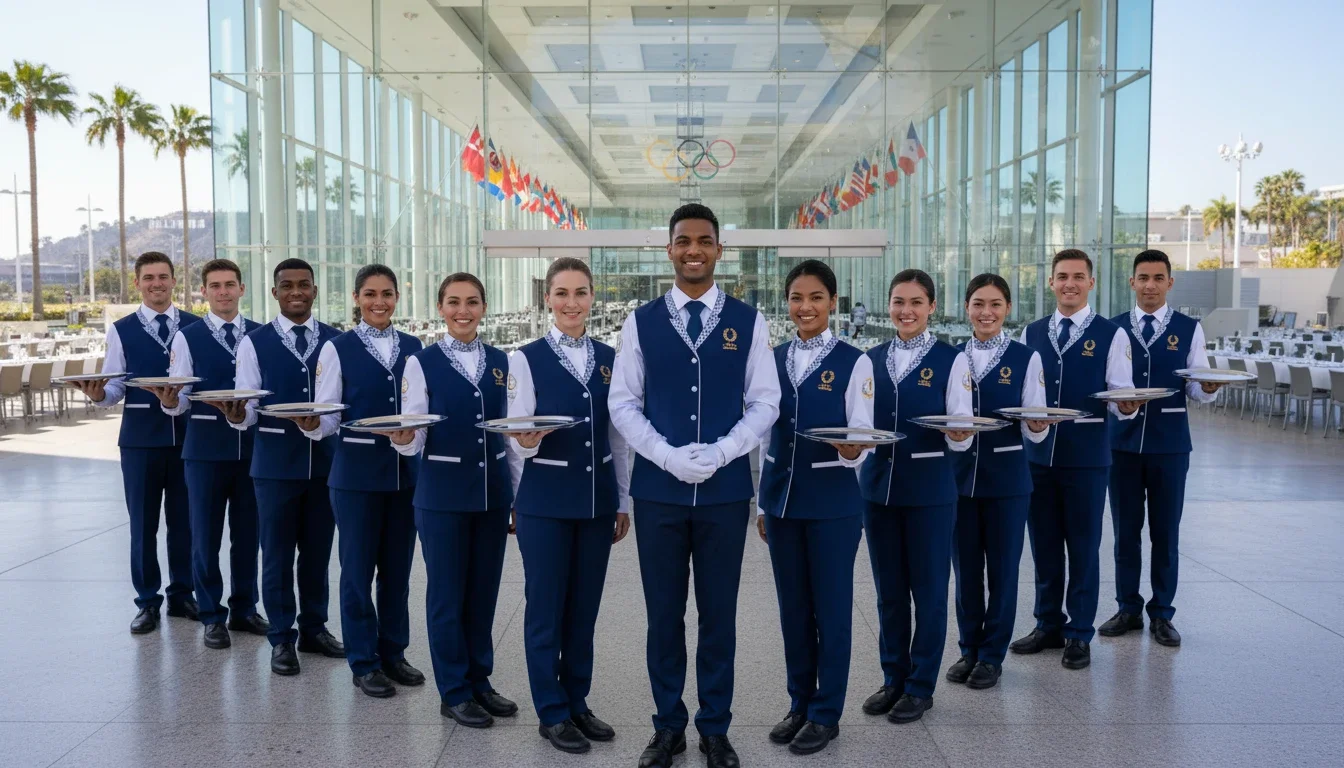
A professional hospitality team in branded uniforms ready to serve at a luxury event in Los Angeles.
How to Design the Guest Experience — Not Just the Space
Most hospitality planning focuses on the physical space — the furniture, the branding, the catering. The brands that stand apart think about the experience as a choreographed journey from the moment a guest is invited to the moment they leave and beyond.
Arrival and Welcome Flow
The arrival sequence matters enormously. A VIP guest who waits 15 minutes in a confusing check-in queue has already formed a negative impression — before they've tasted a drink or seen your brand in context. Design the arrival experience intentionally:
Clear, branded wayfinding from the venue entrance or drop-off point
A dedicated greeter stationed at the first touchpoint — not inside the lounge, but before it
Pre-registered guest lists for instant, frictionless check-in
A personalized welcome moment: the greeter knows the guest's name and role
A smooth handoff from check-in into the lounge environment
In-Suite Activation and Brand Integration
Once guests are inside, the experience should feel like an extension of your brand's identity — not a generic catered room with a logo on the wall. Consider:
Dedicated brand ambassadors stationed at key touchpoints to spark conversation
Interactive product experiences or demonstrations relevant to your brand
Curated programming — athlete appearances, panel discussions, live moments that guests can't get anywhere else
Thoughtful design that makes the brand visible without feeling forced
VIP Departures and Follow-Up Touchpoints
The departure experience is the last impression — and it often gets the least attention. Train your guest relations staff to offer warm, personalized goodbyes, assist with transportation or next steps, and distribute any parting gifts or materials with care. A strong departure moment reinforces the overall experience and sets up post-event follow-up.
Operational Planning: The 90-Day Staffing Countdown
Olympic hospitality doesn't come together in a few weeks. To execute at the level LA 2028 demands, your planning timeline should start at least 90 days out — ideally earlier for large activations.
90 Days Out — Scope, Brief, and Partner Selection
Define your hospitality format: VIP suite, sponsor lounge, or both
Identify venue locations and understand access and credentialing requirements
Establish your guest tiers and expected daily headcount
Brief and select your staffing agency — the earlier you book, the better your staff selection
Outline your brand activation concept so staffing can be integrated into the design
Pro Tip: Early Booking Matters
For high-profile events like the Olympics, top-tier hospitality staff get committed quickly. Eleven8 recommends securing your staffing partner at least 90 days out — ideally earlier for large sponsor activations — to ensure access to the most experienced, vetted professionals available.
60 Days Out — Staff Selection and Training
Review staff profiles and select your team based on experience, personality, and language capabilities
Brief staff on your brand: values, tone, key messages, VIP guest roster details
Begin venue-specific orientation — understand where staff will be stationed, access routes, and emergency protocols
Conduct run-through briefings for complex guest flows
Confirm uniform and presentation requirements
30 Days Out — Run-of-Show and Venue Logistics
Create a detailed run-of-show for each hospitality day
Confirm credentials and venue access for all staff
Conduct a venue walkthrough with your on-site coordinator
Establish communication protocols (staff app, radio, group chat) for event day
Prepare contingency plans for weather delays, late VIPs, or volume spikes
Event Week — Execution and Real-Time Coordination
Pre-event briefing with full staff team: guest list review, run-of-show walk, role clarification
Station team members with clearly defined responsibilities and area ownership
Designate one point of escalation (coordinator or captain) for any live issues
Debrief after each event day and adjust for the next
Credentialing, Security, and Protocol: What You Must Know
LA 2028 will have some of the most robust security protocols of any Olympic Games in recent history. Any staff working in or adjacent to official venues must be properly credentialed and undergo background clearance as required by LA28 and venue security teams.
Key considerations:
Staff credentials must be secured well in advance — process timelines can be lengthy
Different access zones require different credential types; your staffing agency must understand this
All staff should be briefed on security protocols, prohibited items, and emergency procedures
For suites inside official venues, staff movement must comply with the IOC and venue operations guidelines
Working with a staffing agency that has experience navigating large-scale, credentialed events — such as FIFA World Cup activations, Super Bowls, or major convention operations — is a significant advantage. Eleven8, for example, is already serving as a preferred staffing partner for the FIFA World Cup 2026 in Los Angeles, providing direct experience with the credential and security frameworks relevant to international mega-events.
Multilingual Staffing: A Non-Negotiable for the Global Stage
The LA 2028 Olympics will bring guests from every corner of the globe. Your VIP suite or sponsor lounge will host executives from Tokyo, partners from São Paulo, athletes' families from Lagos, and media representatives from Paris — often on the same day.
Multilingual staffing isn't a nice-to-have at the Olympic level. It's a fundamental element of genuine hospitality. Guests feel welcomed when they can communicate naturally. They feel valued when staff engage them in their preferred language. And they remember brands that demonstrated that level of attention.
When briefing your staffing agency, specify the languages represented in your expected guest list and request staff accordingly. Common languages to plan for at LA 2028 include Spanish, Mandarin, French, Portuguese, Japanese, and Arabic — though your guest roster will dictate the specific priorities.
Common Mistakes Brands Make with Olympic Hospitality
Even experienced hospitality teams make avoidable errors when operating at the scale and scrutiny of the Olympics. Here are the most common — and how to prevent them.
Understaffing: The single most common and most damaging mistake. Calculate generously. Add a buffer.
Treating staff as decoration rather than experienced architects: Staff who understand your brand and guest expectations create experiences. Staff who are briefed in ten minutes do not.
Ignoring the arrival and departure experience: Guests remember the beginning and the end. Invest in both.
Booking staff too late: Premium talent gets committed early. Late bookings mean compromised selection.
Forgetting credentialing lead times: Allow significantly more time than you think you'll need.
Neglecting contingency planning: What happens if a key staff member can't make it? What if the event runs long? What if a VIP brings unexpected guests? Plan for all of it.
Not defining a clear brand story for staff to tell: Brand ambassadors can only engage on-brand if they know what that means. Deep briefing is not optional.
Why Working with a Specialized Staffing Agency Changes Everything
There's a meaningful difference between hiring staff for a corporate party and staffing a hospitality suite at the Olympic Games. The latter requires people who have performed at the highest levels, in high-pressure environments, for extraordinarily discerning guests — and who can do it consistently across multiple event days.
A specialized hospitality staffing agency brings:
Pre-vetted talent pools with demonstrated high-stakes event experience
Familiarity with Olympic and major sporting event protocols and venue dynamics
Infrastructure for managing large, complex deployments, including last-minute changes
Dedicated on-site coordination and management support
Industry relationships and local knowledge that only a Los Angeles-based agency can offer
Eleven8 has spent over 30 years staffing premium events in Los Angeles — from Academy Awards ceremonies and NFL activations to global product launches for brands like Nike, Porsche, and Netflix. As a preferred staffing partner for LA 2028 and a current official staffing provider for FIFA World Cup 2026 in Los Angeles, the team brings direct, proven experience with international mega-event hospitality at exactly the venues where the Olympics will take place.
Ready to Plan Your LA 2028 Hospitality Staffing?
Whether you're operating a VIP suite at SoFi Stadium, a multi-day sponsor lounge at a partner hotel, or a brand activation at the LA Convention Center, Eleven8 can build the right team for your vision. Start the conversation today at hello@elev8.la or call 323-426-6910.