
FIFA World Cup Is Coming to Your City — Is Your Business Ready to Handle the Rush?
Summer 2026 is no ordinary summer. For eleven American cities — including Los Angeles — the world is literally arriving on their doorsteps. The FIFA World Cup, the largest sporting event on the planet, is set to run from June 11 through July 19, 2026, bringing an estimated 5 to 7 million international visitors across North America. Millions more domestic fans will be traveling, tailgating, filling hotels, packing restaurants, and flooding fan zones — with or without match tickets.
If you're a business owner in a host city and you haven't started thinking seriously about staffing yet, this article is your wake-up call.
The window to secure the right people is closing faster than you might think. This isn't the kind of event you can staff on short notice. Here's what's coming, why it matters more than any other busy season you've planned for, and exactly what you need to do.
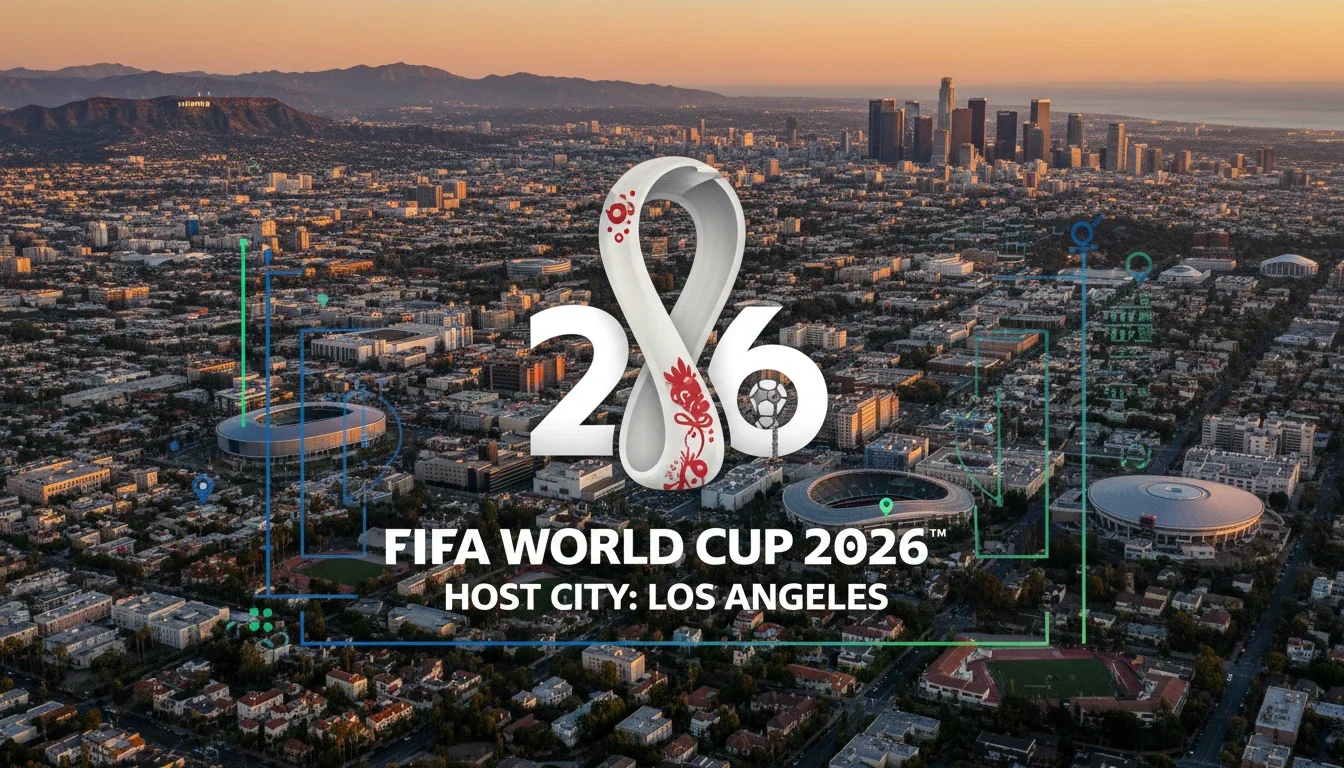
Los Angeles will host 8 FIFA World Cup 2026 matches, drawing hundreds of thousands of global visitors.
The Scale of This Is Unlike Anything Your City Has Seen
Numbers help set the scene. The 2026 World Cup features 48 teams playing 104 matches — a massive expansion from the 32-team, 64-game format of prior tournaments. The event runs for 39 consecutive days. That is not a weekend. That is not a week. That is close to six weeks of sustained, high-volume foot traffic, with wave after wave of arriving and departing fans.
A Boston Consulting Group study projects the event could generate more than $5 billion in short-term economic activity across North America, supporting approximately 40,000 jobs. For individual host cities, economic impact estimates range from $160 million to over $620 million per market, depending on the number of matches hosted.
What's Actually Happening in Los Angeles
Los Angeles is slated to host eight World Cup matches at SoFi Stadium in Los Angeles, including two U.S. Men's National Team group stage games. Based on current economic projections, Los Angeles County could see roughly $594 million in total regional economic impact, along with an estimated $34.9 million in tax revenue for local government entities.
That economic activity does not stay inside SoFi Stadium. It radiates outward into restaurants, hotels, retail, nightlife, pop-up events, watch parties, and every hospitality business operating within a reasonable distance of the venue — and frankly, across the entire LA metro area.
The Economic Windfall Is Real — But So Is the Pressure
Here is the tension every local business owner needs to sit with: the same surge that creates enormous revenue opportunity also creates enormous operational pressure. More customers means more orders, more service interactions, more complexity, more potential for things to go wrong.
The businesses that win during the World Cup will be the ones that planned staffing months. The ones that scramble in May or June will be overwhelmed, understaffed, and unable to convert the opportunity into revenue.
Why Most Local Businesses Are Already Behind on Staffing
Here is something most businesses don't realize until it's too late: staffing for a mega-event is not like staffing for a busy weekend. You can't post a job listing in April and expect to have a fully trained, vetted, reliable team ready for June. It doesn't work that way — and in a World Cup market, it definitely doesn't work that way.
The Talent Pool Is Shrinking Fast
Right now, thousands of other businesses — in your city and competing for the same events — are booking their staffing partners. Every professional event staffer, brand ambassador, experienced bartender, bilingual hospitality professional, and trained check-in crew member who is available for summer 2026 is being claimed. Hospitality staffing agencies are receiving more inquiries right now than at any other point in their history.
The experienced, reliable people — the ones who have worked high-traffic events, who can handle a crowd, who know how to represent a brand professionally under pressure — are the first to be booked. What's left for late planners is the bottom of the talent pool.
You're Competing Against Everyone at Once
Think about all the businesses and organizations competing for event talent during the World Cup window in your city: official FIFA partners and sponsors, stadium operations, hotel chains, restaurant groups, bars, retailers, brands running activations, fan zone operators, corporations hosting client entertainment, and city government-run events. You are not competing against a normal labor market. You are competing against some of the largest and best-funded operations in the world — all of them booking now.
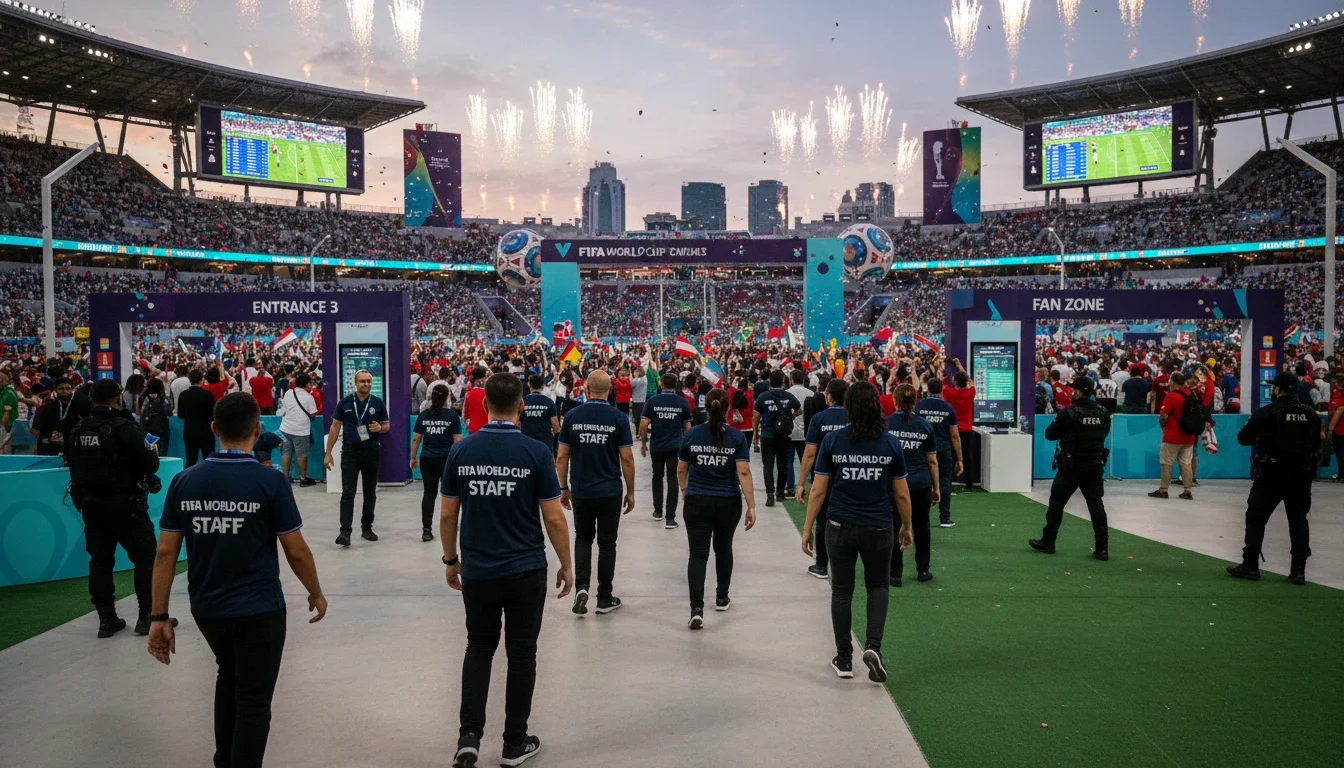
Experienced event staff are the difference between surviving the World Cup rush and thriving during it.
What Types of Staff Does Your Business Actually Need?
The answer depends on what kind of business you're running and what role you want to play during the World Cup. Here's a breakdown of the staffing categories that matter most for this event.
Hospitality and Food Service Staff
If you operate a restaurant, bar, catering company, or any food and beverage business, your core need is experienced front-of-house staff who can handle sustained high volume. Not someone who has done a couple of busy weekends. Someone who has worked events of 500, 1,000, and 5,000 people and knows how to maintain service quality under that pressure.
This includes servers, bartenders, barbacks, floor managers, food runners, and general hospitality staff. These roles require people who are professionally trained, have food handling certifications, and can represent your brand in front of an international audience.
Brand Ambassadors and Promotional Staff
If your business is planning any kind of activation, sponsored event, product sampling, or fan zone presence, brand ambassadors are the front line of your operation. These are the people interacting directly with global visitors, creating first impressions of your brand, and driving engagement in high-energy environments.
The best brand ambassadors for a World Cup environment are energetic, culturally aware, articulate, and experienced working with crowds from diverse national backgrounds. They need to adapt quickly, think on their feet, and genuinely enjoy connecting with strangers.
Check-In and Registration Teams
For businesses or organizations running ticketed events, corporate hospitality suites, watch parties, or any kind of organized World Cup activation, check-in and registration staff are essential. The first experience a guest has sets the tone for everything that follows. Slow, chaotic, disorganized check-in destroys the experience before it starts.
Professional check-in teams are trained in event technology, crowd management, VIP handling, and keeping lines moving efficiently. For a World Cup crowd that may include guests speaking dozens of languages, having patient, experienced, multilingual-adjacent staff at the entry point is not optional.
Multilingual Staff — A Non-Negotiable for 2026
This is the element that separates a good World Cup staffing plan from a great one. The FIFA World Cup does not attract a monolithic fan base. Argentina fans. Brazilian supporters. English, French, German, Japanese, Mexican, Korean, and dozens of other national fan groups will all be in your city, many of them visiting the United States for the first time.
Staff who speak Spanish, Portuguese, French, Korean, Japanese, or Arabic are not just a nice-to-have for summer 2026 — they are the foundation of a truly international-grade guest experience. In Los Angeles, especially, where the U.S. will play two group stage matches, and where a globally diverse local population already sets a high standard for multicultural service, multilingual staffing is a genuine competitive advantage.
Your World Cup Staffing Timeline: What to Do and When
Here is a clear timeline to help you understand where you should be in your planning process and what actions to take immediately.
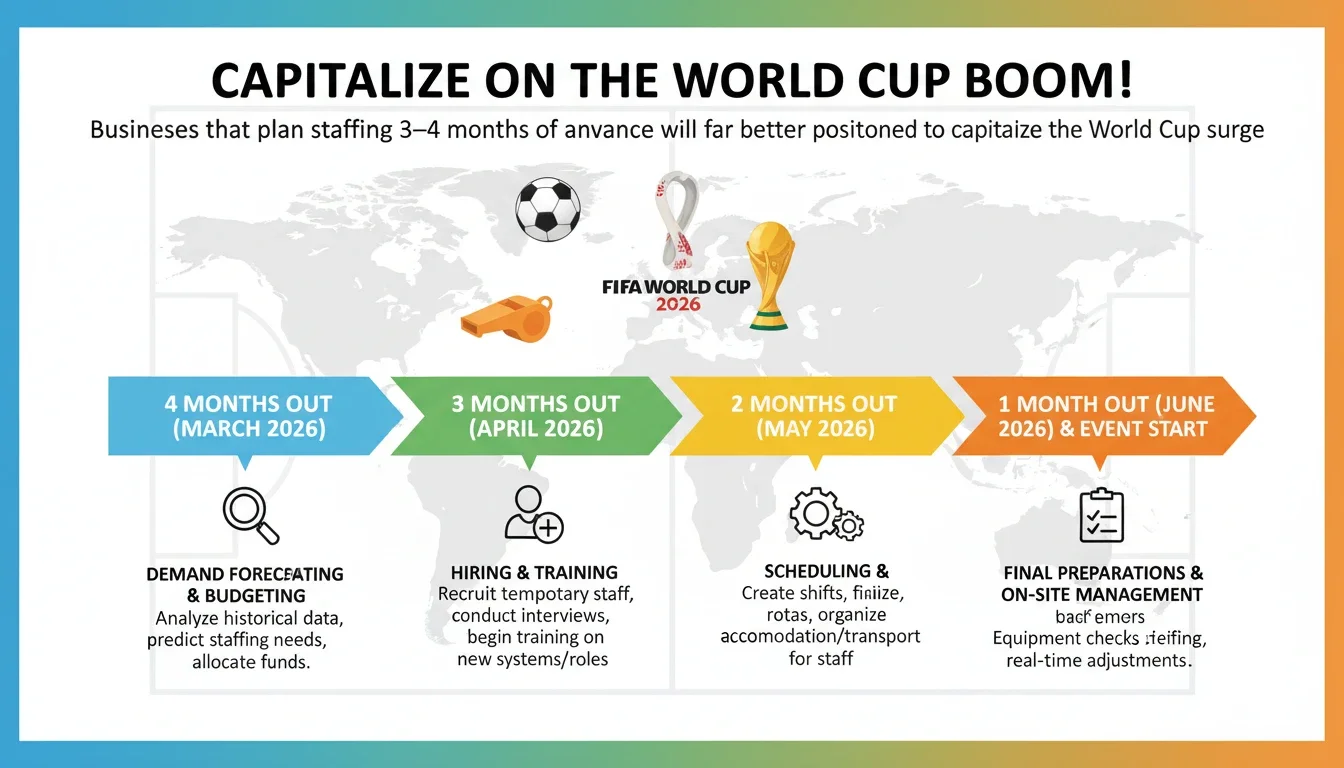
Businesses that plan staffing 3–4 months in advance will be far better positioned to capitalize on the World Cup surge.
Right Now — February through March 2026
This is the most important window. Here is what you must do:
Assess your maximum capacity and identify which date windows will see the heaviest demand for your business (match days, fan zone events, corporate hospitality periods).
Calculate the gap between your current staff levels and what you will need to operate at full capacity during peak periods.
Contact a professional event staffing agency to discuss availability, scope, and timelines. Do not put this off — agencies are filling their rosters now.
Identify your multilingual staffing needs based on the nationalities of fan groups attending matches in your city.
Start internal scheduling conversations with your current team to understand who is available during the tournament window.
April through May 2026
Confirm and lock in your staffing agency partnership and finalize the number of staff per role per event period.
Begin any specific brand training, uniform coordination, or onboarding that requires lead time.
Test your operations at full capacity — don't wait until match day to discover bottlenecks.
Brief your event team on World Cup culture, international guest expectations, and any FIFA-specific protocols.
June through July 2026 — The Match Period
Execute. Your team is in place. Your contingency plans are ready. You have direct lines of communication with your staffing coordinator.
Maintain a staffing buffer — always have on-call backup available for last-minute no-shows or demand spikes.
Debrief after each major match window and adjust for the next.
The Hidden Opportunity: Fan Zones, Watch Parties, and Brand Activations
Think Beyond the Stadium
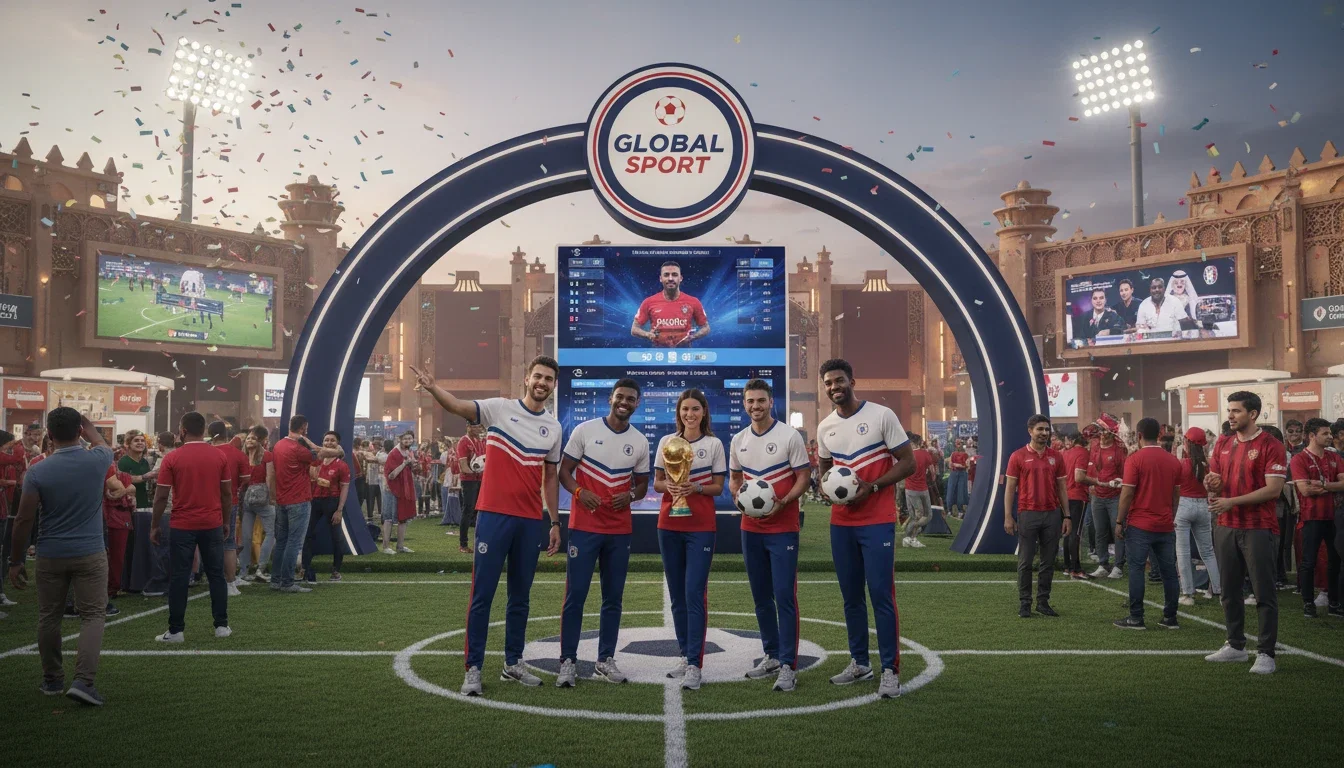
Fan zones and brand activations create massive staffing opportunities for experiential marketing teams during the World Cup.
Most businesses think of the World Cup purely in terms of match-day traffic. But the tournament generates weeks of activation opportunities that go far beyond game day. Fan zones — massive public viewing areas with big screens, live music, food, and entertainment — will be operating for the duration of the event in most host cities. In Houston, FIFA has confirmed a fan festival running for 39 consecutive days.
Watch parties at bars, restaurants, and outdoor venues. Brand activations in high-traffic pedestrian areas. Corporate client entertainment events. Pop-up shops and sampling campaigns targeting international visitors. Hotel welcome experiences for foreign travelers. Sponsor lounges at adjacent venues.
Every one of these requires staff. Experienced, presentable, professional, brand-aligned staff who understand how to create a positive experience for guests arriving from 48 different countries. This is not a moment for minimum-wage temp workers who have never seen an event of this scale.
How a Professional Staffing Agency Changes the Game
What Eleven8 Brings to Your World Cup Preparation
Eleven8 Event Staff has been staffing high-profile events in Los Angeles and across the United States since 1990, with over 10,000 events completed for clients including Nike, Adidas, Versace, Netflix, and The Academy. The team is specifically preparing for the 2026 event surge and is already fielding World Cup inquiries.
Here is what working with a professional event staffing agency provides that DIY hiring cannot:
Pre-vetted talent: Only the top 3.5% of applicants are admitted to the Eleven8 roster. You are getting screened, trained professionals — not random hires.
Scalability: From a single staff member to 100+ people for a multi-day event. Staffing scales to exactly what you need.
Multilingual rosters: Staff available in Spanish, Portuguese, French, Korean, Japanese, and more — essential for a globally diverse audience.
Dedicated coordinator: Every client gets a dedicated event coordinator available 7 days a week, including during events.
Contingency staffing: Last-minute replacements handled. Backups on call. No gaps on match day.
Fully insured: All staff carry liability coverage. Certificate of Insurance available upon request.
Don't Wait for Kickoff to Start Planning
The FIFA World Cup is a genuine once-in-a-generation business opportunity. For local businesses in Los Angeles and across the 11 U.S. host cities, it offers the chance to serve a global audience, build brand recognition far beyond your usual customer base, and generate revenue that can fund growth for years to come.
But it will not wait for you. The businesses that are booking their staffing partners today — right now, in February and March 2026 — will be the ones serving satisfied international guests all summer. The businesses that wait until April or May will find their options severely limited, and those that try to improvise in June will likely be overwhelmed.
The question at the top of this article was whether your business is ready. If you're reading this and you haven't started yet, the answer is no, but it doesn't have to stay that way. Reach out to Eleven8 Event Staff today, and let's build your World Cup staffing plan before the best talent is gone.